
Imagine stepping into a sunlit living room: a classic chintz sofa anchors the space, a jewel-toned rug grounds the conversation area, and antique brass lamps cast a warm, inviting glow. It feels deeply familiar, yet entirely energized. This is the magic of grandmillennial style—a design movement that proves comfort, curated patterns, and unapologetic optimism never truly go out of fashion.
Coined by House Beautiful writer Emma Bazilian, the term describes a generation’s return to the traditional, layered aesthetics of their grandparents’ homes, but with a fresh, modern twist. Today’s decorators are ditching stark minimalism and “sad beige” interiors in favor of rooms that tell a story. But how do you embrace this maximalist resurgence without making your home look like a dusty time capsule? The secret lies in the intentional interplay of pattern and paint.
In this guide, we will break down exactly how to mix floral patterns in interiors with bold color palettes. Whether you are working with inherited heirlooms or starting from scratch, you will learn concrete rules, room-by-room applications, and insider sourcing tips to master the modern grandmillennial look.
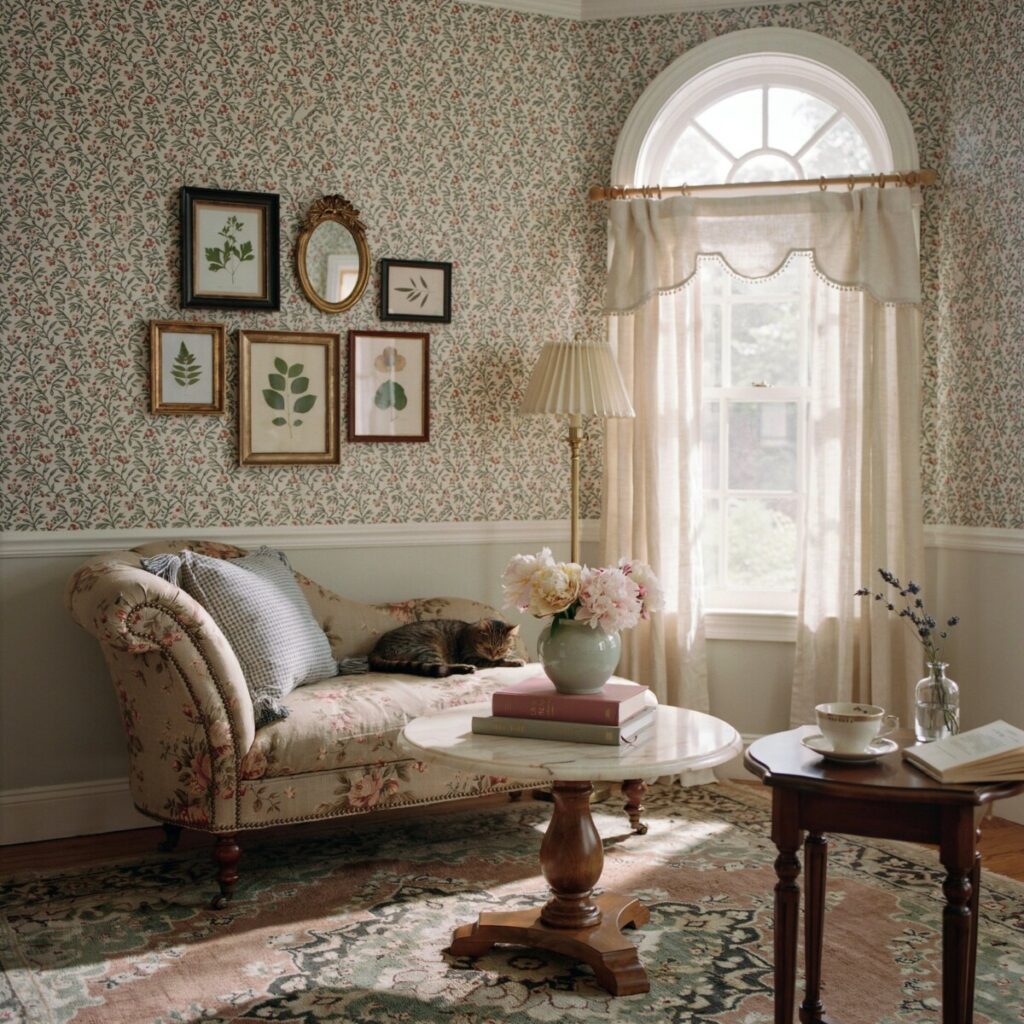
What is Grandmillennial Style?
To master the aesthetic, you first need to understand its roots. The grandmillennial style emerged as a direct rebellion against the sleek, mid-century modern and ultra-minimalist trends that dominated the 2010s. It is a nostalgic yet highly curated revival of the traditional design sensibilities of the 1970s and 1980s. Think of the legendary, pattern-layered rooms of Mario Buatta (the “Prince of Chintz”) or the vibrant, unapologetic spaces designed by Dorothy Draper and Sister Parish.
At its core, this aesthetic celebrates the “anti-trend.” Key elements include oversized vintage floral decor, crisp chintz, pleated lampshades, ruffled or skirted upholstery, lacquered wood furniture, antique brass hardware, and heavily patterned wallpaper. It is about embracing the pleasantly patinaed and the realistically rumpled.
However, it is crucial to distinguish modern grandmillennial design from “grandma chic” or modern farmhouse styles. Grandma chic often relies on literal, kitschy reproductions of the past, resulting in a space that feels more like a movie set than a livable home. Modern farmhouse, on the other hand, leans heavily into rustic woods, shiplap, and muted neutrals. Grandmillennial style, by contrast, is deeply refined. It takes heirloom-quality silhouettes and traditional floral patterns and injects them with a contemporary edge—perhaps by pairing a skirted floral sofa with a sleek piece of modern abstract art, or by painting the trim in a high-gloss, unexpected jewel tone. It is traditional design with a vibrant, personalized pulse.
Why Floral + Bold Color Works
Why do floral patterns and bold colors make such a spectacular pairing? The answer lies in the balance of visual scale and emotional resonance. Florals provide a complex, organic pattern language that draws the eye and softens the hard architectural lines of a room. Bold colors, particularly saturated jewel tones, provide the emotional punch and structural grounding.
From a color psychology perspective, deep, rich hues like sapphire blue, emerald green, and ruby red evoke feelings of timelessness, sophistication, and security. When you pair a delicate, multi-colored floral print with a moody, dark wall, the contrast allows the intricate details of the fabric to pop, while the dark paint prevents the room from feeling overly saccharine or dated.
Furthermore, the current design zeitgeist is heavily favoring maximalism and personalization. As noted by Elle Decor and Architectural Digest, homeowners are increasingly treating their spaces as expressions of joy rather than sterile showrooms. Mixing bold paint colors with floral wallpaper ideas or patterned upholstery creates a layered, collected-over-time look that feels deeply personal, inherently cozy, and visually dynamic.
Principles for Mixing Florals and Bold Colors
Successfully executing this look requires a discerning eye. Here are seven practical rules for how to mix patterns and colors without overwhelming the senses.
1. Limit Your Dominant Patterns
A good rule of thumb is to use no more than three distinct patterns in a single room. For example, anchor the space with a large-scale floral sofa, introduce a medium-scale striped or geometric pillow, and use a subtle, small-scale texture or solid for the curtains. This creates a visual hierarchy that the eye can easily process.
2. Play with Scale and Proportion
Never pair two florals of the exact same scale; they will visually bleed into one another and create a muddy, chaotic effect. If your wallpaper features a massive, sweeping botanical print, choose a tight, micro-floral or a classic ticking stripe for your upholstery.
3. Anchor with Grounding Neutrals
Bold color palettes and busy prints need places to rest. Introduce natural, grounding materials to balance the visual weight. A chunky sisal or jute rug, warm walnut wood tones, or crisp white and cream architectural trim will give the eye a place to pause and prevent the room from feeling suffocating.
4. Establish a “Shared Hue”
The golden rule of mixing patterns and colors is repetition. Pick one secondary color from your primary floral print and repeat it throughout the room. If your chintz fabric features emerald green leaves against a cream background with blush roses, use that exact emerald green for your velvet throw pillows, the piping on your curtains, or even the painted ceiling.
5. Balance Saturation with Texture
When working with highly saturated bold colors, texture is your best friend. A flat, matte emerald wall feels entirely different when paired with a plush velvet sofa, a nubby linen throw, and heavily woven drapery. Texture adds depth and prevents bold hues from feeling flat or institutional.
6. Utilize Architectural Elements
Instead of painting every wall a dark, moody hue, use bold paint colors strategically on architectural features. Paint the inside of your built-in bookshelves a vibrant coral, lacquer your trim in a high-gloss navy, or treat the ceiling (the “fifth wall”) to a surprising, soft botanical green.
7. Create a Definitive Focal Point
Every room needs a star. Choose one major statement piece—a heavily patterned floral sofa or a jewel-toned, tufted velvet headboard—and build the rest of the room’s supporting cast around it.
Pull Quote: “Start small: one floral sofa or a bold-painted fireplace is all you need to shift the energy of a room.”
Room-by-Room Application
Let’s translate these principles into actionable, room-specific strategies, utilizing three classic grandmillennial color pairings: navy & coral, emerald & blush, and mustard & teal.
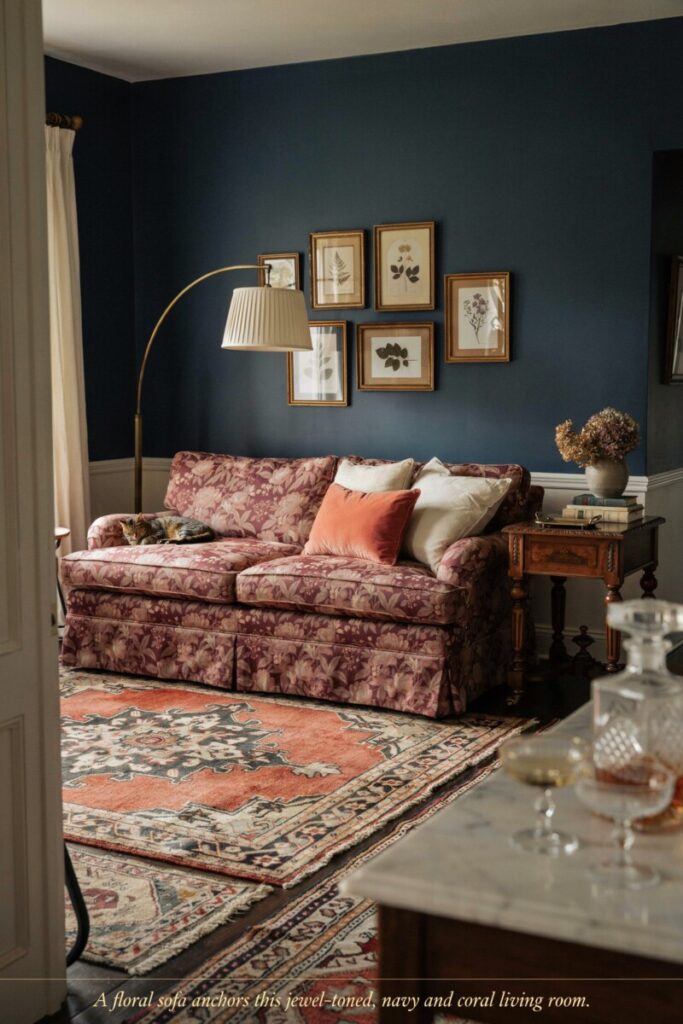
Living Room: Navy & Coral
The living room is the ultimate showcase for grandmillennial living room ideas. Start with a classic, skirted sofa upholstered in a vibrant, large-scale chintz floral featuring hints of coral and cream. To ground the piece, paint the walls in a deep, moody navy blue, such as Benjamin Moore’s Navy Masterpiece. Keep your larger case goods, like the coffee table and media console, in solid, warm wood tones to prevent visual clutter. Layer the floral sofa with solid velvet throw pillows in a contrasting coral hue. Finish the space with antique brass lighting, a heavily patterned vintage Oushak rug, and a gallery wall of botanical prints in ornate gold frames. The result is a space that feels deeply inviting, layered, and perfect for conversation.
Bedroom: Emerald & Blush
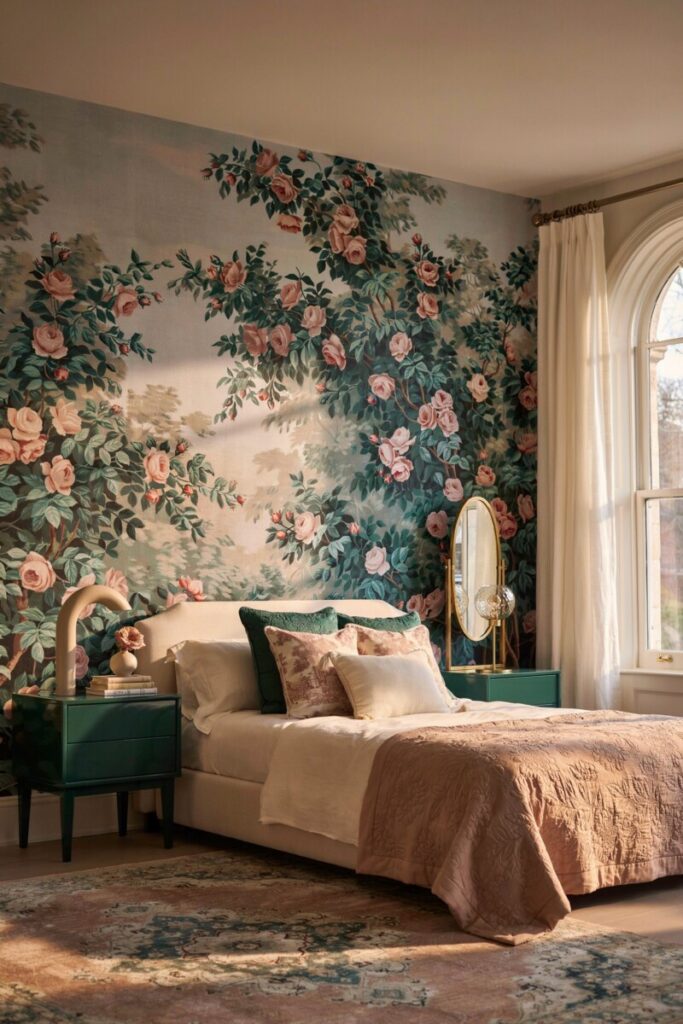
In the bedroom, the goal is to create a romantic, enveloping retreat. Embrace floral wallpaper ideas by applying a sweeping, vintage-inspired botanical print featuring emerald foliage and soft blush roses to the wall directly behind the bed. Dress the bed in crisp, high-quality linen sheets in a solid cream tone, and layer on a heavily embroidered blush quilt at the foot of the bed. Incorporate patterned throw pillows that pick up the emerald from your wallpaper. To maintain a modern grandmillennial edge, flank the bed with clean-lined, lacquered nightstands in a high-gloss emerald and contemporary, sculptural table lamps rather than traditional frilly sconces.
Dining Room: Mustard & Teal
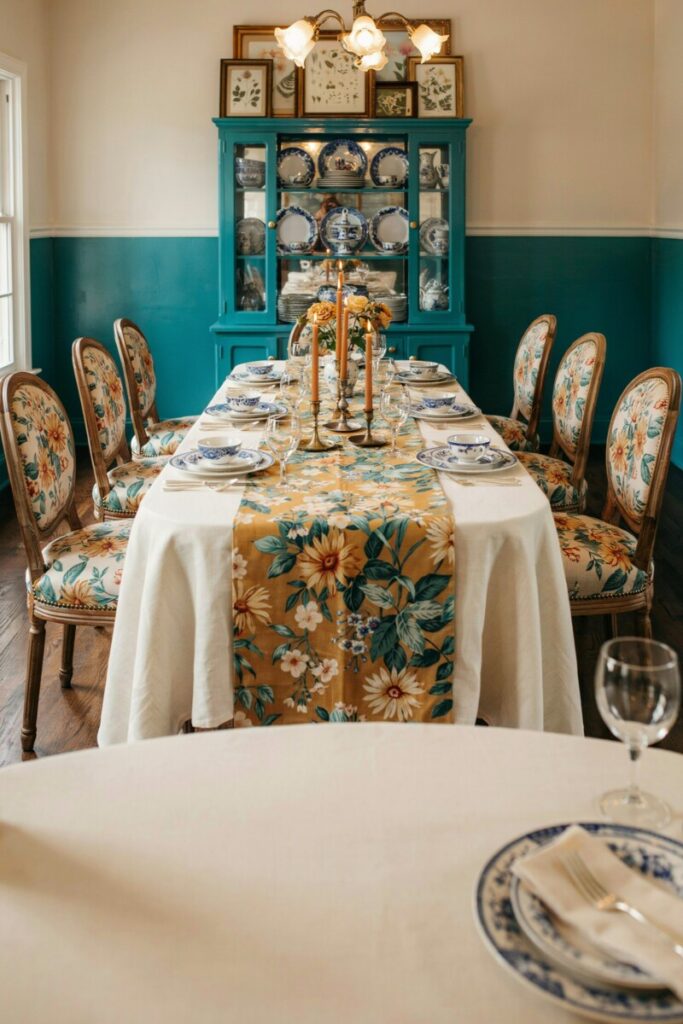
The dining room is the perfect place to take risks with bold colors. Paint the wainscoting or the interior of your built-in china cabinet in a high-gloss, vibrant teal. Upholster your dining chairs in a durable, stain-resistant floral fabric that incorporates warm mustard yellows, or use a beautifully printed, oversized floral table runner over a crisp white linen tablecloth. Mix in classic, heirloom blue-and-white china, heavy silver flatware, and tall brass candlesticks to elevate the space. The juxtaposition of the lively, warm floral textiles against the moody, cool-toned teal architectural details creates a highly sophisticated, dinner-party-ready atmosphere.
Small Spaces and Entryways
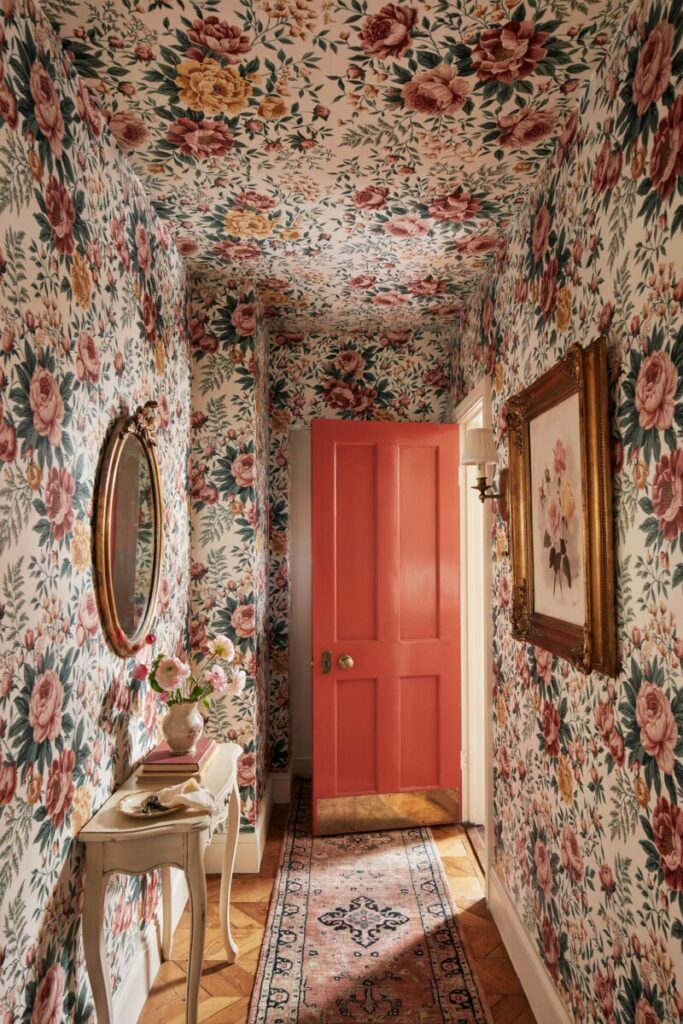
Small spaces are where you can be the most fearless. In a tiny powder room or entryway, wrap the entire room—walls, ceiling, and even the door—in a single, dramatic vintage floral decor wallpaper. Because you are only in the space for a short time, the maximalist approach feels like a delightful, immersive surprise rather than an overwhelming burden. Alternatively, paint your front door a striking, bold color like coral or emerald green, and hang a single, oversized piece of vintage floral art or a beautifully framed fabric swatch on the opposite wall to set the tone for the rest of the home.
Shopping and Sourcing
Knowing where to look is half the battle when curating a modern grandmillennial home. You do not need an unlimited budget to source beautiful, high-quality pieces.
- New Retailers: For accessible, contemporary takes on traditional floral upholstery and decor, look to brands like Anthropologie, Lulu and Georgia, and Joss & Main. Ballard Designs is an excellent resource for classic, traditional silhouettes and high-quality pleated or ruffled accents.
- Vintage and Resale: The true heart of this aesthetic lies in authentic, timeworn pieces. Scour Etsy, Chairish, and local antique shops for original 1980s chintz fabrics, vintage rugs, and solid wood furniture with good bones. Estate sales and Facebook Marketplace are goldmines for inheriting the literal heirlooms that define the style.
- Custom Options: If you find a vintage sofa frame with great proportions but terrible fabric, hire a local upholsterer to bring it back to life. For highly specific floral patterns, platforms like Spoonflower allow you to print custom floral fabrics and wallpapers, giving you total control over scale and color.
- Budget Tips: If reupholstering or wallpapering is out of your current budget, test the waters with smaller commitments. Use heavily patterned floral throw pillows, drape a vintage floral quilt over a modern bench, or frame beautiful, leftover fabric swatches and hang them as art.
Common Mistakes and Fixes
Even the most enthusiastic decorators can stumble when mixing bold paint with floral wallpaper. Here are quick fixes for the most common missteps:
- Mistake: Too many competing patterns. Fix: Edit the room down to two dominant patterns and one supporting solid or texture.
- Mistake: Clashing color temperatures. Fix: If your floral is dominated by warm tones (reds, oranges), avoid introducing stark, cool-toned blues. Bridge the gap with warm neutrals like cream or brass.
- Mistake: Overwhelming scale. Fix: If a large-scale floral wallpaper makes the room feel claustrophobic, balance it by painting the trim and ceiling a crisp, bright white to reflect light and open the space.
- Mistake: Neglecting texture. Fix: A room with only flat cotton florals and matte paint will feel flat. Introduce woven rugs, velvet cushions, or lacquered wood to add necessary dimensional depth.
- Mistake: Ignoring the “fifth wall.” Fix: Don’t forget the ceiling. Painting it a soft, coordinating hue or adding a subtle metallic leaf finish completes the enveloping, curated look.
- Mistake: Buying “fast furniture” reproductions. Fix: Skip the particleboard. Invest in one or two solid, vintage wood pieces that will develop a beautiful patina over time.
Final Styling Checklist
Ready to transform your space? Use this quick checklist before you finalize your design:
- [ ] Choose one major focal floral piece (sofa, wallpaper, or rug).
- [ ] Pick a “shared hue” from your floral and repeat it three times.
- [ ] Limit the room to a maximum of three distinct patterns.
- [ ] Test your bold paint colors with large physical samples on the wall.
- [ ] Introduce at least one metallic accent (brass, gold, or silver).
- [ ] Layer a minimum of three distinct textures (e.g., velvet, wood, linen).
- [ ] Apply bold color to at least one architectural feature (trim, ceiling, or built-ins).
- [ ] Source at least one authentic vintage or antique item.
- [ ] Step back, edit out one item, and ensure the room still feels balanced.
Your Turn
The grandmillennial style is all about breaking the rules of minimalism and embracing the joy of a well-lived, beautifully layered home. Don’t be afraid to start small—try introducing one bold floral accent or painting a single piece of furniture this weekend.
Have you embraced the grandmillennial revival? Share your before-and-after room transformations on Instagram and Pinterest using the hashtag #MyGrandmillennial.