Your front door is a small surface with outsized influence — the color you choose can elevate curb appeal, reflect your personality, and even affect how guests feel before they step inside. Whether you’re driving home after a long day, greeting friends for dinner, or prepping to list your house, that single rectangle of paint is often the very first thing people notice about your home.
A fresh coat on the front door is also one of the highest-return, lowest-effort upgrades in all of home design. For the price of a quart of paint and an afternoon, you can transform the whole vibe of your façade. But with thousands of front door color ideas swirling across Pinterest and paint-store walls, picking the one can feel surprisingly hard. Should you go bold or play it safe? Match your shutters or contrast them? Lean into front door color trends 2026 or stick with timeless?
This guide walks you through exactly how to choose front door color — from architectural style and neighborhood context to color psychology, paint finishes, and resale-safe picks — so you walk away with a confident, welcoming choice you’ll love every time you pull into the driveway.
Why Front Door Color Matters More Than You Think
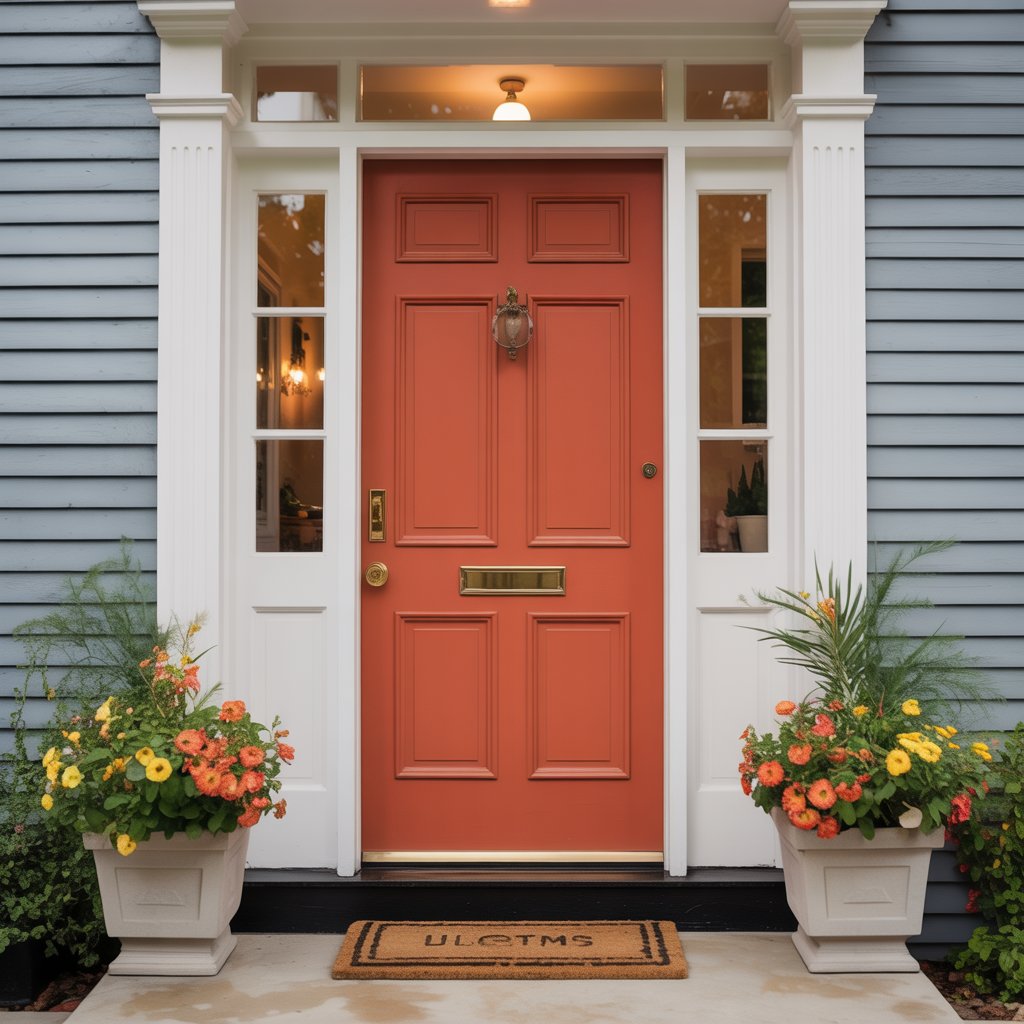
Let’s start with the numbers, because they’re genuinely surprising. According to a large-scale Zillow study of thousands of recent and prospective home buyers, homes with a black front door received offers averaging roughly $6,449 more than comparable homes — a striking return for a project that typically costs under $100 in materials. Slate blue doors added around $1,537, and olive green added roughly $969. On the flip side, pale pink doors knocked an estimated $6,516 off offers, and cement gray cost sellers about $3,365.
Quick stat: A new steel entry-door replacement returns an average 188% ROI according to Zillow’s exterior improvement data — but simply repainting your existing door often delivers most of that curb appeal bump for a fraction of the cost.
Beyond resale, front door color psychology plays a real role in how your home feels:
- Red → welcoming, energetic, historic (think Colonial tavern signs)
- Blue → calm, trustworthy, coastal or grounded depending on depth
- Black → elegant, modern, confident
- Yellow → cheerful, optimistic, cottage charm
- Green → natural, restorative, connected to the landscape
- White or cream → fresh, classic, crisp
Color also communicates personality at a glance. A bold front door color like ruby red or teal says “we’re creative and fun,” while neutral front door colors like charcoal or warm taupe signal quiet sophistication. The right tone can turn a forgettable façade into the house people point out on evening walks.
Match Your Front Door Color to Your Home’s Architectural Style
The single biggest mistake homeowners make is choosing a color in isolation — at the paint counter, on a chip, on Instagram — without considering the architectural language of the house itself. Here are quick guidelines for the most common US home styles.
Colonial
Classic symmetry calls for historic-leaning hues. The go-to front door color for colonial house exteriors is a deep, confident red (Williamsburg red, oxblood), rich navy, or glossy black paired with crisp white trim. Avoid neon-brights; Colonials reward restrained drama.
Craftsman & Bungalow
These homes celebrate natural materials — stone piers, wood shingles, tapered columns. Earthy, grounded tones shine here: forest green, deep olive, warm mahogany brown, or a burnt umber. The 2026 trend toward warm eucalyptus and sage greens is particularly well-suited to Craftsman facades.
Victorian
Victorians were originally painted in rich, multi-tone palettes, so you’ve got permission to be expressive. Jewel tones — aubergine, sapphire blue, deep teal — look stunning, especially with contrasting trim in cream or soft gold. A ruby or garnet red also honors the era’s love of saturated color.
Modern & Contemporary
Clean lines and flat planes pair beautifully with monochrome or high-contrast choices. Modern front door colors lean toward matte black, charcoal/anthracite gray, or a single saturated accent (electric blue-burgundy, oxidized copper) against a minimalist façade. Stained wood doors with visible grain are also trending heavily for 2026 modern homes.
Ranch
Long, low profiles benefit from a door that anchors the eye. Go for mid-depth tones — slate blue, brick red, warm taupe — that read clearly from the street without overwhelming the horizontal lines.
Farmhouse
White siding, black window sashes, and a porch begging for a rocking chair. Farmhouse front door colors that work beautifully include sage green, barn red, soft navy, and the 2026 favorite: muted olive or eucalyptus. Pair with aged brass or oil-rubbed bronze hardware.
Consider Your Neighborhood & Curb Appeal Context
Before you buy that daring canary yellow, take a slow walk around your block. Your door doesn’t exist in a vacuum — it lives next to your neighbor’s olive-green ranch and across the street from the gray Colonial that’s been there for sixty years. Good curb appeal tips always start with context.
HOA realities. If you’re in a neighborhood with a homeowners’ association, check the covenants first. Many HOAs restrict exterior door color ideas to an approved palette, and getting retroactive approval is expensive and frustrating.
Neighboring homes. You want to stand out, not shout. If every house on your street has a neutral door, a deep teal or warm terracotta becomes a memorable accent. If your neighbors already lean bold, a quieter tone may actually make your home read as more refined.
Exterior materials matter. A color behaves totally differently against red brick, white clapboard, cedar shingles, natural stone, or stucco. Bring swatches home and tape them to the door — view them at:
- Morning light (cool, blue-tinted)
- Midday sun (truest color)
- Golden hour (warms everything up)
- Overcast (reveals undertones)
- Evening with porch light on (critical for welcome feel)
Take photos at each time. Your phone camera will reveal undertones your eyes miss — that “perfect gray” can read green, purple, or brown depending on what’s next to it.
Landscaping context. A sage green door disappears beautifully into hedges and mature trees but can look muddy against a desert yard. Terracotta sings in xeriscaped Southwest gardens but clashes with a lush English-style border. Let your plant palette inform the hue.
Translate Your Personality Into Color (Without Regretting It Later)
Here’s the fun part: front door color is one of the few places in home design where personality can (and arguably should) lead the conversation. Below is a quick pairing of personality types with color directions — think of it as a mood board shortcut.
| Your Vibe | Try These Colors | Pair With |
|---|---|---|
| Classic & conservative | Black, navy, deep red | Polished brass, white trim |
| Warm & welcoming | Terracotta, butter yellow, barn red | Aged bronze, wood accents |
| Nature-loving | Forest green, sage, eucalyptus | Oil-rubbed bronze, stone |
| Modern minimalist | Charcoal, matte black, warm white | Brushed nickel, clean lines |
| Creative & eclectic | Aubergine, teal, ochre | Mixed metals, bold house numbers |
| Coastal & relaxed | Slate blue, soft aqua, sea glass | Weathered brass, rope wreath |
A few cautionary notes
- Trendy ≠ timeless. Neon colors and very specific “color of the year” shades can date a house within 2–3 seasons. If you want longevity, lean toward deeper, more saturated versions of trending hues (deep olive instead of chartreuse, for example).
- Bold is great; loud is risky. A saturated jewel tone reads as confident. A fluorescent shade often reads as accidental.
- Test your “wild card.” If you’re eyeing something daring, paint a large poster board and live with it taped to the door for a week before committing. Mood changes with weather — your color should survive both.
How to Choose Front Door Color: A Step-by-Step Selection Process
Here’s the repeatable, low-stress workflow that designers actually use.
Step 1: Audit your existing exterior tones
Walk outside and catalog the fixed elements you’re not changing: roof color, siding or brick, trim, stone or stucco, window frames, and existing hardware finish. These are your guardrails. A warm brick house wants warm door tones (red, olive, terracotta); cool gray siding wants cool-leaning hues (navy, slate, charcoal). Your house exterior color schemes should harmonize, not fight.
Step 2: Narrow your palette with real samples
Head to the paint store (or order online) and grab 5–7 sample pots or peel-and-stick swatches. Peel-and-stick samples from brands like Samplize are excellent for this because they don’t damage the existing finish and can be moved around the door. Eliminate options that clash with your roof or trim, then narrow to your top 3.
Step 3: Test large patches in real light
Paint two 12×12-inch test patches directly on the door (or on poster board taped in place) — one on the sun-facing side, one on the shaded side. Live with them for 3–5 days. Check them in the morning, at noon, at dusk, and under your porch light at night. The color that looks right in all four is your winner.
Step 4: Choose finish and durability specs
For the best paint finish for front door performance, pick a semi-gloss or satin exterior enamel — semi-gloss is most durable and easiest to wipe clean; satin gives a softer, more modern look. Make sure the paint is exterior-rated, UV-resistant, and formulated for doors/trim. More on this below.
Step 5: Coordinate hardware, wreath, and house numbers
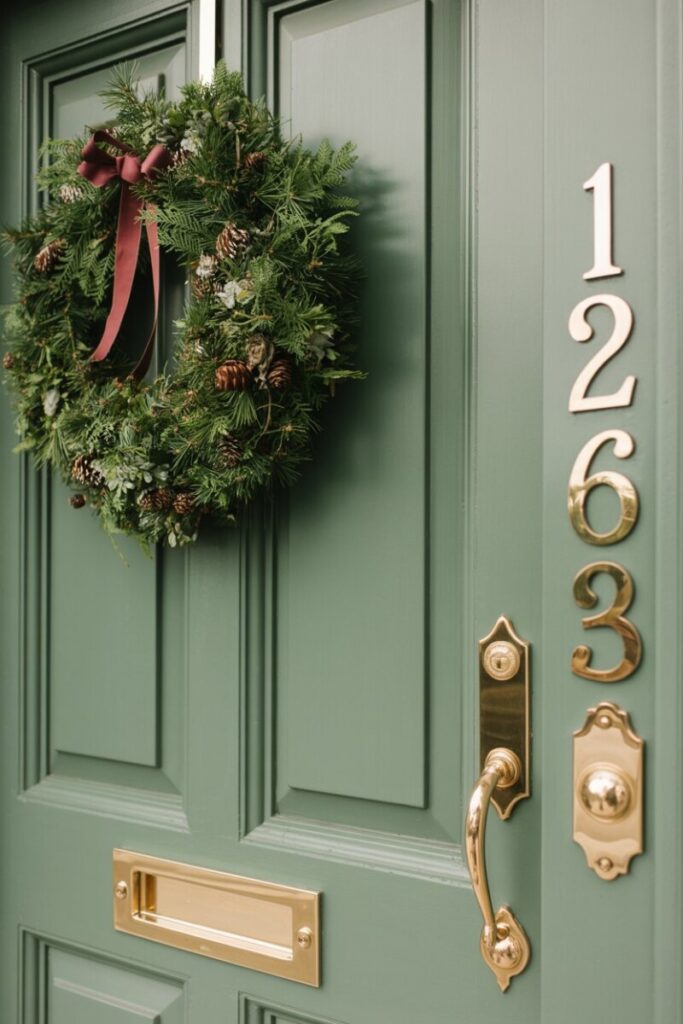
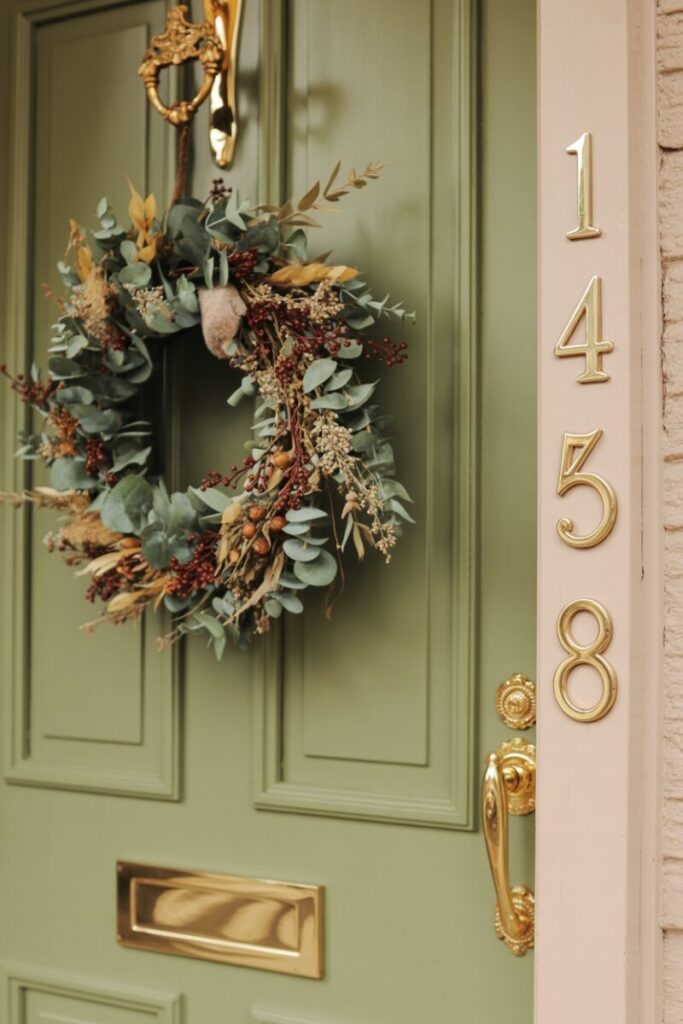
Your front door hardware ideas should echo the color’s mood: warm brass with navy or green, matte black with charcoal or white, polished nickel with aubergine, oil-rubbed bronze with earth tones. House numbers, mailbox, porch light, and doormat should feel like a deliberate ensemble, not leftovers. Seasonal wreaths and planters are your rotating “accessories” — let them lean into the door color rather than fight it.
Paint Type, Finish & Maintenance: Getting It to Last
The best paint for front doors isn’t the most expensive can on the shelf — it’s the one formulated for the job. Here’s the short spec sheet:
- Paint type: 100% acrylic latex exterior enamel (or a high-quality alkyd/oil-modified hybrid for ultra-smooth finish). Top-performing lines include Benjamin Moore Aura Grand Entrance, Sherwin-Williams Emerald Urethane Trim, and Behr Marquee Exterior.
- Finish: Semi-gloss for traditional/colonial homes and high-traffic families; satin for modern, farmhouse, or low-sheen 2026 looks. Avoid flat/matte on doors — it marks too easily.
- Primer: If you’re painting over bare wood, a previously stained surface, or switching from a dark color to light (or vice versa), use a bonding exterior primer. Skipping primer is the #1 reason paint peels early.
- Prep: Remove the door if possible (easier to paint flat), take off all hardware, sand with 120–150 grit, clean with TSP substitute, and let dry fully. Two thin coats beat one thick coat every time.
- Maintenance: A quick wipe-down each season with a damp cloth, plus a re-coat every 3–5 years (sooner on south/west-facing doors with heavy sun), keeps the color looking fresh.
Front Door Color Trends 2026: Inspiration & Winning Combos
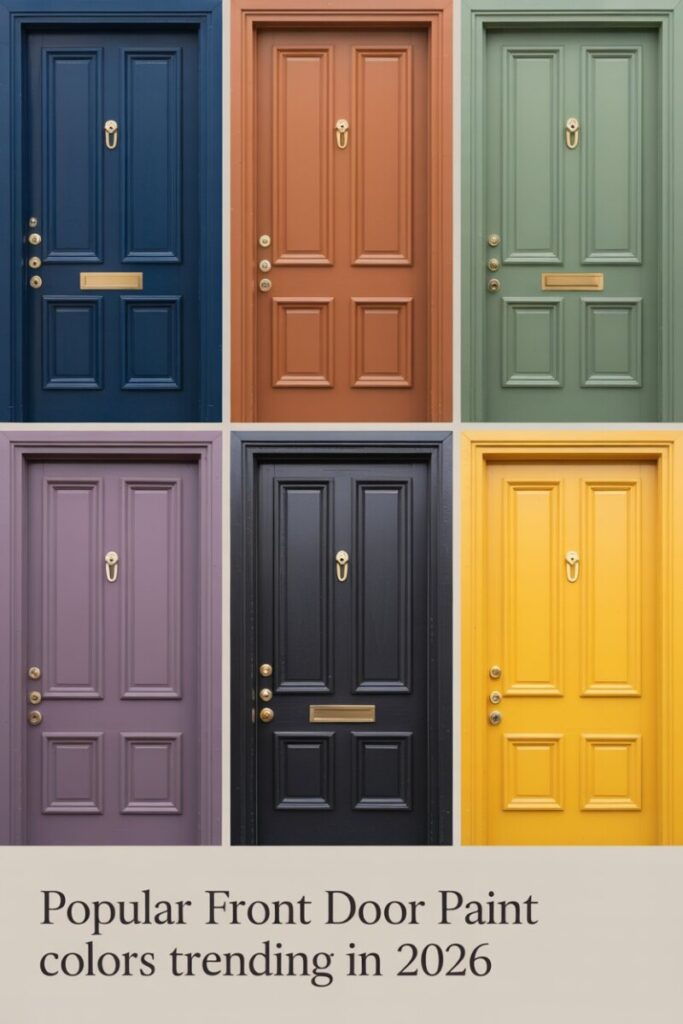
If you want a curated starting point, these combinations are trending strongly with designers this year and have strong resale performance:
- Classic black + brass hardware + crisp white trim → timeless on almost every style
- Deep navy + warm brass + cream siding → the most universally liked blue direction
- Warm eucalyptus or olive green + bronze + stone accents → 2026’s headline hue, especially on Craftsman and farmhouse front door colors schemes
- Aubergine/plum + polished nickel + white or light gray siding → the unexpected, elegant pick
- Burnt terracotta + black hardware + stucco or brick → warm, earthy, welcoming
- Sunny yellow + oil-rubbed bronze + white clapboard → cheerful cottages and bungalows
- Charcoal gray + matte black hardware + any light exterior → modern alternative to pure black
- Stained wood (warm walnut or white oak tone) + black hardware → rising 2026 favorite for contemporary and modern-farmhouse homes
Where to find more front door paint colors inspiration
- Pinterest boards — search “front door makeover 2026” for real before/afters
- Brand visualizer tools: Sherwin-Williams ColorSnap, Benjamin Moore Personal Color Viewer, Behr’s Paint Your Place
- Paint brand “colors of the year” — Valspar’s 2026 Warm Eucalyptus is a strong signal of where the market is heading
Resale-Safe Picks & Your Final-Decision Checklist
If you plan to sell within 3–5 years, bias your choice toward buyer-friendly tones: black, slate blue, navy, deep olive, or warm charcoal. Zillow’s research consistently shows these hues add perceived value without polarizing. Save the aubergine or teal for a home you plan to stay in.
✅ Pre-paint checklist
- [ ] HOA rules reviewed and color (if required) pre-approved
- [ ] 3 test swatches painted on poster board, viewed in 4 lighting conditions
- [ ] Color harmonizes with roof, siding, brick/stone, and trim
- [ ] Hardware finish chosen and ordered
- [ ] Neighbors’ doors surveyed (so you complement, not clash)
- [ ] Exterior-grade, UV-resistant paint selected in semi-gloss or satin
- [ ] Primer on hand if changing tones dramatically or painting bare wood
- [ ] Maintenance plan noted (re-coat in 3–5 years)
- [ ] Seasonal decor and wreath palette considered
When every box is checked, you’re ready to paint — with confidence that your choice is welcoming, durable, and genuinely you.
Your Turn: Pick a Color, Grab a Brush
Repainting your front door is the rare home project that pays off in daily joy and measurable curb appeal. Start with a test swatch this weekend — it takes twenty minutes and removes all the guesswork. We’d love to see what you choose: drop a photo in the comments or tag us on Instagram with #MyWelcomeDoor.
👉 Download our free printable Front Door Color Checklist & 5-Color Palette Generator to take with you to the paint store — it walks you through every decision from sample to final coat. Or browse our curated gallery of [Best Exterior Paint Brands] to pick a line that’ll last for years.
Your home’s first impression is one Saturday afternoon away from being unforgettable.