
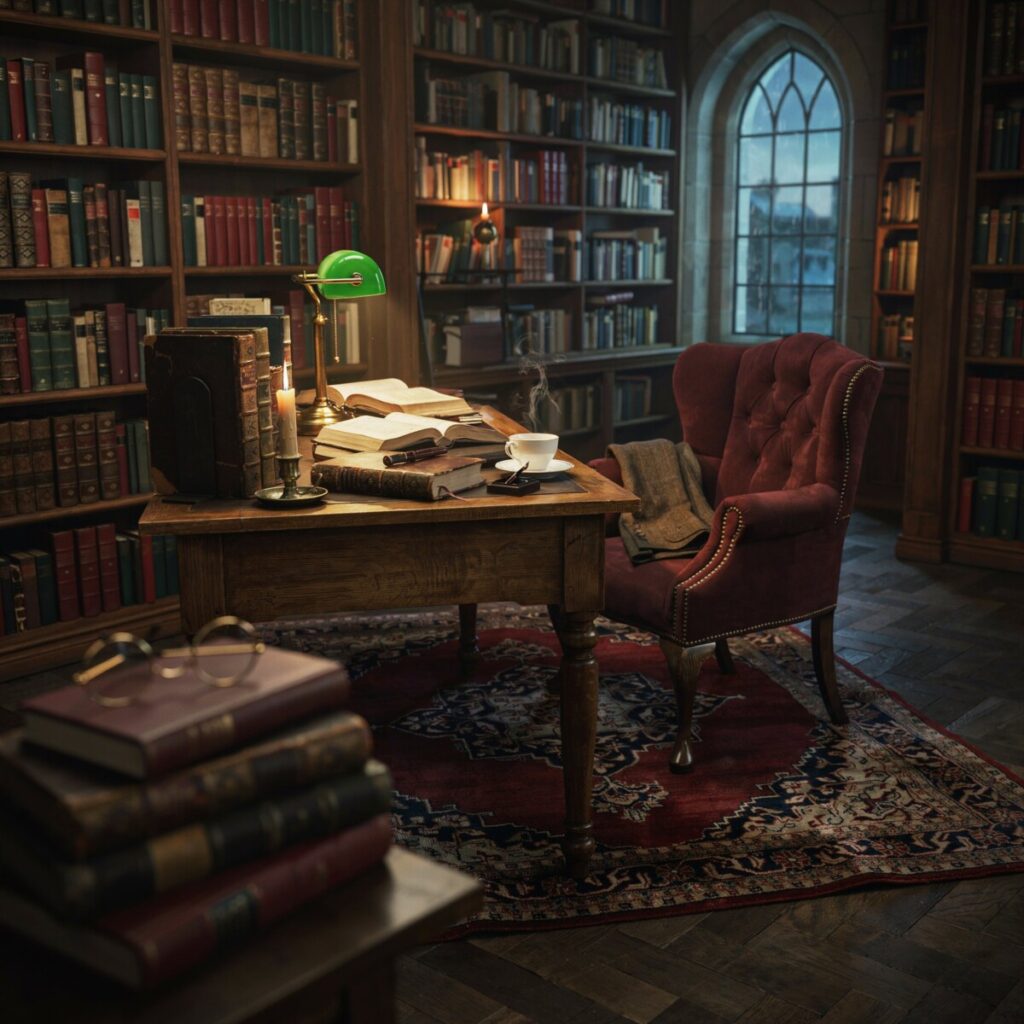
On a rainy afternoon, lamplight pools across a walnut desk stacked high with leather-bound books — the perfect beginning to a Dark Academia study. Dark academia decor is a design aesthetic that romanticizes the pursuit of knowledge. It blends classic literature, gothic-inspired home office elements, and vintage scholarly charm into a cohesive, moody space. It evokes the feeling of a centuries-old university library or a secret writing nook tucked away in a Victorian manor.
For US-based professionals, remote workers, and avid readers, a home office shouldn’t just be a place to answer emails. It should be a sanctuary that inspires deep focus and creativity. A dark academia room offers exactly that. By surrounding yourself with rich textures, warm lighting, and intellectual artifacts, you cultivate an environment that naturally encourages concentration and reflection. Whether you are writing a novel, studying for a degree, or simply escaping into a good book, moody study decor transforms mundane tasks into romantic, scholarly rituals. This aesthetic proves that a workspace can be deeply functional while remaining steeped in history and atmosphere.
Origins and Aesthetic Principles
To truly master this literary aesthetic, it helps to understand its roots. The Dark Academia movement draws heavy inspiration from prestigious European universities like Oxford and Cambridge. It also leans into classic literature and gothic fiction. Think of the hallowed halls of Hogwarts, the brooding moors of Wuthering Heights, or the ivy-covered brick facades of New England liberal arts colleges. It is an aesthetic that celebrates the romanticism of learning, poetry, and the arts.
At its core, a dark academia study relies on several foundational principles. First, it champions a deeply moody color palette that feels intimate and grounded. Second, it emphasizes natural textures and tactile fabrics. Think heavy wool throws, worn leather, and crisp linen. Third, layered lighting is absolutely essential. A single overhead light will ruin the mood. Instead, you need a symphony of warm, dimmable lamps, sconces, and candles.
Vintage or vintage-inspired pieces form the backbone of this style. Rather than sleek, modern minimalism, dark academia embraces the patina of time. Curated book displays act as both functional storage and primary decor. Meanwhile, classical artwork and architectural salvage add historical weight to the room.
Furthermore, this design style naturally overlaps with sustainable and secondhand sourcing. You don’t need to buy brand-new furniture to achieve the look. In fact, thrifted decor ideas and antique finds often look far more authentic than mass-produced replicas. Hunting for sustainable vintage furniture not only reduces your carbon footprint. It also ensures your dark academia bedroom/study ideas are entirely unique to your personal history and taste.
Color Palettes and Materials
The foundation of any successful dark academia room lies in its deep color palettes. You want hues that absorb light and create a cozy, enveloping atmosphere. Rich oxblood, deep forest green, midnight navy, and charcoal gray are excellent choices for walls or large furniture pieces. Deep brown and warm ochre serve as perfect grounding accent colors. Color psychology plays a massive role in moody interior design. Deep greens and blues naturally lower the heart rate and promote concentration, making them ideal for deep work.
However, a moody interior design scheme shouldn’t feel like a cave. You must balance these dark shades with lighter neutrals and metallic contrasts. Ivory paper, parchment tones, warm brass, and antique gold provide necessary visual relief. They also catch the low light beautifully.
When selecting materials, lean heavily into natural, historic elements. Dark woods like walnut, mahogany, and oak are non-negotiable for desks and shelving. Upholstery should feature supple leather, crushed velvet, breathable linen, or heavy wool. Accents in aged metal, tarnished brass, and veined marble add a layer of sophisticated antiquity.
If you are painting your study, the finish matters just as much as the color. Opt for an eggshell finish on the walls to provide a subtle, velvety depth without being high-gloss. Use a matte finish for the trim and ceiling to create a seamless, historic feel. Worried about dark colors shrinking your space? Balance the moody walls with lighter wood flooring, strategically placed mirrors, and ample task lighting to keep the room feeling open.
Key Furniture and Decor Pieces
Curating the right dark academia furniture requires an eye for character and craftsmanship. The undisputed centerpiece of your study is a statement desk. Look for solid wood options with turned legs or a rugged steel-and-wood industrial design. Pair this with a high-back leather desk chair that offers ergonomic support while looking suitably distinguished.
Storage is equally important. An antique bookcase, preferably one that reaches the ceiling or features a rolling library ladder, is the ultimate flex for this aesthetic. If floor space is limited, a vintage side table or a repurposed wooden credenza provides excellent hidden storage for office supplies and files.
Lighting sets the stage. A classic brass banker’s lamp on your desk is an iconic staple of vintage study decor. Supplement this with adjustable brass task lamps, wall sconces flanking your reading chair, and clustered pillar candles for a soft, flickering glow.
Accessories breathe life into the literary aesthetic. Place a vintage globe or framed antique maps on a side table. Hang framed botanical prints, classical portraits, or architectural sketches in ornate gold frames. A vintage typewriter makes a stunning focal point, while heavy brass bookends and a winding antique clock add authentic scholarly charm.
Not everyone has the budget or space for massive antiques. Fortunately, there are brilliant small-space and budget alternatives. Apply peel-and-stick wood veneers to modern flat-pack desks to instantly age them. Thrifted dressers can be repurposed as credenzas with a fresh coat of dark stain or paint. Swap out modern hardware for vintage brass pulls, and use faux-leather slipcovers on dining chairs to create a cozy reading seat.
When it comes to shopping, cast a wide net. Local antique shops, estate sales, and thrift stores are goldmines for authentic pieces. Estate sales are particularly wonderful for finding heavy, solid-wood pieces that have stood the test of time. Online marketplaces like Etsy, Chairish, and Facebook Marketplace are excellent for finding specific vintage items. For reliable reproductions or budget-friendly basics, Wayfair and Target offer surprisingly good options that fit the moody study decor vibe.
Styling and Arrangement Tips
Once you have your furniture, knowing how to style bookshelves and arrange your room is crucial. Books are your primary decor, so display them intentionally. You can arrange them by color for a curated, designer look. Alternatively, mix horizontal and vertical stacks to create visual interest. Leave some negative space to display small artifacts like a magnifying glass or a piece of marble.
Layering is the secret to achieving those cozy study ideas. Start with a vintage-inspired Persian or Oriental rug over hardwood floors to anchor the space. Drape heavy velvet throws and wool pillows over your seating areas. Use large, leather-bound books as risers to elevate smaller decor items on your desk or credenza.
Every dark academia study needs a dedicated reading nook. Position a comfortable armchair near a window or in a corner. Add a small side table, a dedicated reading lamp, and a textured throw blanket. This creates a distinct zone for reading that separates leisure from active desk work.
“A well-styled desk should feel like a scholar’s sanctuary, not a chaotic command center.”
When styling your actual workspace, practice curated clutter. Limit your desktop to daily essentials: a leather blotter, a pen holder, and your current reading material. Introduce a touch of nature with low-light tolerant plants like a snake plant or a trailing pothos in a terra-cotta pot. Finally, engage the senses. Scent is powerful for focus; use a reed diffuser or candle with notes of leather, cedarwood, old paper, or pipe tobacco.
Lighting strategy must balance productivity and ambiance. Use bright, adjustable task lighting for reading and writing to prevent eye strain. When you transition to relaxing or brainstorming, switch to dimmable ambient light from sconces or lamps to enhance the gothic-inspired home office atmosphere.
“True dark academia relies on layered lighting; never rely on a single overhead fixture.”
The Ultimate Dark Academia Study Checklist
- Anchor with Wood: Ensure your primary desk or shelving is made of dark, natural wood.
- Layer the Light: Combine one overhead fixture with at least three localized lamps or candle groups.
- Add Tactile Textures: Drape a heavy wool throw or velvet pillow over your seating area.
- Curate the Clutter: Limit desk accessories to beautiful, functional items like brass trays and leather blotters.
- Engage the Senses: Introduce a woodsy, leather, or old-paper scent via a diffuser or candle.
Styling for Different Study Sizes and Types
Not everyone has a sprawling Victorian mansion, but the literary aesthetic adapts beautifully to various footprints. For a small apartment study, vertical space is your best friend. Use tall, narrow shelving units to draw the eye upward. A wall-mounted folding desk or a compact secretary desk keeps the floor plan open. Strategically place a large, ornate mirror opposite a window to reflect natural light. This makes the dark color palette feel expansive rather than oppressive. Use lighter accent colors, like cream and brass, to balance the deep wall hues.
In a shared home office or multi-use room, creating distinct zones is vital. Use a consistent color palette throughout the space to unify the design. However, rely on furniture placement to define areas. A vintage folding screen or a tall, open-back bookcase can act as a subtle room divider. This ensures both the workspace and the adjacent living area feel cohesive without bleeding into one another.
If you are blessed with a large study or a dedicated library room, you have the freedom to go grand. Install floor-to-ceiling custom shelving with a rolling library ladder. Anchor the room with a massive, heavily patterned statement rug. Create a sprawling gallery wall featuring framed classical art, vintage bookplates, and antique mirrors. In a large space, grouping furniture into distinct conversational or reading clusters prevents the room from feeling empty. This echoes the grand halls of historic estates.
Curating a Literary Mood
Decor only gets you halfway there; the true magic of a dark academia study lies in the atmosphere you cultivate. Curate your book collection to reflect your intellectual passions. Display your favorite classic novels, poetry collections, and heavy art history tomes prominently. Intersperse these with personal touches like framed handwritten notes, vintage postcards, or a favorite poetic quote typed on a card.
“The most authentic dark academia rooms are filled with the evidence of a life spent reading and writing.”
Integrate daily study rituals to make the space feel lived-in and cherished. Set up a dedicated tea or coffee station on a vintage silver tray. Keep a leather-bound journal open on your desk alongside analog tools like a fountain pen, wax seal kit, or a brass magnifying glass. When you sit down to work, put on a curated playlist of classical music, dark cello sonatas, or ambient rain sounds. These sensory details bridge the gap between a beautifully decorated room and a truly immersive literary lifestyle.
Maintenance and Sustainability Tips
Maintaining a moody, vintage-inspired space requires a bit of dedication. Regularly dust your bookshelves using a microfiber cloth to protect your books and artifacts. Condition your leather desk chair and desktop accessories every few months to prevent cracking and maintain that rich patina. If you use real candles for ambiance, always practice safe burning habits. Trim the wicks regularly to avoid soot staining your walls or ceiling.
Embracing this aesthetic is also an opportunity to champion sustainability. The most authentic dark academia furniture isn’t bought new; it is rescued. Prioritize thrifted decor ideas and estate sale finds over fast furniture. Learn basic restoration skills to sand and refinish damaged wood rather than throwing pieces away. Invest in long-lasting, high-quality textiles that will age gracefully. Finally, look to your own family history. Repurposing inherited heirlooms, like a grandfather’s old desk or a vintage globe, adds unmatched soul and sustainable vintage furniture to your scholarly sanctuary.
Closing
Creating a dark academia study is about more than just following a design trend. It is about crafting a deeply personal sanctuary that blends moody atmosphere, focused functionality, and timeless style. By embracing deep hues, vintage textures, and literary artifacts, you build a space that invites you to sit down, open a book, and lose yourself in thought.
Ready to transform your home office? Subscribe to our newsletter below to download our free, printable Dark Academia Room Checklist. Share your own cozy study ideas and progress photos with us on social media using the hashtag #MyScholarlySanctuary!