
When late-afternoon light pours across a linen sofa and lands on a low reclaimed-wood coffee table, a room can feel quietly curated without fuss. Organic modern decor pairs raw, tactile materials with soft accent colors to create spaces that feel both contemporary and naturally warm. This guide shows simple, budget-friendly ways to balance rougher textures—like honed stone and rattan—with muted hues so your rooms look inviting, modern, and timeless.
Whether you are updating a sprawling living area or refreshing a cozy bedroom, mastering this balance is the secret to a home that feels effortlessly stylish. You do not need a massive renovation budget or a professional design degree to achieve this look. By understanding how to layer natural materials and introduce gentle pops of color, you can transform your space into a serene retreat. Let us explore how to bring this beautiful, grounded aesthetic into your own home.
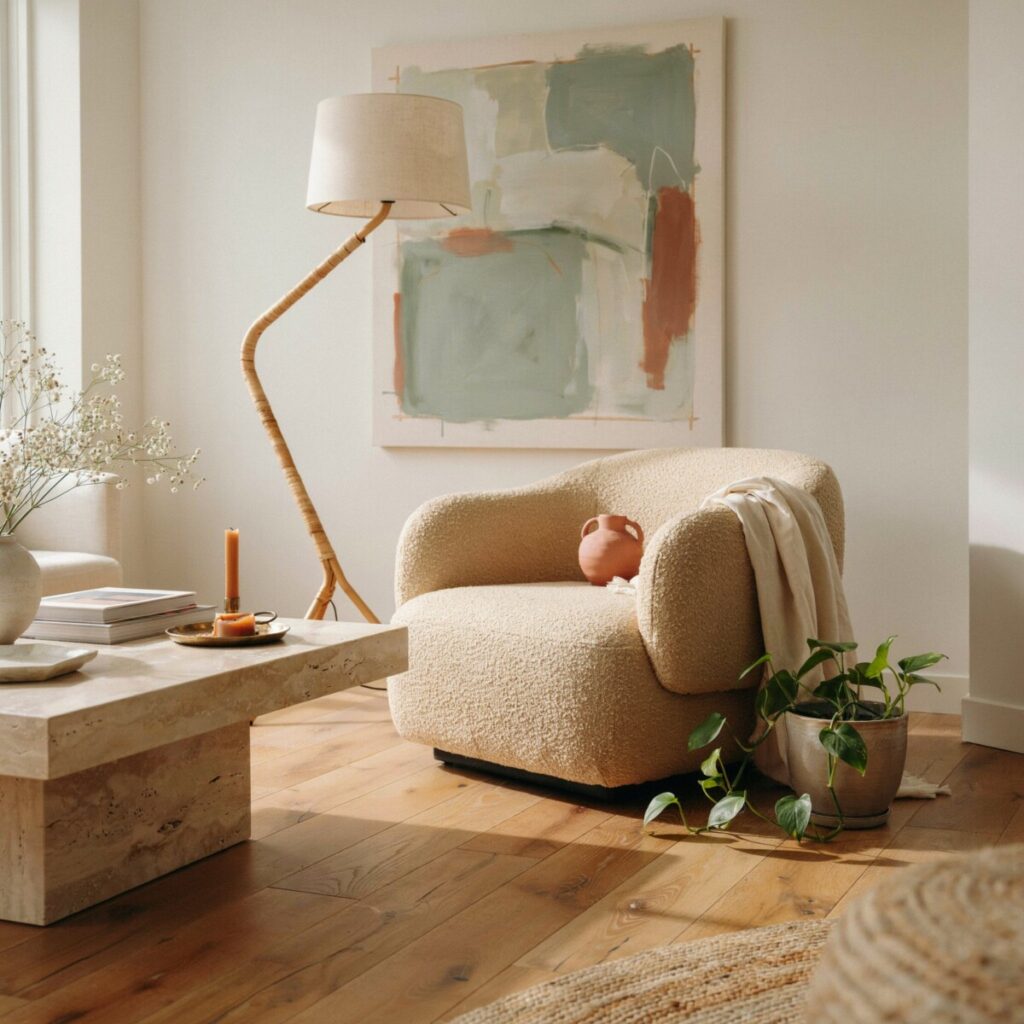
What is Organic Modern Decor?
At its core, organic modern decor is a design philosophy that marries the sleek, uncluttered lines of contemporary design with the raw, unrefined beauty of the natural world. It is the sweet spot where minimalist aesthetics meet tactile warmth. The style relies heavily on clean architectural lines, a neutral color palette, and an abundance of natural materials. Unlike stark, ultra-modern spaces that can feel cold or clinical, or a purely modern rustic cabin that feels overly heavy, organic modern interiors prioritize comfort and livability.
The foundation of this style is a deep connection to nature, often referred to as biophilic design. It brings the outdoors in, not just through potted plants, but through the very bones of the room. You will see a heavy reliance on tactile textures that invite you to touch and feel, creating a sensory experience that grounds the space.
Historically, this trend evolved as a natural progression of mid-century modern design, blended with the cozy, functional warmth of Scandinavian interiors and the nature-centric focus of biophilic design. It rejects the overly polished, high-gloss finishes of the early 2000s in favor of authenticity. Imperfections are celebrated here. A knotted wood grain or a slightly uneven plaster wall finish is not a flaw; it is a feature. This approach results in a home that feels minimalist yet warm, offering a calming sanctuary from the chaotic, highly stimulated outside world.
Why Raw Textures and Soft Accent Colors Work Together
The magic of organic modern decor lies in the deliberate contrast between raw textures and soft accent colors. Raw textures—such as the deep grain of reclaimed wood, the cool matte surface of concrete, or the woven intricacy of rattan—provide visual weight and anchor a room. They give a space its structural integrity and earthy foundation. However, relying on these elements alone can make a room feel heavy or overly dated.
This is where soft accent colors step in to save the day. Muted hues like blush, sage green, powder blue, and dusty terracotta introduce lightness, airiness, and warmth. They soften the hard edges of raw materials, creating a perfect visual and tactile balance. This interplay prevents the space from feeling like a cave or a sterile gallery, striking a chord that is both grounded and uplifting.
The benefits of this combination extend far beyond aesthetics. It creates depth and dimension, making rooms feel more expansive and layered. It also ensures your textured home decor is resilient to fleeting trend shifts, as both natural textures and muted tones possess a timeless quality.
Psychologically, this balance profoundly impacts how we feel in a space. The raw textures make us feel grounded, secure, and connected to the earth, while the soft accent colors promote relaxation, lower stress, and evoke a sense of gentle optimism. Together, they cultivate an environment that is inherently calming and deeply welcoming.
Key Materials and Textures to Use
To achieve this look, you need to curate a thoughtful mix of materials. Here are the key textures to incorporate into your organic modern home:
- Reclaimed Wood and Natural Finishes: Reclaimed wood furniture brings instant history and warmth. Use it for statement dining tables, bed frames, or floating shelves. Opt for matte or oiled finishes rather than high-gloss polyurethanes. Maintenance: Dust regularly and use a dedicated wood oil annually to keep the grain nourished.
- Honed Stone and Concrete: Honed marble, travertine, or raw concrete offer a cool, solid contrast to warm woods. Use them for kitchen countertops, bathroom vanities, or even large decorative trays. Maintenance: Seal natural stone annually to prevent staining, and clean concrete with pH-neutral cleaners.
- Plaster and Limewash: A plaster wall finish adds incredible depth and subtle movement to flat surfaces. It is perfect for living room accent walls or bedroom headboard walls. Maintenance: Simply dust gently; avoid harsh chemical cleaners that can strip the finish.
- Natural Textiles (Linen, Wool, Cotton): A linen sofa is a staple of this style, offering a relaxed, breathable feel. Layer it with chunky wool throws and crisp cotton pillows. Maintenance: Wash linens in cold water and embrace their natural wrinkles; spot clean wool to avoid shrinking.
- Rattan, Cork, and Woven Elements: Rattan decor and cork panels introduce lightweight, airy textures. Use rattan for dining chairs, pendant lights, or baskets. Cork is excellent for acoustic wall panels. Maintenance: Wipe with a barely damp cloth; avoid soaking woven fibers.
- Leather and Patina Metals: Choose leather with a natural, unfinished patina that ages beautifully over time. For metals, avoid shiny chrome and opt for brushed brass, blackened steel, or aged copper. These materials add a subtle, refined edge to the rustic elements.
Choosing Soft Accent Colors
Building your color palette requires a strategic approach. Start with a strong foundation of warm neutrals. Think creamy warm whites, soft taupes, and versatile greiges. These shades will cover the majority of your large surfaces, such as walls, large rugs, and primary upholstery.
Once your neutral base is established, introduce your muted accent colors. The key here is low saturation. You want colors that look like they have been dusted with a layer of gray or white. Excellent choices include muted terracotta, dusty rose, sage green, soft ochre, and powder blue. These hues provide visual interest without overwhelming the senses.
To maintain balance, apply the classic 60-30-10 rule. Let your warm neutrals dominate 60% of the room. Use your secondary textures and slightly deeper neutral tones for 30%. Reserve the remaining 10% for your soft accent colors. This ensures the accents truly pop without creating visual chaos.
Place these accent colors strategically. Use them in easily swappable items like throw pillows, ceramic vases, abstract art, or a single accent chair. This allows you to update the look seasonally without committing to permanent changes.
When pairing colors, look to nature for inspiration. Warm greige paired with sage green mimics a misty morning landscape. Raw oak paired with dusty rose echoes the soft beauty of a desert sunset. By keeping the color story cohesive and drawn from the natural world, your organic modern decor will always feel intentional and harmonious.
Practical Styling Steps — How to Balance Texture and Color
Transforming your space into an organic modern haven requires a deliberate styling process. Follow these actionable steps to perfectly balance texture and color:
Step 1: Lay a Neutral Foundation. Begin by painting your walls in a warm neutral and selecting large, foundational pieces—like your sofa or bed—in a subdued tone. This creates a quiet canvas for the rest of your design.
Step 2: Anchor with a Dominant Texture. Choose one strong, raw texture to ground the room. A large reclaimed wood dining table or a heavily textured wool area rug works perfectly. This establishes the earthy baseline of the space.
Step 3: Layer Complementary Textures. Once the anchor is in place, layer in contrasting tactile textures. If your anchor is smooth and cool (like stone), add warmth with woven rattan decor or a nubby linen sofa. The goal is to create a rich, varied tactile experience.
Step 4: Introduce Soft Color in Controlled Amounts. Bring in your muted accent colors through small, intentional decor items. Add a sage green throw blanket, a dusty rose ceramic vase, or a set of powder blue linen napkins.
Step 5: Repeat Accents for Cohesion. Do not let an accent color exist in just one spot. Repeat your soft hues at least two or three times around the room to create a cohesive visual flow that ties the space together.
Step 6: Embrace Negative Space. Organic modern design relies on breathing room. Do not over-style your surfaces. Leave empty space on shelves and walls to let the textures and colors stand out.
Mastering Scale and Contrast: Pay attention to the size of your items. Pair large, raw-surfaced pieces with smaller, delicate soft-color accents. For tactile layering, stack a smooth leather pillow on top of a chunky knit throw on your linen sofa.
Mixing Patterns: If you use patterns, keep them incredibly subtle. Think tone-on-tone geometrics or low-contrast organic prints that blend into the background rather than shouting for attention.
Lighting the Space: Lighting is crucial for highlighting textured home decor. Maximize natural light during the day. In the evening, use layered lighting—combining ambient, task, and accent lights. Choose warm LED bulbs (around 2700K) to cast a golden glow that enhances the natural grain of wood and the subtle variations in plaster walls.
Room Examples
Living Room:
When browsing living room decor ideas, look for pieces that ground the space. Anchor the room with a low-profile reclaimed-wood coffee table and a textured plaster wall finish behind the media console. Pair this with a relaxed, oversized linen sofa. Introduce life and softness through a mix of sage green and blush accent pillows, topped with a chunky, neutral wool throw.
Bedroom:
For bedroom decor ideas, focus on creating a serene retreat. Install a raw, live-edge wood headboard and dress the bed in crisp, warm white cotton-linen bedding. Add a soft ochre throw blanket at the foot of the bed and hang a woven rattan pendant light above the nightstand for a gentle, organic focal point.
Small Apartment:
When it comes to small apartment decorating, you must maximize every inch. Install a cork wall panel behind the sofa bed to add acoustic warmth and visual interest. Use woven rattan storage baskets to hide clutter, and place a vibrant yet muted powder-blue accent chair in the corner to add a pop of color without overwhelming the compact footprint.
Shopping and Budget Tips
Achieving sustainable home decor does not require an unlimited budget. When shopping, prioritize sourcing responsibly. Look for vintage or reclaimed pieces at local architectural salvage yards or estate sales. Support small-batch makers on platforms like Etsy for unique ceramic or textile accents. For budget-friendly options, look for high-quality replicas at major retailers, focusing on pieces made from real materials rather than plastic imitations.
Follow this simple three-step budget approach:
- Prioritize Anchors: Splurge on items you interact with daily and that define the room, such as a solid-wood dining table or a high-quality linen sofa.
- Thrift and Upcycle: Save money on secondary furniture like nightstands or side chairs by buying secondhand and refinishing them with natural oils or limewash.
- Use Textiles for Affordable Refresh: Invest in inexpensive throw pillows, blankets, and rugs to introduce your soft accent colors and layered textures. Textiles are the most cost-effective way to change the feel of a room seasonally.
Common Mistakes and How to Fix Them
Even with the best intentions, it is easy to misstep when designing an organic modern space. A common mistake is incorporating too many competing textures, which makes the room feel chaotic rather than curated. Another frequent error is using over-saturated accent colors that clash with the muted, earthy vibe. Ignoring scale by pairing tiny furniture with massive, heavy textures can also throw off the room’s proportions, while neglecting the maintenance of natural materials leads to a worn, dirty look.
Quick Fixes: If the room feels busy, remove one textured item to restore balance. If your accent colors feel too loud, swap them out for more neutralized, muted tones. Add one soft-color repeat elsewhere in the room to tie the look together. Finally, simplify your accessories and commit to a regular maintenance routine for your wood and stone to keep the space looking intentionally designed and beautifully cared for.
Conclusion
Creating an organic modern home is a journey of layering and refining. Start small this week by swapping out your throw pillows for textured linens or adding a single woven decor piece. We would love to see your progress! Try one change, snap a photo, and share it in the comments below, or share this article with a friend who is ready to refresh their space.