There’s a particular kind of quiet that feels expensive. Not the sterile silence of an empty showroom, but the hushed, intentional calm of a space where every surface has a reason to exist. That’s the feeling at the heart of the Acubi aesthetic — a design movement that’s quietly overtaking Pinterest boards, TikTok room tours, and the apartments of America’s most design-obsessed creatives.
Born from Korean streetwear culture and filtered through a lens of cyber-minimalism, the Acubi aesthetic translates into interiors as a masterclass in restraint: neutral grays form a meditative base, while chrome finishes, iridescent accents, and smart lighting inject just enough futuristic edge to keep the eye interested. It’s the design world’s answer to a perfectly curated capsule wardrobe — calming, versatile, and subtly sci-fi.
If you’ve been craving a home that feels both grounded and forward-looking — a space that photographs beautifully, lives comfortably, and doesn’t demand a gut renovation — you’re in the right place. Ahead, we’ll break down the Acubi color philosophy, walk through room-by-room applications, share renter-friendly hacks, and point you toward real products at real prices from US retailers. Let’s build your future-calm sanctuary.
What is the Acubi Aesthetic?
The word “Acubi” (아쿠비) traces back to a Korean fashion label, Acubi Club, and the broader Seoul streetwear scene that championed layered, gender-neutral styling in muted, cool tones. On the fashion side, it blends Y2K silhouettes, subversive basics, and soft grunge into something quietly rebellious. Translated into interior design, those same principles become cyber-minimalism — a visual language that feels like stepping into the apartment of a character in a near-future film.
The Acubi interior borrows from several design DNA strands:
- Minimalism’s discipline — pared-back forms, zero clutter, intentional negative space
- Japandi warmth — natural textures and warmth to prevent coldness
- Cyberpunk’s edge — metallic finishes, LED lighting, tech-forward surfaces
- Techwear’s utility — modular furniture, concealed storage, functional design
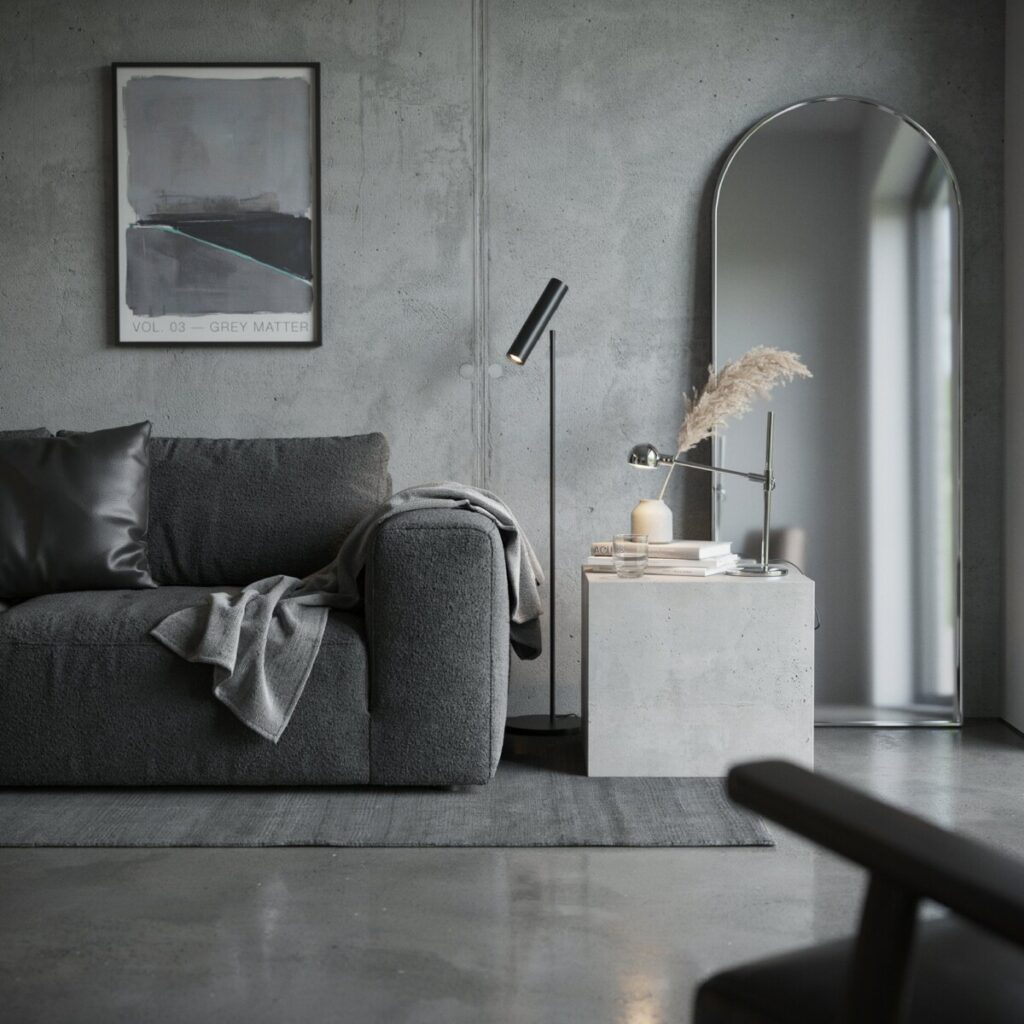
The result is a space that feels slightly futuristic without crossing into theme-park territory. Think matte gray walls, a brushed-steel coffee table, a single holographic art print catching the afternoon light — and nothing more than that.
Moodboard in a sentence: Imagine a gallery in 2040 — concrete floors, cool-white LED panels, one sculptural bouclé chair, and a chrome lamp that looks like it was 3D-printed on a space station.
Core principles include the deliberate balance of warmth and coolness, a preference for texture over pattern, and an obsession with layered, adjustable lighting. Unlike maximalist trends that ask you to add more, Acubi asks you to edit relentlessly — and then make the remaining pieces count.
The Core Palette: Neutral Grays and Cyber-Chic Tones
The Acubi color philosophy can be summarized in one rule: the base whispers, the accents hum.
The Grayscale Foundation
Gray is the soul of this aesthetic — but not all grays are created equal. Understanding the difference between cool gray and warm gray is the single most important decision you’ll make.
| Type | Undertone | Best For | Example Hex |
|---|---|---|---|
| Cool Gray | Blue-ish, steely | North-facing rooms, tech-heavy spaces, modern condos | #A6AEB6 |
| Warm Gray | Taupe/beige undertone | South-facing rooms, bedrooms, spaces that need coziness | #B6AFA7 |
Pro tip: If your room gets tons of natural light, a cool gray will feel refreshingly crisp. If it’s a basement apartment or a bedroom with blackout shades, lean warm to prevent a clinical, hospital-hallway vibe.
The Accent Strategy
Here’s where the “cyber-chic” comes alive. Acubi palettes use color the way a film director uses a lens flare — sparingly and with maximum impact.
Recommended accent tones:
- Iridescent Teal (
#2FD7D9) — holographic vases, LED glow behind a monitor - Violet-Blue — a single throw pillow, digital art on a smart frame
- Neon Coral — used very sparingly; think one art print, one neon sign
- Chrome / Silver — not technically a color, but a finish that reads as a neutral in this aesthetic
🎨 The 70/20/10 Rule for Acubi Interiors:
- 70–80% neutral grays (walls, large furniture, flooring)
- 15–25% textured metals and fabrics (chrome, bouclé, brushed cotton)
- 5–10% vibrant cyber-chic accents (iridescent decor, neon, holographic pieces)
This formula prevents the space from feeling either sterile or chaotic. The grays provide the calm; the textures provide the depth; the accents provide the personality.
Materials, Textures, and Finishes That Define Acubi
A room painted entirely in gray can fall dangerously flat. The antidote is rich, layered materiality — and Acubi interiors lean hard into tactile contrast.
Textiles to Reach For
- Bouclé — The looped, nubby texture of a bouclé sofa or accent chair instantly warms up a gray room. It photographs beautifully and invites touch.
- Brushed Cotton & Linen — Matte, lived-in, slightly rumpled. Ideal for bedding, curtains, and slipcovers.
- Vegan Leather — Sleek, slightly reflective, cruelty-free — perfect for desk chairs, ottomans, or accent trays.
- Wool Felt — Use in acoustic panels, desk mats, or decorative baskets for a matte, sound-dampening quality.
Finishes That Read “Cyber-Chic”
- Satin Chrome — Less mirror-bright than polished chrome; softer and more modern. Ideal for lamp bases, drawer pulls, and table legs.
- Anodized Aluminum — That slightly iridescent, gunmetal-ish quality you see on high-end tech products. Use in monitor stands, shelving brackets, or picture frames.
- Pearlescent Glaze — A subtle opalescent quality on ceramics or wall art that shifts color as you move past it.
- Matte Concrete — Whether in planters, side tables, or wall panels, concrete grounds the cyber elements with raw, industrial earthiness.
Lighting as a Material
In the Acubi aesthetic, light isn’t just functional — it’s a design element.
- LED strip lighting behind headboards, under floating shelves, or along the toe-kick of a media console adds architectural drama. Aim for a color temperature between 4000K–5000K (cool white) for that gallery-future feel.
- Smart bulbs (Philips Hue, Govee, Nanoleaf) let you shift color temperature throughout the day — cooler for work hours, warmer for evenings.
- Projection lamps that cast slow-moving clouds, aurora effects, or geometric patterns onto a blank wall turn any surface into living art.
💡 Avoid warm fairy lights or multicolor RGB chaos — these clash with Acubi’s clean, studio-grade vibe. Think “professional atelier,” not “college dorm.”
How to Design an Acubi Living Room, Bedroom, and Workspace
Theory is fun, but let’s get practical. Here’s how to apply the Acubi aesthetic room by room — with specific furniture picks, layout logic, and renter-friendly workarounds.
Living Room Ideas
Anchor piece: A gray modular sofa in bouclé or brushed cotton. Modular configurations let you adapt to any apartment size, from a 500-square-foot studio to a sprawling open-plan loft.
Sculptural coffee table: Go for glass with chrome legs, or a matte concrete block with a single metallic edge. The table should feel like a piece of sculpture — not storage.
Accent moment: One holographic art print, a single iridescent vase on the console, or a neon wall piece spelling out a single word or abstract shape.
Lighting layers:
- Overhead: flush-mount LED panel (4000K)
- Task: a satin-chrome arc floor lamp beside the sofa
- Accent: LED strip behind the TV or media console
Renter hack: Swap builder-grade light fixtures with plug-in sconces. Use peel-and-stick metallic wallpaper on a single accent wall — it removes cleanly and instantly transforms the room.
Bedroom Ideas
Low platform bed: Japanese-inspired, close to the ground, in light gray oak or matte white. The low profile reinforces Acubi’s clean horizontal lines.
Layered bedding: Start with crisp white percale sheets, add a warm gray duvet, and finish with a single charcoal or silver throw at the foot of the bed. Resist the urge to pile on decorative pillows — one or two is enough.
Accent wall: Apply peel-and-stick metallic wallpaper in a brushed-silver or pearlescent finish behind the headboard. Alternatively, mount a projection lamp that casts slow-moving light patterns onto the ceiling.
Smart blackout shades: A must-have. Motorized blackout shades (available from IKEA, Serena by Lutron, or Graywind on Amazon) let you control light with a tap — and they reinforce the tech-forward mood.
For small bedrooms: Use a wall-mounted floating nightstand in chrome or matte gray to free up floor space, and install a slim LED reading light directly above the bed.
Workspace Ideas
Matte desk: A clean-lined desk in warm gray laminate or concrete-look finish. Avoid high-gloss surfaces — they feel corporate.
Monitor setup: An anodized aluminum monitor riser with subtle cable-management channels underneath. Route all cords through a single cable tray mounted beneath the desk — visible cables are the antithesis of Acubi.
Task lighting: An adjustable-arm desk lamp with color-temperature control (BenQ ScreenBar or Xiaomi LED Desk Lamp 1S are excellent, affordable options). Cooler light for focused work, warmer light for evening wind-down.
Tech as decor: Mount smart speakers on small chrome brackets. Frame a tablet displaying generative digital art. Use a decorative cable sleeve in gray fabric to bundle and disguise power strips.
Small-space hack: If your workspace is a corner of your living room, use a slim console desk and a floating pegboard above it in matte gray to hang headphones, pens, and a small plant — functional and sculptural.
Styling Tips, Budget Swaps, and DIY Upgrades
You don’t need a designer’s budget to pull off this look. Here are the cheats that make the biggest visual impact for the least money.
Budget vs. Splurge Swaps:
| Category | Budget Pick | Splurge Pick |
|---|---|---|
| Sofa | IKEA FRIHETEN in gray (~$699) | CB2 Helix Acacia sectional (~$2,500+) |
| Coffee table | Wayfair chrome-and-glass (~$150) | West Elm sculptural concrete (~$800) |
| Accent lighting | Govee LED strips (~$30) | Nanoleaf Shapes panels (~$200) |
| Wall finish | Peel-and-stick metallic ($20–$40/roll) | Venetian plaster application ($$$) |
DIY Upgrades:
- Spray-paint an existing side table in satin chrome spray paint (Rust-Oleum Metallic, ~$7 a can). Let it cure for 48 hours for a durable, factory-like finish.
- Wrap old drawer pulls in metallic contact paper for an instant chrome upgrade.
- Turn a thrifted concrete planter into a lamp base by drilling a hole for a cord kit ($15 at any hardware store).
- Print a holographic art poster at a local print shop (~$15) and frame it in a slim aluminum frame from Target.
Styling cheats that read high-end:
- Limit your palette to three colors max per room.
- Use the “rule of three” for shelf styling: group objects in threes with varying heights.
- Keep visible surfaces at least 60% empty. Negative space is the design.
- Invest in one excellent light source rather than five mediocre ones.
🏷️ Thrift stores and Facebook Marketplace are goldmines for chrome-legged tables, concrete planters, and matte-gray ceramics. Acubi rewards the patient hunter.
Quick Shopping List: Where to Buy (US-Focused)
Here’s a starter kit of Acubi-approved pieces with approximate price ranges. All are available from major US retailers as of 2026.
| Item | Retailer | Price Range |
|---|---|---|
| Gray modular sofa (bouclé or linen) | IKEA, West Elm, CB2 | $500–$2,800 |
| Low-pile gray area rug (8×10) | Wayfair, Ruggable, Target | $80–$400 |
| LED accent strip lighting (smart, app-controlled) | Govee, Philips Hue (Amazon) | $25–$100 |
| Chrome or satin-metal side table | CB2, Urban Outfitters Home, World Market | $60–$350 |
| Holographic / iridescent art print | Etsy, Society6, local print shops | $15–$120 |
| Smart bulbs (color-temperature adjustable) | Philips Hue, Govee, Wyze (Amazon, Target) | $12–$50 each |
| Peel-and-stick metallic wallpaper | Target, Wayfair, Tempaper.com | $20–$60 per roll |
| Matte concrete planter or tray | West Elm, CB2, Etsy | $15–$90 |
Prices are approximate and reflect mid-2026 retail. Always check current stock and reviews before purchasing.
One Change, This Weekend
You don’t need to overhaul your entire home to embrace the Acubi aesthetic. Start with one room, one weekend, one swap. Paint a single wall in cool gray. Stick a strip of LED lighting behind your desk monitor. Replace one warm-white bulb with an adjustable smart bulb and set it to 4500K.
The Acubi aesthetic isn’t about perfection — it’s about intentionality. It’s the feeling of walking into your own home and exhaling.
→ Show us your space! Tag your before-and-afters with #AcubiHome on Instagram — we feature our favorites every Friday.
Got a question about a specific room, budget, or rental constraint? Drop a comment below — we read every one.