Walk into any room that feels alive, and chances are color is doing the heavy lifting. Whether it’s a sun-soaked kitchen with butter-yellow cabinets or a cozy bedroom layered in rich jewel-tone decor, colourful home decor has the power to shift your mood, define your style, and make even a rental feel like it’s truly yours.
If you’ve been scrolling Pinterest and bookmarking vibrant interiors but aren’t sure where to start, you’re not alone. Many of us default to safe neutrals—not because we don’t love color, but because we’re afraid of getting it wrong. The good news? Adding color to your home doesn’t require a designer’s budget or a contractor’s schedule. With a few smart choices and a basic understanding of color palette ideas, you can create a space that feels bold, balanced, and unmistakably you.
In this guide, we’ll walk through color theory basics, practical ways to introduce color at every budget level, trend-forward palettes for 2026, and a quick DIY project you can knock out in an afternoon. Let’s bring your walls—and your confidence—to life.
Why Colour Matters in Your Home
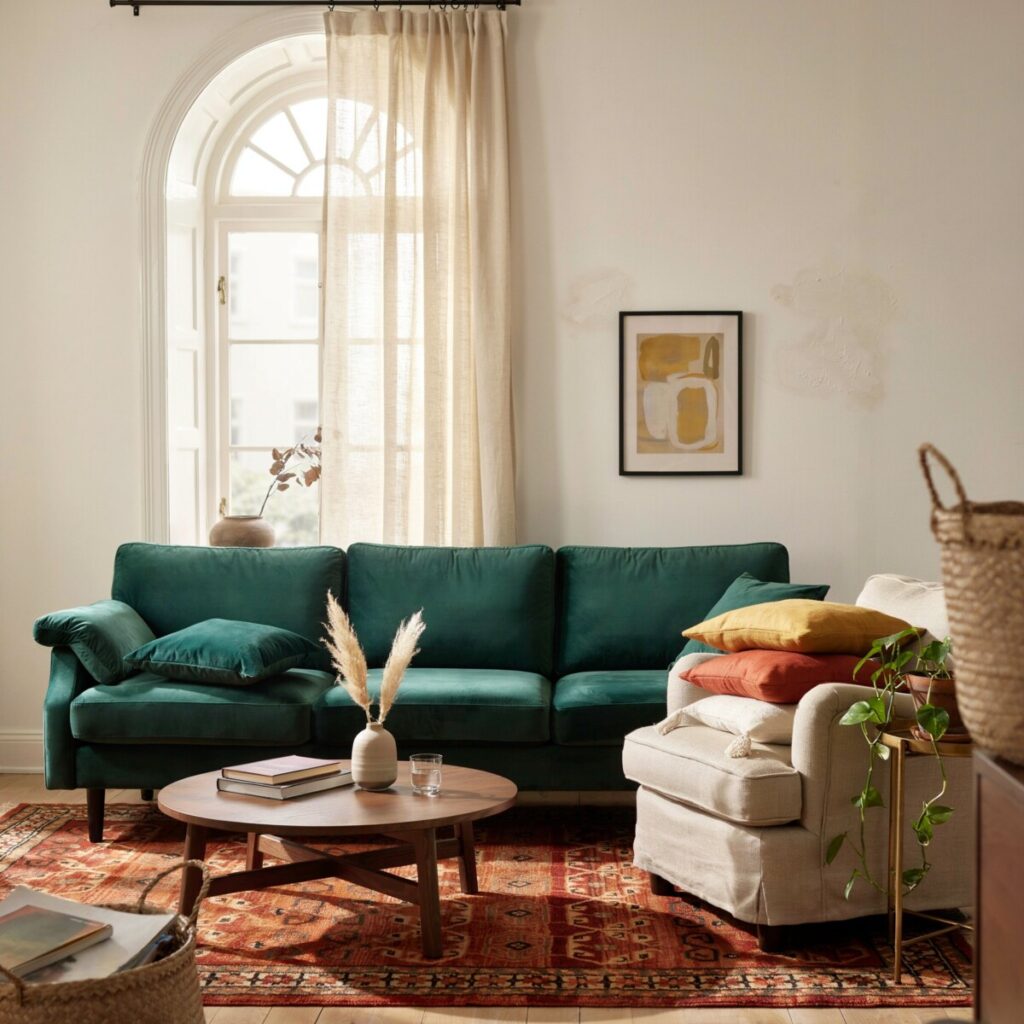
Color isn’t just decoration—it’s communication. Every shade you choose sends a signal about how a room should feel, and research in environmental psychology backs this up. Warm colors like terracotta, coral, and golden yellow tend to energize a space, making them ideal for kitchens, dining rooms, and social areas. Cool colors like sage green, dusty blue, and lavender promote calm and focus, perfect for bedrooms and home offices.
But the impact goes beyond mood. Color psychology in interiors also influences how we perceive the size and shape of a room. Light, cool tones can make a small room feel more open and airy, while deep, saturated hues can make a large, cavernous space feel intimate and cozy. This is especially useful if you’re working with small space color tips—strategic use of a bold accent wall or a saturated ceiling can actually draw the eye in a way that makes a cramped room feel more intentional rather than smaller.
Beyond function, there’s a deeply personal element. Your home is the one environment where you have total creative control. Choosing colors that resonate with you—whether that’s a moody indigo study or a cheerful citrus-toned breakfast nook—creates a space that supports your well-being every single day.
“People often ask me what color is ‘in.’ I tell them the best color is the one that makes you feel something when you walk in the door.” — Interior designer principle, widely cited in design circles
Colour Theory Basics for Everyday Decorating
You don’t need a fine arts degree to use color well, but a quick refresher on the fundamentals will save you from costly mistakes and give you the confidence to experiment.
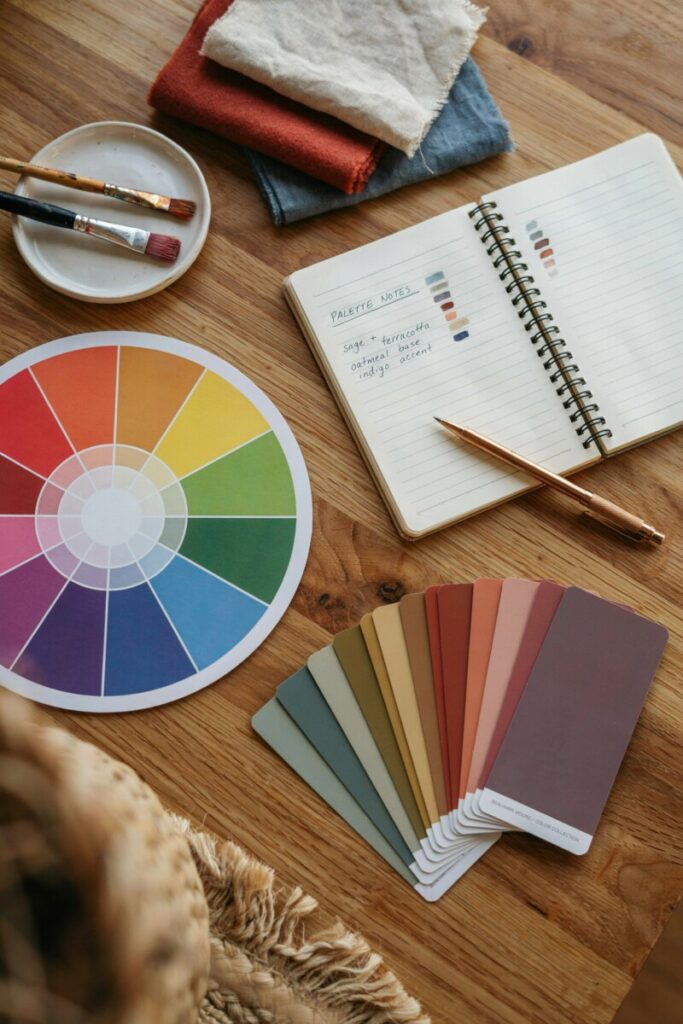
The Color Wheel at a Glance
- Primary colors: Red, blue, and yellow—the building blocks of every other hue.
- Secondary colors: Green, orange, and violet, created by mixing two primaries.
- Tertiary colors: The in-between shades like blue-green, red-orange, and yellow-green that give palettes depth and sophistication.
Warm vs. Cool, Saturation, and Contrast
Warm colors (reds, oranges, yellows) advance visually—they feel energetic and cozy. Cool colors (blues, greens, purples) recede—they feel spacious and restful. Understanding this helps you control how a room feels beyond just how it looks.
Saturation refers to intensity. A fully saturated cobalt blue makes a bold statement; a desaturated dusty blue feels softer and more muted. Mixing saturation levels within a palette—one bold anchor piece with several softer supporting tones—creates visual interest without chaos.
Contrast is about pairing colors that differ in value (light vs. dark). High contrast (think navy walls with crisp white trim) feels dramatic and modern. Low contrast (think beige on cream) feels serene and layered. Both work beautifully—just be intentional about which effect you want.
How Color Influences Mood and Perceived Space
| Goal | Strategy |
|---|---|
| Make a small room feel larger | Use cool, light colors on walls; keep trim slightly lighter |
| Make a large room feel cozier | Use warm, saturated colors; paint the ceiling a shade darker |
| Create a focal point | Apply a bold color to one accent wall or a single statement furniture piece |
| Promote relaxation | Lean into soft pastels, muted greens, and low-contrast palettes |
For a deeper dive on how different finishes affect color perception, see our beginner’s guide to paint finishes.
Practical Ways to Add Colour to Every Room
Now that you’ve got the theory, let’s talk execution. Here are the most impactful ways to bring color into your home—organized from biggest commitment to smallest.
1. Paint: The Highest-Impact, Lowest-Cost Tool
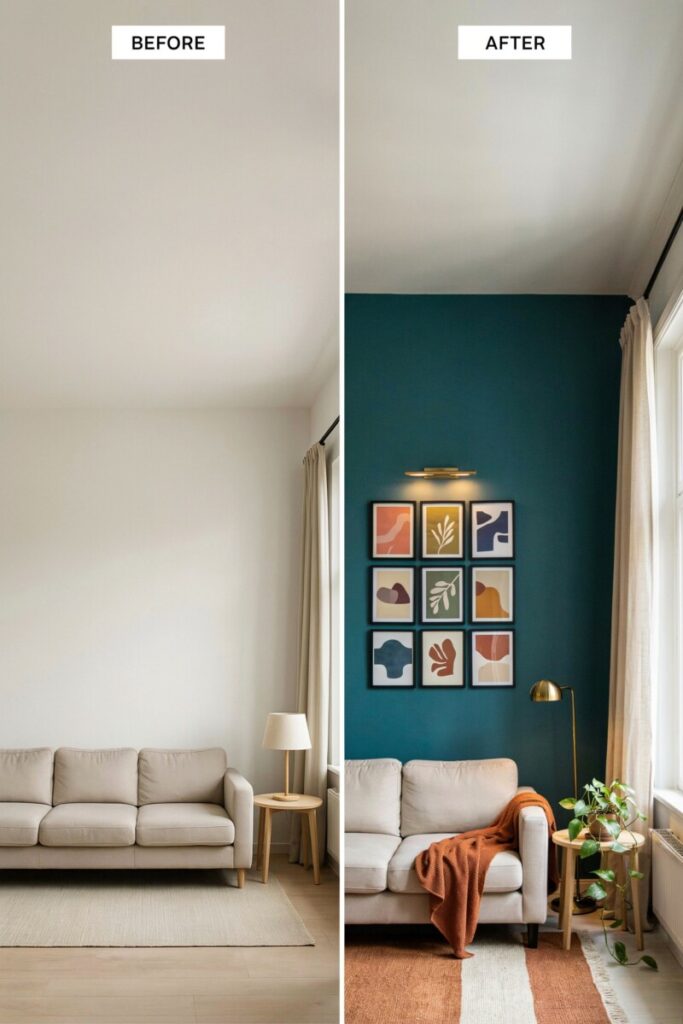
Paint is the single most transformative thing you can do to a room. A gallon of quality interior paint typically costs $40–$70 and can completely reinvent a space in a weekend.
- Accent wall ideas: Paint the wall behind your bed, sofa, or dining table a rich, contrasting color. Deep plum, warm terracotta, and forest green are trending for 2026.
- Ceilings: Don’t ignore the “fifth wall.” A pale sky blue ceiling in a bedroom or a moody charcoal in a dining room adds unexpected depth.
- Doors and trim: Painting interior doors a bold color (think navy, sage, or even a punchy coral) is a designer trick that adds character without overwhelming.
- Paint color trends for 2026 are leaning toward nature-inspired tones with warmth—mushroom, olive, clay, and soft mauve—so you’re unlikely to tire of them quickly.
2. Statement Furniture and Upholstery
If painting feels too permanent, let your furniture do the talking. A single statement furniture piece—a velvet armchair in sapphire blue, a mustard-yellow dining bench, or a reupholstered headboard in a lively print—anchors a room’s color story without requiring wall changes. Thrifted decor finds are perfect for this: an old wooden chair can be spray-painted or reupholstered for under $100.
3. Textiles: Rugs, Throw Pillows, and Curtains
Textiles are the easiest way to layer color and swap seasonally. A patterned area rug can introduce three or four colors at once and serve as your palette anchor. Layer throw pillows in varying sizes (20″, 18″, lumbar) and textures (velvet, linen, woven cotton) for a collected, effortless look. Curtains in a bold hue or botanical print frame windows dramatically—especially hung high and wide to maximize light and height.
4. Artwork and Gallery Walls
Art is where you can afford to be fearless. A gallery wall mixing colorful prints, photography, and even textile wall hangings adds personality and becomes a conversation piece. See our guide on how to hang art like a pro for spacing and layout tips.
5. Accessories and Small Accents
Bookshelves styled with colorful book spines, a bold ceramic vase, an enameled tray, or a set of vivid taper candles—these small touches add up. Colorful accessories are also the easiest to rotate with the seasons.
6. Plants and Natural Pops of Green
Never underestimate living greenery as a color element. A fiddle-leaf fig, trailing pothos, or a cluster of succulents on a windowsill adds a fresh, organic layer of color that no paint swatch can replicate.
7. Lighting and Color Temperature
The lightbulbs you choose dramatically affect how colors appear. Warm bulbs (2700K–3000K) enhance reds, oranges, and yellows. Cool bulbs (4000K–5000K) make blues and greens pop. For most living spaces, 2700K–3000K creates the most flattering, inviting atmosphere—especially important for pastel interiors and boho color palette schemes.
8. Small Spaces vs. Open Plans
Small space color tips: Stick to a tighter palette (2–3 colors) and use mirrors to bounce color around the room. A single bold element—like a colorful front door or a painted bookshelf nook—feels intentional rather than chaotic.
Large open plans: Use color to zone spaces. A warm terracotta dining area can transition into a cool sage living area, creating definition without walls.
Colour Schemes & Inspiration
Not sure where to start? Here are four foolproof color scheme ideas with real-room applications.
Monochrome with Pops
Pick one color family and layer it in varying shades and textures. A bedroom in shades of blue—from pale powder on the walls to deep navy in the bedding to a cobalt ceramic lamp—feels cohesive and calming. Add a single pop of contrasting color (a brass lamp, a coral throw) to keep it from feeling flat.
Complementary and Analogous Palettes
- Complementary (opposites on the color wheel): Teal + terracotta, navy + mustard, sage + dusty rose. These pairings feel dynamic and energetic—great for modern color schemes in living rooms and kitchens.
- Analogous (neighbors on the color wheel): Blue + blue-green + green, or yellow + yellow-orange + orange. These feel harmonious and soothing—ideal for bedrooms and bathrooms.
2026 Trend-Forward Palettes
- Warm terracotta + deep teal + brass: Earthy, sophisticated, and perfect for living spaces.
- Muted pastels + warm wood tones: Soft lavender, buttercream, and blush paired with oak and rattan for a gentle, Scandinavian-Japanese fusion feel.
- Jewel-tone decor: Emerald, amethyst, sapphire, and ruby layered against dark walls or moody gray upholstery for maximalist impact.
Real-Room Examples
| Room | Palette Idea | Key Elements |
|---|---|---|
| Living room | Sage + cream + rust + brass | Sage walls, cream sofa, rust throw pillows, brass floor lamp |
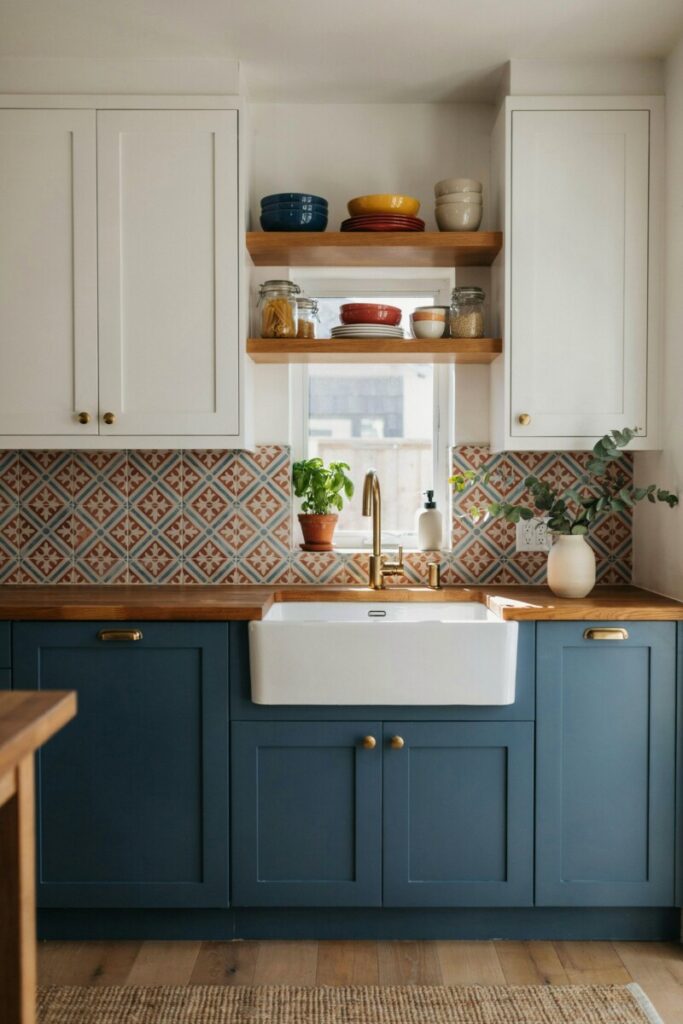
| Kitchen | Navy + white + warm wood + copper | Navy lower cabinets, white uppers, butcher block counters, copper hardware |
| Bedroom | Dusty mauve + oatmeal + sage | Mauve accent wall, oatmeal linen bedding, sage throw, woven headboard |
For more on making bold choices work in compact spaces, check out our small-space decorating tips.
Budget-Friendly Colour Updates
You don’t need a renovation budget to transform a room. Here are budget home decor ideas that deliver maximum impact for minimal spend:
- Thrifted decor finds: Scout estate sales, Facebook Marketplace, and Habitat for Humanity ReStores for solid-wood furniture you can paint or reupholstery. A $30 dresser becomes a $300-look statement piece with sandpaper, primer, and a bold color.
- DIY upholstery: Re-covering dining chair seats is one of the most approachable DIY home decor projects—often just a staple gun, new fabric, and 30 minutes per chair.
- Peel-and-stick wallpaper: Perfect for renters. Apply behind a bed, inside open shelving, or on the back of a bookcase for a temporary burst of pattern and color.
- Spray paint magic: Lampshades, picture frames, planters, and hardware can all be spray-painted in an afternoon. Matte black, brass, and saturated jewel tones all read as high-end.
- Swap soft goods: New pillow covers, a fresh table runner, and a colorful shower curtain can redefine a room’s mood for under $50 total.
Quick DIY Project: Painted Accent Shelf
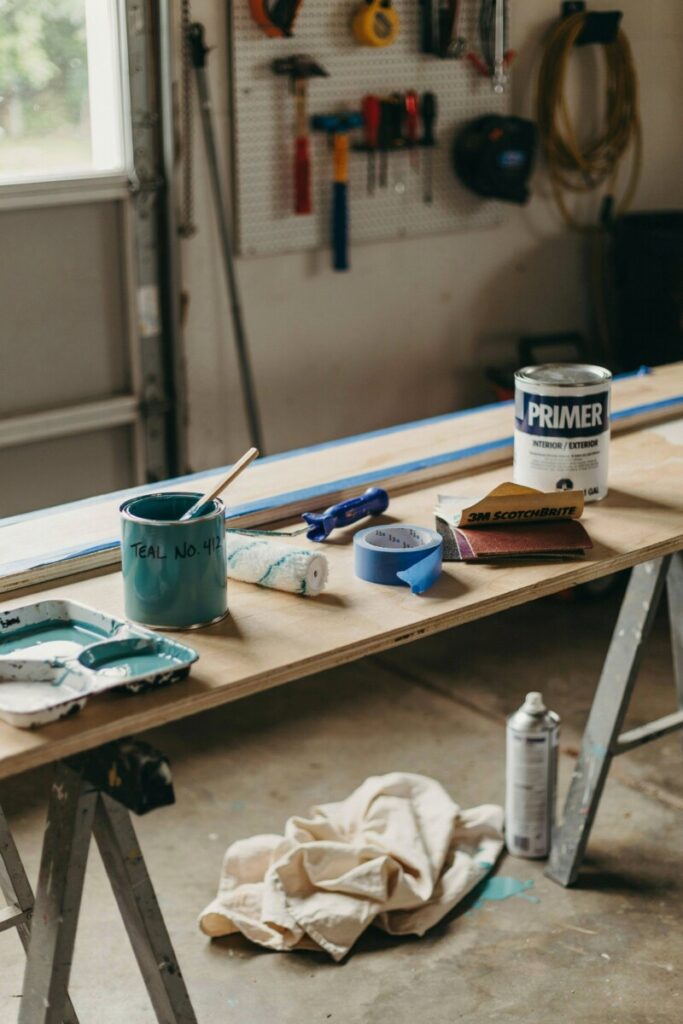
Project: Painted Accent Shelf
⏱️ Time: 1–3 hours (plus drying time)
🎚️ Difficulty: Beginner
Materials:
- Small wooden shelf (thrifted or new, ~$10–$25)
- Primer
- High-quality latex paint in your chosen color
- Foam roller and small brush
- Painter’s tape
- Fine-grit sandpaper (120–220)
- Clear water-based sealer
Steps:
- Sand the shelf lightly to create a surface the primer can grip. Wipe clean with a damp cloth.
- Prime with one thin coat. Let dry completely (usually 1–2 hours).
- Tape off any edges or areas you want to keep natural wood.
- Paint two thin coats with your foam roller, letting each coat dry fully between applications.
- Remove tape while the second coat is still slightly tacky for the cleanest edge.
- Seal with a clear water-based sealer for durability.
- Display on a wall with a contrasting color behind it, styled with a small plant, a stack of colorful books, and a ceramic object.
Pro tip: Use color coordination tips from earlier—pick a shelf color that appears somewhere else in the room (a pillow, a piece of art) to tie the whole space together.
Shopping Resource List
Looking for curated picks to jumpstart your colorful home decor? Here are some reliable go-to sources across a range of budgets:
| Store / Brand | Best For | Price Range |
|---|---|---|
| World Market | Bold textiles, globally inspired accessories, colorful rugs | $$ |
| Etsy | Custom pillow covers, handmade ceramics, original art | $–$$$ |
| IKEA | Affordable furniture ready for a paint makeover, colorful textiles | $ |
| Target (Threshold & Project 62) | Trend-forward accessories, peel-and-stick wallpaper | $–$$ |
| Rejuvenation | High-quality colorful hardware and lighting | $$$ |
| Habitat for Humanity ReStore | Thrifted furniture, doors, and architectural salvage | $ |
Final Tips & Your Next Step
Color is one of the most powerful tools in home decorating, and it’s also one of the most forgiving. Paint can be repainted. Pillows can be swapped. A thrifted chair can be reinvented a dozen times. The only real mistake is playing it so safe that your home doesn’t feel like yours.
Start small. Pick one room—maybe even one wall—and commit to a single colorful change this week. Paint an accent wall. Buy a set of vibrant throw pillows. Spray-paint a lamp base. Whatever you choose, the act of making a bold decision will build your confidence for the bigger projects ahead.
Ready to take the challenge? Try one colorful change this week and share your results on Instagram with #ColorfulHomeChallenge—we’d love to see your vibrant interiors! And if you found this guide helpful, sign up for our newsletter to receive a free printable color palette worksheet and weekly decorating inspiration straight to your inbox.