You walk into a friend’s living room and immediately feel your shoulders drop. The space feels calm, inviting, almost like a deep exhale. Then you visit another home where the living room buzzes with energy—conversation flows easily, laughter comes faster, and nobody wants to leave. The secret ingredient in both rooms isn’t the furniture, the square footage, or even the budget. It’s color.
A few years ago, I helped a neighbor repaint her downtown apartment living room. She had been struggling to unwind after work, and the stark white walls felt more like an exam room than a sanctuary. We swapped in a soft sage green on the walls, layered in cream textiles, and added a burnt-rust throw pillow or two. Within a week, she told me the room felt like a completely different space—not just visually, but emotionally.
That’s the power of color psychology in the living room. Science tells us that the hues surrounding us influence heart rate, appetite, focus, and even social behavior. Ahead, you’ll learn exactly how color affects mood and get a practical, step-by-step plan to choose living room paint colors that genuinely improve how you feel at home.
How Color Affects Mood: The Science Behind the Paint
The Biology of Color Perception
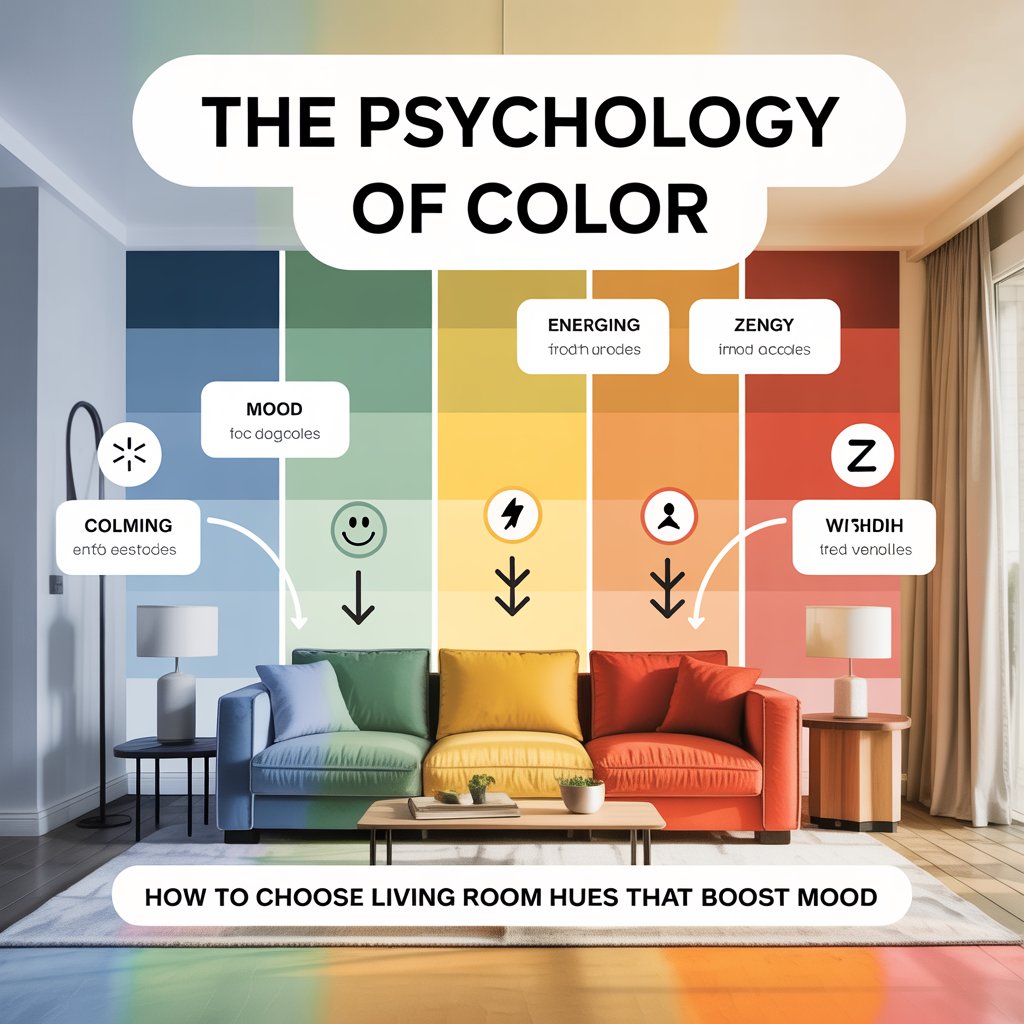
Color isn’t just decorative—it’s biological. When light hits an object, the wavelengths that bounce back enter your eye and trigger a chain of neurological responses. Your brain’s hypothalamus, which regulates hormones and the autonomic nervous system, processes these signals and can shift everything from your cortisol levels to your heart rate. In short, how color affects mood isn’t a matter of taste alone; it’s rooted in physiology.
Research in environmental psychology backs this up. A widely cited study published in the journal Color Research and Application found that participants in blue-toned rooms reported lower stress levels and slower physiological arousal compared to those in red-toned rooms. Meanwhile, research from the University of Texas linked warm, muted tones to feelings of comfort and sociability—ideal for gathering spaces like living rooms.
Cultural Context Matters, Too
While some responses to color are near-universal—blue’s calming effect appears across cultures, for example—personal associations play a big role. In the US, white often reads as clean and modern, but in some contexts, it can feel sterile or clinical. Deep greens might evoke the Pacific Northwest’s forests for a Portland homeowner, while a Floridian might associate bright coral with coastal living.
That’s why choosing a living room paint color isn’t about following a one-size-fits-all formula. It’s about understanding the psychological tendencies of color families and then filtering them through your personal experiences, your home’s natural light, and the mood you want to cultivate.
The Key Takeaway
Color psychology for interiors isn’t pseudoscience or interior-design myth. It’s a real, measurable field—and you can use it as a tool. The next section breaks down the major color families, their mood profiles, and how to apply them in a living room setting.
Primary Color Moods and Living-Room Uses
Here’s your at-a-glance guide to the mood-boosting colors that work best in living rooms, plus practical ways to apply each one.
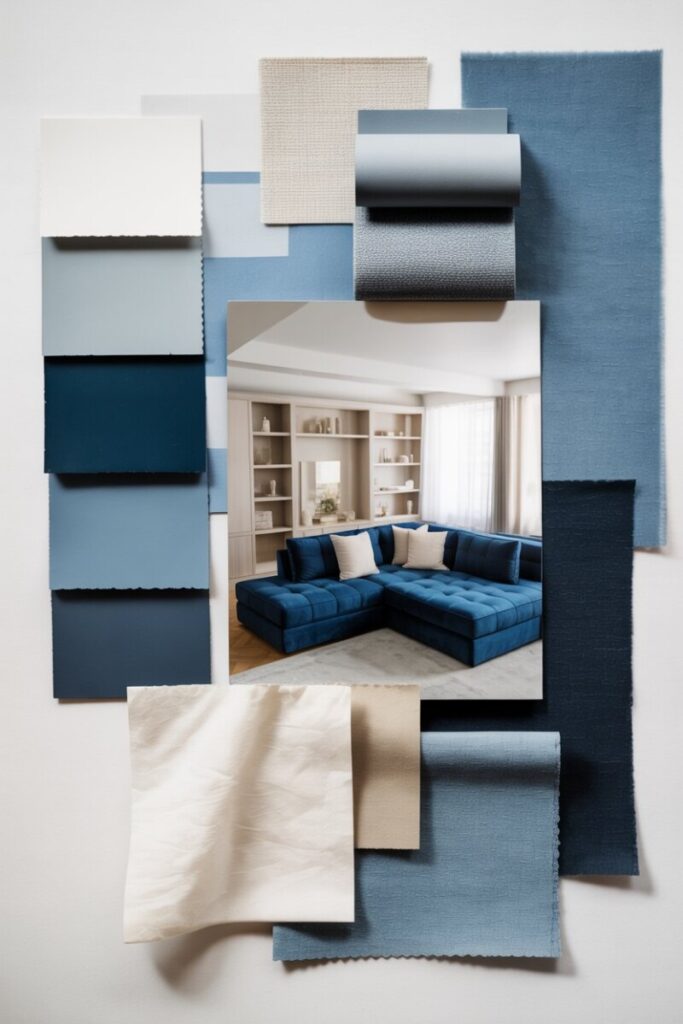
Blues: Calm, Focus, and Rest
Blue is the undisputed champion of calming living room colors. It lowers blood pressure and slows heart rate, making it a natural fit for spaces where you relax, read, or decompress after a long day.
- Best for: Reading nooks, media rooms, and any zone meant for unwinding.
- Light considerations: Soft powder blues work beautifully in south-facing rooms with abundant natural light. In dimmer, north-facing rooms, opt for a warmer blue-gray to avoid a chilly feel.
- Application tips: Paint an accent wall behind the sofa in a muted navy, or bring blue in through a large area rug, linen curtains, or upholstered armchair.
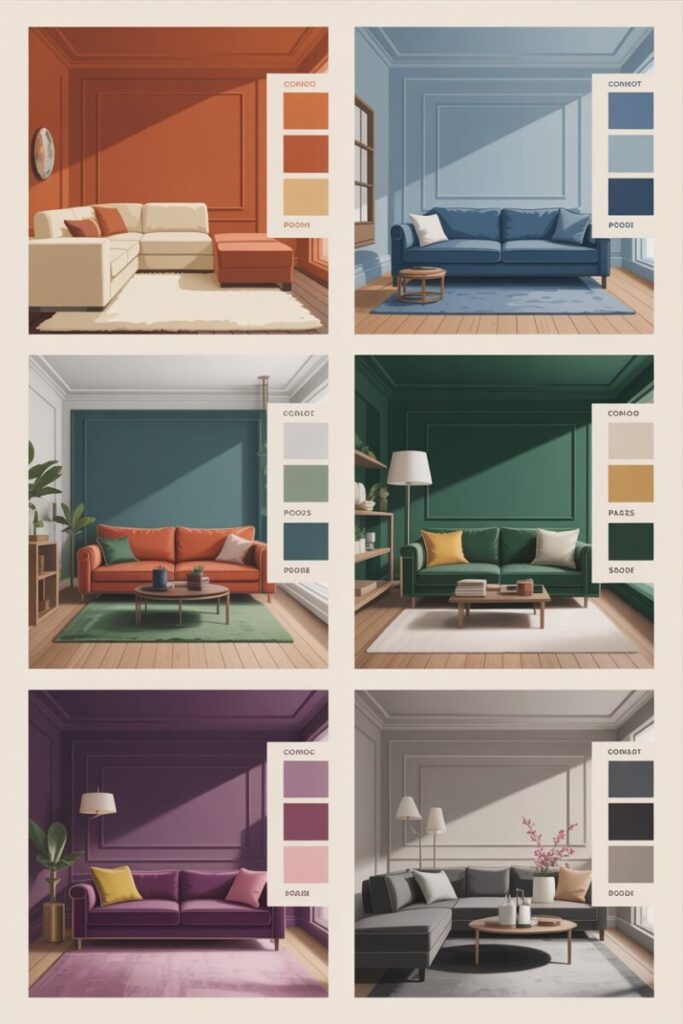
- Example palette: Dusty blue walls + warm white trim + walnut wood tones + brass hardware.
Greens: Balance, Restoration, and Biophilic Design
Green sits at the center of the visible spectrum, and your eyes don’t have to adjust to process it—making it one of the most restful colors to be surrounded by. It’s the backbone of biophilic design in the living room, connecting indoor spaces to the natural world.
- Best for: Multi-purpose living rooms, home-office combos, and spaces where you want calm sociability.
- Light considerations: Sage and olive greens are remarkably versatile and work in almost any light. Lime or chartreuse leans energetic—use sparingly.
- Application tips: A feature wall in sage green pairs beautifully with natural rattan, indoor plants, and jute textures.
- Example palette: Sage green + cream + light oak + terracotta accents.
Neutrals: Comfort, Warmth, and Versatility
Neutrals for the living room—think beige, warm gray, taupe, and off-white—form the backbone of countless American homes, and for good reason. They’re flexible, timeless, and create a comfortable canvas for layering.
- Best for: Open-plan layouts, small apartments, and anyone who likes to refresh decor seasonally without repainting.
- Light considerations: Warm neutrals (beige, cream) add coziness to north-facing rooms. Cool neutrals (greige, light gray) feel airy in sun-drenched south-facing spaces.
- Application tips: Use a matte or eggshell paint finish for the living room to diffuse light softly. Layer in texture—chunky knit throws, boucle pillows, woven baskets—to keep neutrals from feeling flat.
- Example palette: Warm greige walls + linen sofa + dark walnut coffee table + olive-green throw pillows.
Warm Tones: Energy, Sociability, and Appetite
Reds, oranges, and terracottas stimulate conversation and even appetite, making them ideal for living rooms that double as entertaining spaces. These are among the most energizing colors for the living room.
- Best for: Gathering zones, conversation areas, and open-plan rooms connected to dining spaces.
- Light considerations: Warm tones intensify in direct sunlight, so test swatches at noon and in the evening. In low-light rooms, they add welcome warmth without overwhelming.
- Application tips: Rather than painting all four walls red, try a terracotta accent wall, a rust-colored velvet sofa, or burnt-orange throw blankets.
- Example palette: Creamy white base + terracotta accent wall + rattan furniture + aged brass accents.
Yellows and Golds: Optimism and Brightness
Yellow is cheerful and attention-grabbing, but it’s also the most fatiguing color on the eyes in large doses. Use it strategically.
- Best for: North-facing rooms that need a brightness boost, breakfast nooks, and small accent moments.
- Application tips: Buttery yellow on a single wall, gold-toned velvet cushions, or a mustard throw. Avoid large expanses of bright yellow in living rooms meant for evening relaxation.
- Example palette: Soft butter-yellow accent wall + crisp white trim + light oak floors + sage-green accessories.
Purples and Blushes: Luxury, Creativity, and Sophistication
Lavender, mauve, and blush pink bring a sense of refined creativity to a living room without the intensity of a bold primary hue.
- Best for: Accent wall ideas, creative work zones within the living room, and homes with a glam or eclectic design style.
- Application tips: Dusty mauve on bookshelf backs, a blush velvet chair, or a lavender-toned art piece.
- Example palette: Warm white walls + dusty mauve accent chair + gold-framed mirror + charcoal accessories.
How Light, Size, and Layout Change Color Effects
Natural vs. Artificial Light
The single biggest mistake DIY decorators make is picking a color in the store and assuming it will look the same at home. Light and color in rooms are inseparable. Natural daylight reveals true undertones, while warm incandescent bulbs amplify yellows and reds. Cool LEDs can make warm paints look slightly gray or green.
In the US, a south-facing living room receives strong, warm light most of the day—great for cool blues and greens, which balance the warmth. A north-facing room gets cooler, bluer light, so warm neutrals, terracottas, and soft yellows compensate beautifully.
Room Size and Color
Warm vs. cool paint colors also affect spatial perception:
| Goal | Color Strategy |
|---|---|
| Make a small living room feel larger | Light, cool tones (soft blue, pale gray, off-white) |
| Make a large room feel cozier | Deep, warm tones (charcoal, navy, olive, terracotta) |
| Raise a low ceiling visually | Paint the ceiling a shade lighter than the walls |
| Define zones in an open plan | Use a contrasting accent color or deeper tone in one zone |
Open-Plan Considerations
If your living room flows into a kitchen or dining area, your living room color schemes need to harmonize with adjacent spaces. A common approach: choose a unifying neutral for the main walls and use accent colors to define each zone. For example, warm white throughout with a sage-green feature wall in the living area and a terracotta backsplash in the kitchen.
Choosing a Mood-First Color Plan
Ready to put theory into practice? Follow this five-step method to build a color palette for your living room that starts with how you want to feel.
Step 1: Define Your Living Room’s Primary Purpose
Ask yourself: What do I do in this room most? If you binge-watch TV and read after work, prioritize relaxation. If you host game nights and holiday gatherings, lean into sociability. A home-office combo needs focus and calm without being sleepy.
Step 2: Pick the Dominant Mood
Based on your primary purpose, choose one mood word: calm, energetic, sociable, cozy, or creative. This becomes your North Star. Every color decision should point back to it.
Step 3: Select Your Three-Part Palette
A well-balanced paint color combination follows a 60-30-10 ratio:
- 60% dominant hue — your wall color, chosen to match your mood.
- 30% supporting neutral — sofa, large rug, or secondary wall color.
- 10% accent color — throw pillows, artwork, a single chair, or decorative objects.
Step 4: Test Before You Commit
Order peel-and-stick paint samples (brands like Samplize or paint-brand swatches from Sherwin-Williams and Benjamin Moore) and place them on at least two walls. Observe them in morning, afternoon, and evening light for at least 48 hours. If you’re digitally inclined, apps like Sherwin-Williams’ ColorSnap let you visualize colors in a photo of your actual room.
Step 5: Fine-Tune with Textiles, Art, and Lighting
You don’t always need to repaint. If your walls are neutral, you can shift the mood dramatically with:
- Textiles: Swap out throw pillows and a blanket in your accent color.
- Art: A large canvas in your dominant hue anchors the room.
- Lighting: Warm-toned bulbs (2700K) enhance cozy palettes; cooler bulbs (3500K–4000K) support energizing, focused moods.
📋 Mini Checklist: Mood-First Color Planning (click to expand)
- ☐ Primary room purpose identified
- ☐ Dominant mood word chosen
- ☐ 60-30-10 palette selected
- ☐ Swatches ordered and placed on two walls
- ☐ Observed at 3 different times of day
- ☐ Textile and lighting adjustments planned
- ☐ Final paint or decor order placed
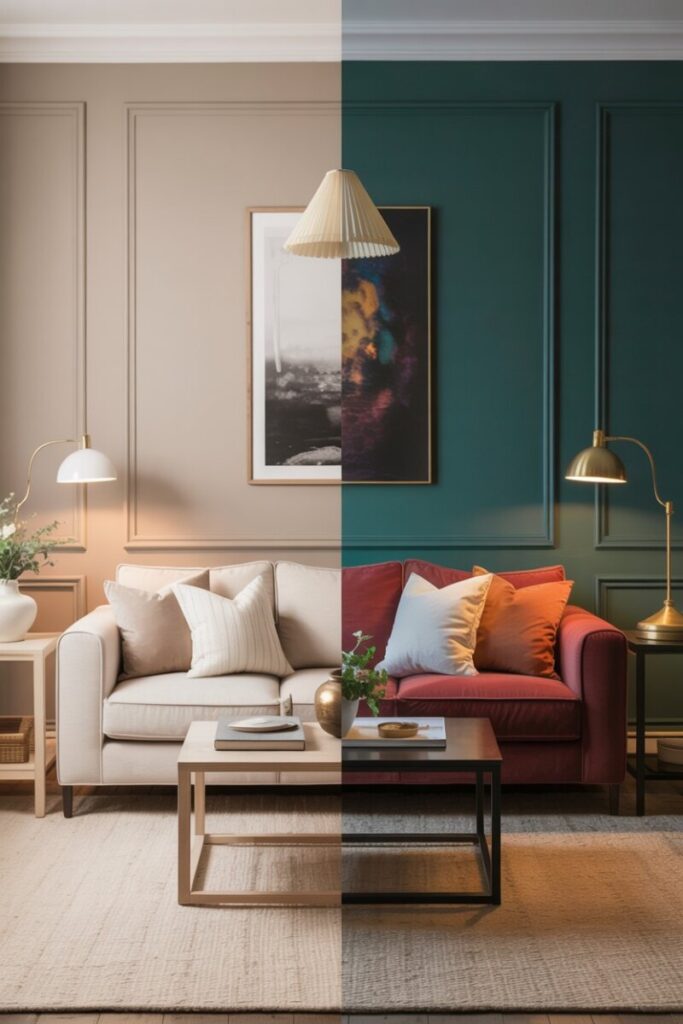
Common Mistakes and How to Avoid Them
Even with the best intentions, color testing tips are often ignored. Here are the most frequent pitfalls:
- Following trends without testing. That viral TikTok sage green might look stunning on screen and terrible under your warm-toned recessed lighting. Always test swatches in your actual space.
- Ignoring undertones. A “white” paint can have pink, yellow, blue, or green undertones. Compare swatches side by side against a pure white sheet of paper to see what’s lurking underneath.
- Overlooking paint finish. A high-gloss finish reflects light and highlights wall imperfections. For most living rooms, matte or eggshell paint finishes are ideal—they diffuse light and hide minor flaws.
- Mismatching color temperature. Pairing a cool blue-gray wall with warm oak floors and warm-white trim can create visual tension. Decide whether your room leans warm or cool and stay consistent.
The fix is simple: slow down, test thoroughly, and let your mood-first plan guide every choice.
Quick Color Recipes for Four Popular Living-Room Goals
Need a shortcut? These four living room color ideas are proven crowd-pleasers, each designed around a specific mood goal.
🧘 Calm & Serene
- Walls: Pale blue or soft sage green (eggshell finish)
- Supporting: Warm white trim and ceiling
- Accents: Natural wood tones, linen textiles, a single ceramic vase
- Best for: Reading-heavy households, bedrooms that open into the living area
🎉 Energetic & Social
- Walls: Warm beige or soft terracotta (matte finish)
- Supporting: Cream sofa, rattan furniture
- Accents: Brass lamps, burnt-orange cushions, a bold geometric rug
- Best for: Open-plan living-dining areas, frequent entertainers
🛋️ Cozy & Intimate
- Walls: Deep warm gray or charcoal (matte finish)
- Supporting: Warm walnut wood furniture, layered knit throws
- Accents: Amber glass vases, candlelight, a plush area rug
- Best for: Evening-heavy use, media rooms, colder climates
☀️ Bright & Cheerful
- Walls: Crisp white (eggshell finish)
- Supporting: Light oak floors and furniture
- Accents: Buttery yellow pillows, sunflower art, glass accessories
- Best for: North-facing rooms, small apartments needing a lift
Final Tips & Your Next Steps
Choosing the best paint colors for your living room doesn’t have to be overwhelming. Here are your key takeaways:
- Start with mood, not trend. Decide how you want the room to feel before browsing swatches.
- Test every color on your walls and observe across different times of day.
- Consider your light. North-facing rooms need warmth; south-facing rooms handle cool tones gracefully.
- Use accents first. If you’re commitment-shy, introduce a new mood through pillows, art, and a single accent chair before you paint.
We’d love to see what you create. Share a photo of your living room transformation in the comments below, or tag us on social media. And if you’re stuck between two shades, drop a question—we’ll help you decide.