Picture this: you walk through your front door after a long day, and instead of a beige, forgettable hallway, you’re greeted by a sunflower-yellow console table, a gallery wall of travel photos in mismatched frames, and a hand-woven rug in every color of a Moroccan market. Instantly, something shifts. Your shoulders drop. You smile. That little spark of happiness? That’s the idea behind dopamine decor.
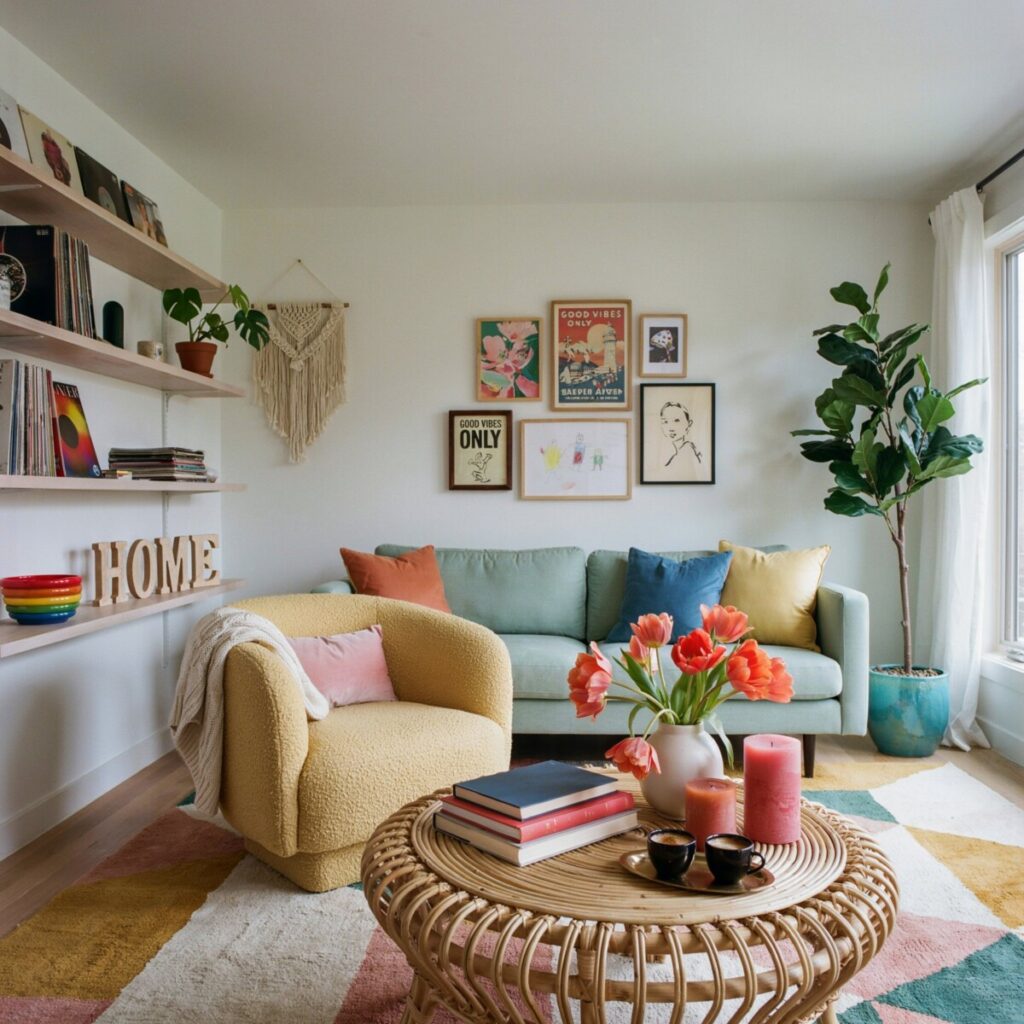
Dopamine decor is a mood-boosting design approach that uses joyful color, playful pattern, rich texture, and deeply personal items to make your home feel genuinely good to be in. It’s not about following a single aesthetic or achieving Instagram perfection—it’s about surrounding yourself with things that light you up.
The trend has exploded over the past few years, fueled by a cultural shift toward wellness, the rise of remote work (hello, home office fatigue), and a collective craving for self-care that extends beyond skincare routines into the spaces we inhabit daily. Designers, psychologists, and everyday homeowners are all leaning into the idea that your environment directly shapes how you feel—and that intentional design choices can be a powerful daily mood boost.
If you’ve been scrolling through colorful home decor inspiration and wondering, “Could my space actually make me happier?”—the answer is a resounding yes. Let’s break down exactly what dopamine decor is, the science behind it, and how you can bring it into every room of your home, no matter your budget or whether you own or rent.
What Is Dopamine Decor?
The Origins of a Colorful Movement
Dopamine decor—sometimes called dopamine design—emerged as a cultural moment on platforms like TikTok and Instagram, where creators began showcasing homes decked out in saturated hues, bold patterns, and quirky personal collections. But the roots go deeper than social media. The concept draws from decades of color psychology research, the maximalist design revival, and the broader wellness movement that asks not just how does your home look? but how does your home make you feel?
The Science (Made Simple)
Dopamine is a neurotransmitter often called the “feel-good chemical.” It plays a key role in your brain’s reward system—firing up when you experience something pleasurable, novel, or personally meaningful. Research in environmental psychology suggests that our surroundings can trigger these responses. A vibrant accent wall, a beloved piece of art, or the soft touch of a velvet throw can spark small but genuine moments of pleasure throughout your day.
Now, decorating your living room won’t replace therapy or medication—but the dopamine decor meaning goes beyond a catchy name. It’s about designing environments that consistently deliver micro-moments of joy, comfort, and stimulation tailored to you.
How It Differs from Minimalism and Hygge
Where minimalism champions “less is more” and hygge centers on cozy neutrality, dopamine decor flips the script. It says: more is more—if it makes you happy. It’s not clutter for clutter’s sake; it’s intentional abundance. Every color, object, and texture earns its place by contributing to how the space makes you feel. Think of it as curated joy rather than curated restraint.
The Psychology of Color and Mood
Understanding the relationship between color and mood is the foundation of dopamine decorating. While individual preferences and cultural backgrounds shape how we experience color, decades of research in color psychology for home environments point to some reliable patterns.
Warm vs. Cool Colors
Warm colors—reds, oranges, yellows, and warm pinks—tend to feel energizing, stimulating, and sociable. They’re associated with warmth, excitement, and appetite (which is why so many restaurants use them). Cool colors—blues, greens, lavenders, and teals—lean calming, restorative, and focused. They’re linked to tranquility and concentration.
Saturation Matters More Than Hue
Here’s a nuance most people miss: it’s not just which color you choose, but how vivid it is. A highly saturated cobalt blue will feel bold and energizing, while a dusty, muted sage green reads as serene. Mood-boosting colors tend to be mid-to-high saturation—vivid enough to register emotionally but not so intense they overwhelm.
The Power of Contrast and Pattern
Visual stimulation isn’t only about color in isolation. Contrast—pairing a deep emerald sofa with bright coral pillows—creates visual energy. Pattern adds rhythm and complexity that the brain finds engaging. A room with varied visual layers gives your eyes places to explore, which can combat the monotony that drains mood over time.
Individual Differences Are Real
Here’s where dopamine decor gets personal: there’s no universal “happiest color.” Your associations matter. If your grandmother’s kitchen was avocado green and you loved her, that shade might flood you with warmth. How to use color in your home effectively means starting with your own emotional responses, not a generic color chart.
Elements That Create Joyful Spaces
Dopamine decor is a multisensory experience. Here are the core design elements that work together to create a happy home.
🎨 Color
This is the star. Use vibrant paint on an accent wall, choose a colorful sofa as your living room anchor, or layer in joyful colors through textiles—pillows, throws, curtains. Don’t be afraid of bold color decorating; even a single saturated piece can transform a room’s energy.
🔶 Pattern and Scale
Mix prints with confidence: pair a large-scale floral with a small geometric check. Varying scale keeps the eye engaged. A statement rug with an eye-catching pattern can define an entire room and serve as the foundation for your color palette.
🧶 Texture and Material
Textured textiles add a tactile dimension that sight alone can’t deliver. Think velvet cushions, chunky knit throws, woven rattan baskets, and nubby linen curtains. Running your hand across a satisfying surface is its own small reward.
💡 Lighting and Ambiance
Mood lighting is an unsung hero of dopamine decor. Layer your lighting: overhead for general illumination, task lamps for function, and accent lights (like a colored glass table lamp or warm string lights) for atmosphere. Smart bulbs let you adjust color temperature throughout the day—bright and cool for focus, warm and golden for winding down.
🖼️ Personal Items and Art
This is what separates dopamine decor from a showroom. Curate displays of travel souvenirs, family photos, handmade pottery, or your child’s artwork. Rotate items seasonally or whenever you crave novelty. A gallery wall of personally meaningful pieces is dopamine decor at its most authentic.
Room-by-Room Dopamine Decor Ideas
Ready to put this into practice? Here are dopamine decor ideas for every major room in your home.
🚪 Entryway
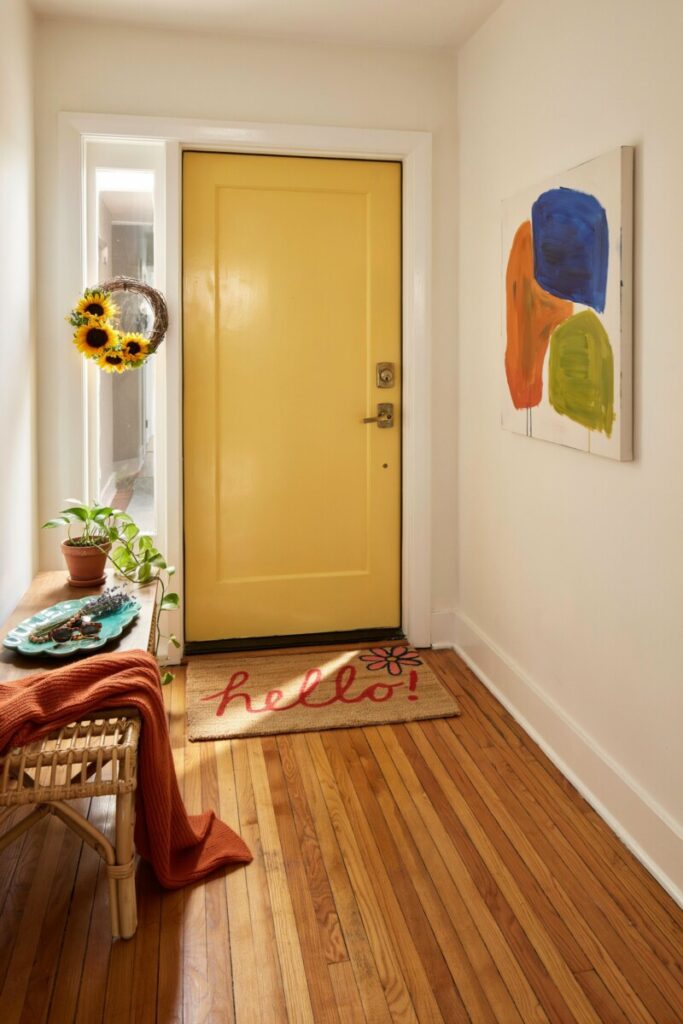
Your entryway sets the emotional tone for every arrival. Try a brightly painted front door (interior side), a playful welcome mat, a bold piece of art at eye level, and a colorful catch-all tray for keys. Swap seasonal accents—a sunflower wreath in summer, a burnt-orange throw in fall—to keep the novelty fresh.
🛋️ Living Room
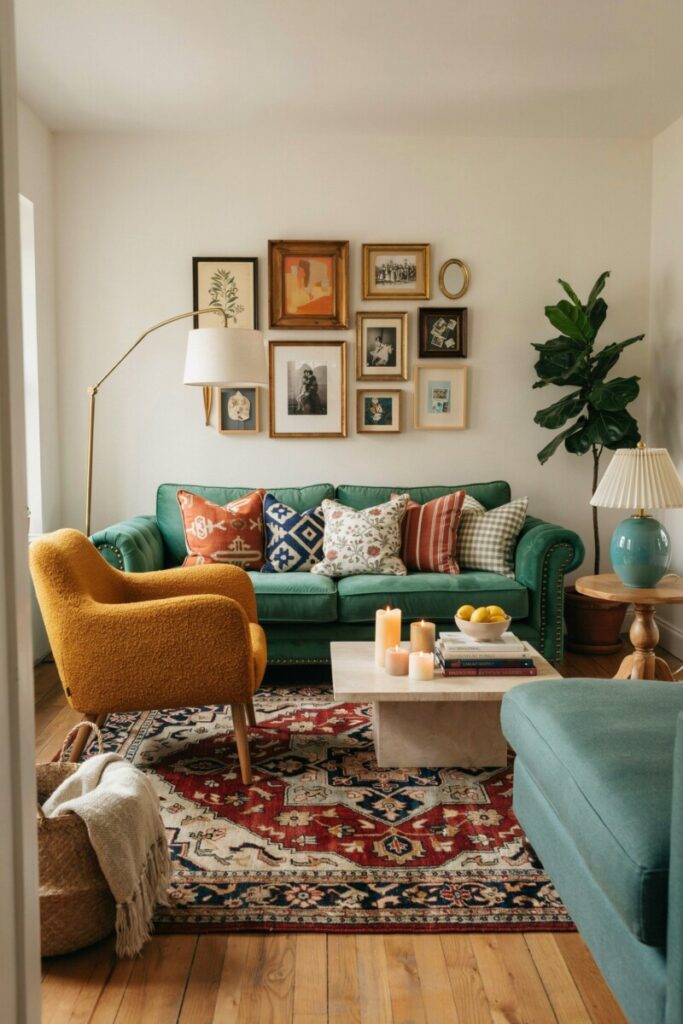
This is where dopamine decor shines brightest. Consider a colorful home decor anchor piece: an emerald sofa, a mustard armchair, or a teal sectional. Layer patterned throw pillows in complementary hues. Build a gallery wall of art and photos you genuinely love. Add a statement rug and layered lighting—a floor lamp, a table lamp with a colored base, and candlelight for evenings.
🍳 Kitchen
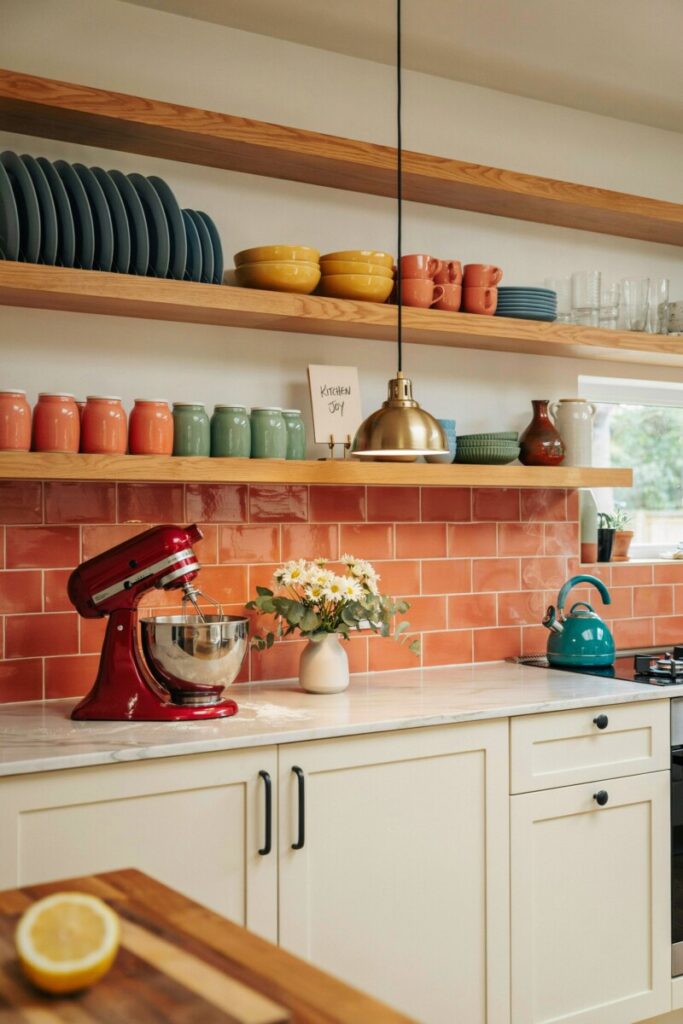
Kitchens are ripe for joyful updates. Display colorful dishware on open shelving. Invest in a stand mixer or kettle in a vivid hue. If you’re ready for a bigger project, try a tile backsplash in a saturated color or playful pattern. Even swapping cabinet hardware to brass or matte black can shift the whole energy.
🛏️ Bedroom
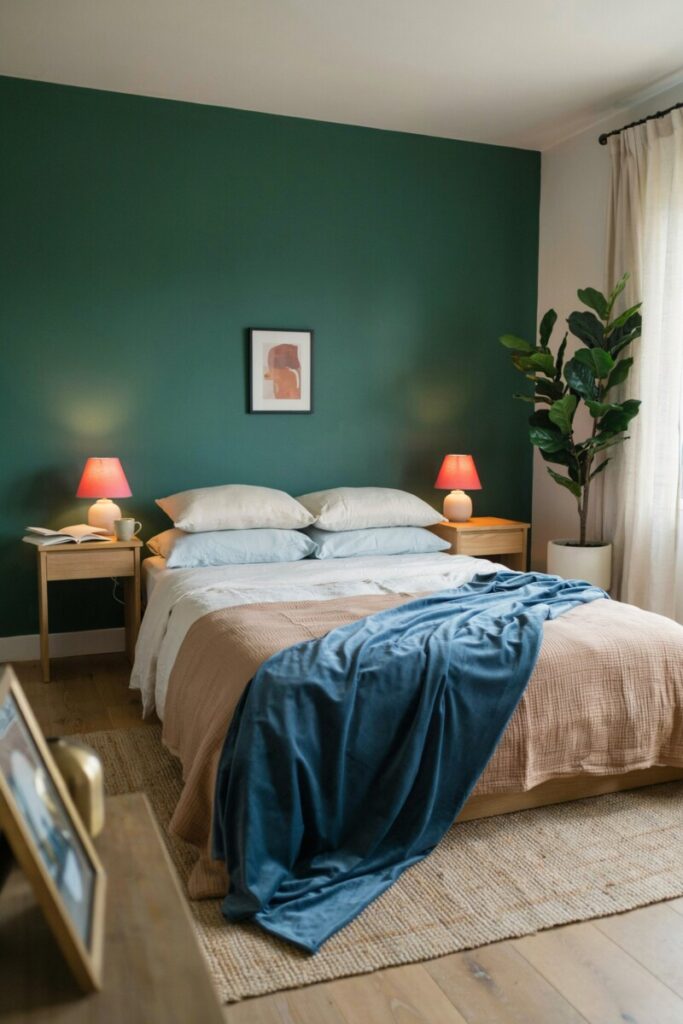
The bedroom requires balance—you want joy without overstimulation at bedtime. Use a calming base palette (soft whites, warm taupes, gentle blues) and add mood-boosting colors as accents: a jewel-toned throw at the foot of the bed, vibrant bedside lamps, or a single accent wall behind the headboard in a rich, enveloping shade.
💻 Home Office
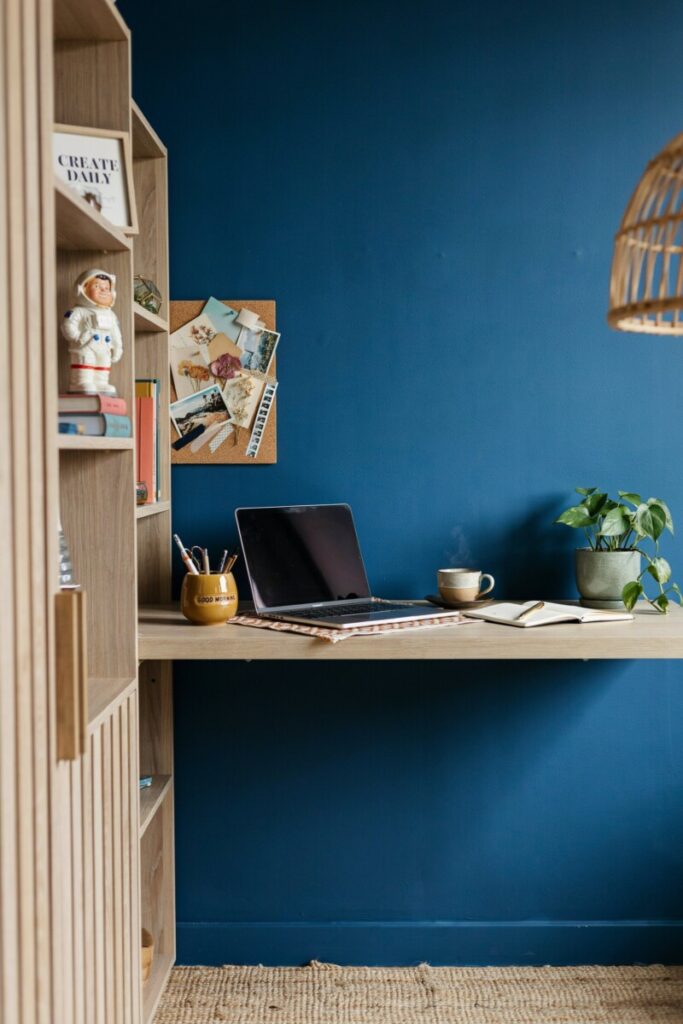
Home office decor ideas that boost productivity and mood? Yes. Paint or wallpaper the wall behind your monitor in an inspiring color (deep blue for focus, warm yellow for creativity). Add desk accessories in colors you love—a bright pen holder, a patterned desk mat, a small potted plant. Keep one shelf or corner purely for joy: a favorite figurine, a framed quote, a colorful mood board.
🛁 Bathroom
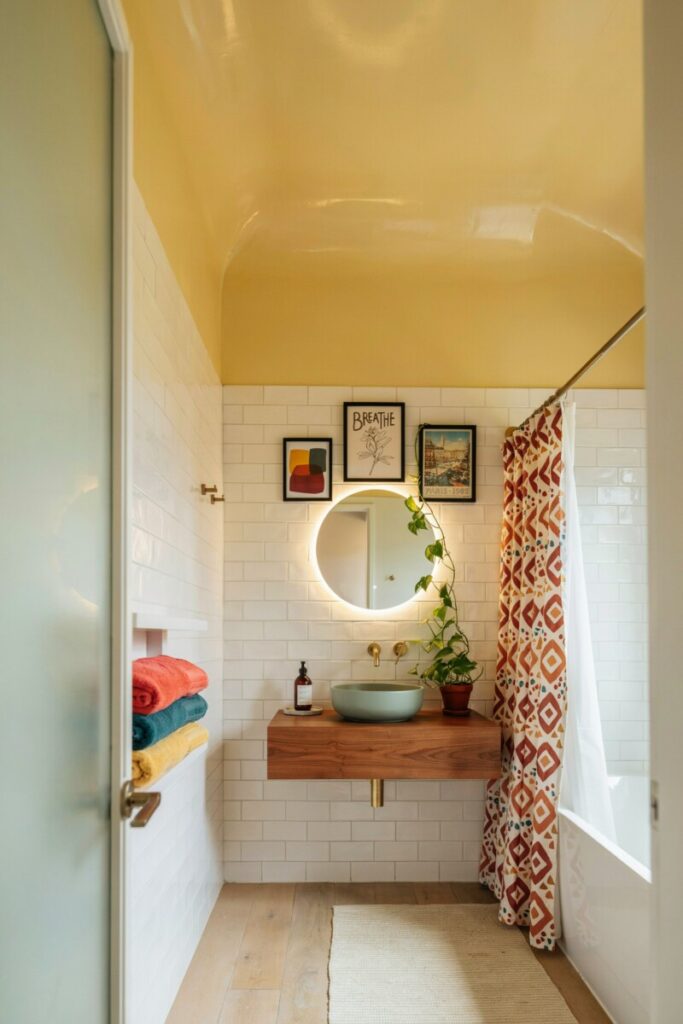
Bathrooms are small, which makes them perfect for bold moves with low commitment. Swap in colorful towels, a patterned shower curtain, and framed art (yes, art in the bathroom!). Paint the ceiling a surprising color for an unexpected delight every time you look up.
Budget-Friendly & DIY Ways to Add Joyful Color
You don’t need a renovation budget to embrace dopamine decor. Here are budget decor ideas and DIY home decor projects that deliver big impact for small dollars.
- Peel-and-stick wallpaper: Perfect for an accent wall, the back of a bookshelf, or even drawer liners. Removable and renter-safe.
- Paint sample tests: Buy sample pots ($5–$8 each) and paint large swatches on poster board. Live with them for a few days before committing.
- Thrift-store finds: Hunt for colorful vases, frames, and ceramic pieces. A $4 thrifted vase spray-painted coral becomes a statement piece.
- DIY art: Stretch fabric with a bold print over a canvas frame. Frame a page from a colorful art book or magazine. Kids’ artwork, matted and framed, is deeply personal and free.
- Update hardware and textiles: New cabinet pulls, a fresh shower curtain, or a set of vibrant pillow covers can transform a room in an afternoon.
- Removable decals: Add playful dots, arches, or botanical motifs to walls, mirrors, or furniture without permanent commitment.
These renter-friendly decor strategies let you experiment freely and evolve your space over time.
Shopping and Styling Checklist
Here’s a practical home decor shopping guide to build your joyful space:
| Category | Where to Shop | What to Look For |
|---|---|---|
| Textiles (pillows, throws) | Target, World Market, Etsy | Mix textures and patterns; 2–3 colors per room |
| Art & wall decor | Society6, Minted, thrift stores | Personal meaning over trendiness |
| Lighting | IKEA, West Elm, Amazon | Layered options; warm-tone smart bulbs |
| Rugs | Ruggable, Rugs USA, vintage shops | Bold patterns that anchor the room |
| Paint & wallpaper | Benjamin Moore, Spoonflower | Test samples first; peel-and-stick for renters |
Color Palette Tips
Start with one hero color you love, then build a palette of 3–5 colors using a color wheel: complementary (opposite), analogous (neighbors), or triadic (evenly spaced). Photograph your room at different times of day—colors shift dramatically in morning vs. evening light.
Care, Maintenance, and Avoiding Overstimulation
Vibrant homes need light upkeep to stay fresh. Wash textiles regularly to keep colors vivid. Dust artwork and rotate gallery pieces every few months to maintain the novelty factor that keeps dopamine firing.
When color overwhelms: If a room starts to feel chaotic rather than joyful, anchor it with neutrals. Add a large white or natural-toned element—a rug, a linen curtain, a cream sofa—to give the eye a place to rest. Scale back to two or three main colors and remove one pattern. The goal is stimulation, not sensory overload. It’s okay to avoid overstimulation and dial things back; dopamine decor should energize you, not exhaust you.
Conclusion & Your 7-Day Dopamine Decor Plan
Your home is the backdrop of your daily life—every meal, every morning routine, every quiet evening. Filling it with joyful color and personal meaning isn’t frivolous; it’s one of the most accessible forms of daily wellbeing you can create. The dopamine decor approach gives you permission to stop decorating for other people’s expectations and start designing for your own happiness.
🗓️ Your 7-Day Dopamine Decor Plan
| Day | Action |
|---|---|
| Day 1 | Choose your hero color—the one that always makes you smile. |
| Day 2 | Add one accent in that color to your most-used room (a pillow, a vase, a lamp). |
| Day 3 | Swap out one textile: a throw blanket, pillow covers, or a rug. |
| Day 4 | Upgrade your lighting: add one warm accent lamp or install a smart bulb. |
| Day 5 | Curate a small display of 3–5 personal items that spark memories. |
| Day 6 | Hang or rearrange one piece of art at eye level in an unexpected spot. |
| Day 7 | Photograph your space, celebrate the changes, and plan your next room. |
Snap a photo of your progress and share it with #DopamineDecorChallenge—or simply enjoy the smile you get every time you walk into a room that feels unmistakably, joyfully yours.