
Late afternoon sunlight spills across a living room where a jewel-toned velvet sofa sits atop a persimmon-and-ivory kilim, framed by a gallery wall of flea-market oil paintings, brass candleholders, and a hand-thrown ceramic pitcher stuffed with dried pampas grass. Nothing “matches” — and yet everything belongs. That’s the magic of maximalist home decor: a style that celebrates abundance, personality, and the joyful pile-up of the things you love.
At its core, maximalism is the confident antithesis of minimalism. Where minimalism pares down to essentials, maximalism layers up — color, pattern, texture, art, objects, memories — into rooms that feel deeply personal and unmistakably lived-in. But there’s a real difference between a room that feels collected and one that feels cluttered. The secret isn’t adding more; it’s adding with intention.
This guide gives you 10 practical, tried-and-true rules to make maximalism feel confident, cohesive, and completely yours — whether you’re styling a sunlit family home or a rented studio apartment.
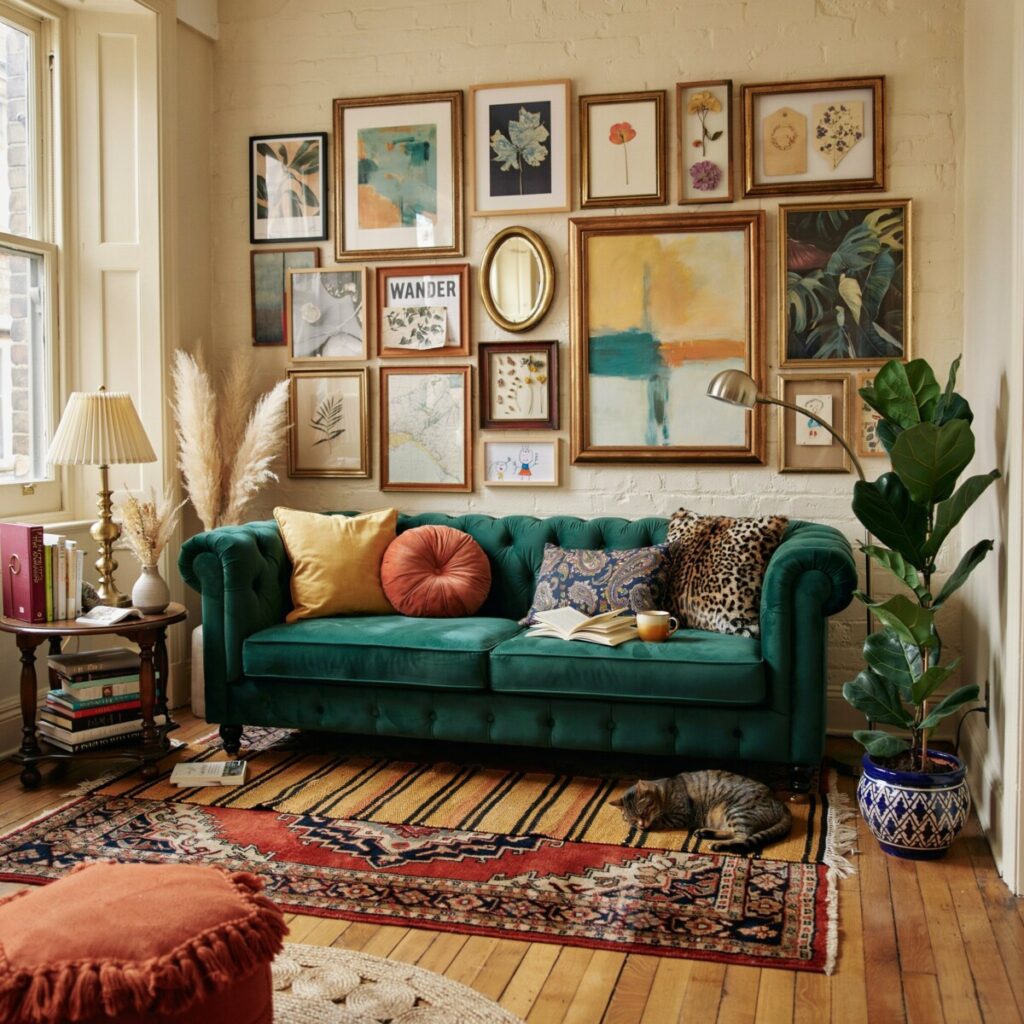
What Is Maximalist Home Decor?
Maximalist home decor is a bold interior design approach built on layering: stacking colors, patterns, textures, objects, and art to create rich, story-filled spaces. It draws from eclectic home decor traditions, global influences, vintage finds, and personal collections — combining them into rooms that feel warm, expressive, and unapologetically alive. Think “more is more,” but curated.
Why Choose Maximalism Now?
After more than a decade of beige minimalism and Instagram-white walls, maximalism is having a major cultural moment. Scroll Pinterest or TikTok and you’ll see saturated jewel tones, patterned wallpaper, and gallery walls stacked to the crown molding. The shift reflects something deeper: people crave homes that tell their story — not a showroom’s.
Maximalism delivers three big benefits:
- Personality on display — Your space becomes an extension of who you are, not a trend copy.
- Coziness by default — Layered textiles and warm tones make rooms feel instantly inviting, perfect for hosting or curling up solo.
- Storytelling through objects — Every vintage find, travel souvenir, and inherited dish earns a place, not a storage box.
Ready to layer with confidence? Here are 10 rules for doing it right.
10 Rules for Doing Maximalist Decor Right
Rule 1 — Start with an Intentional Anchor
Every maximalist room needs a grounding element — a visual “north star” that keeps all the layering from spinning into chaos. An anchor can be a statement furniture piece, a large patterned rug, or a bold wall of wallpaper that sets the palette for everything else.
- Pick one oversized element with a strong color story.
- Pull 2–3 hues from that anchor into your remaining layers.
- Let the anchor dictate the room’s overall mood: moody, playful, earthy, or jewel-box.
Example: A deep emerald velvet sofa anchored by a hand-knotted rug in rust and cream becomes the foundation — then you layer in brass accents, ochre throw pillows, and art with similar tonal notes.
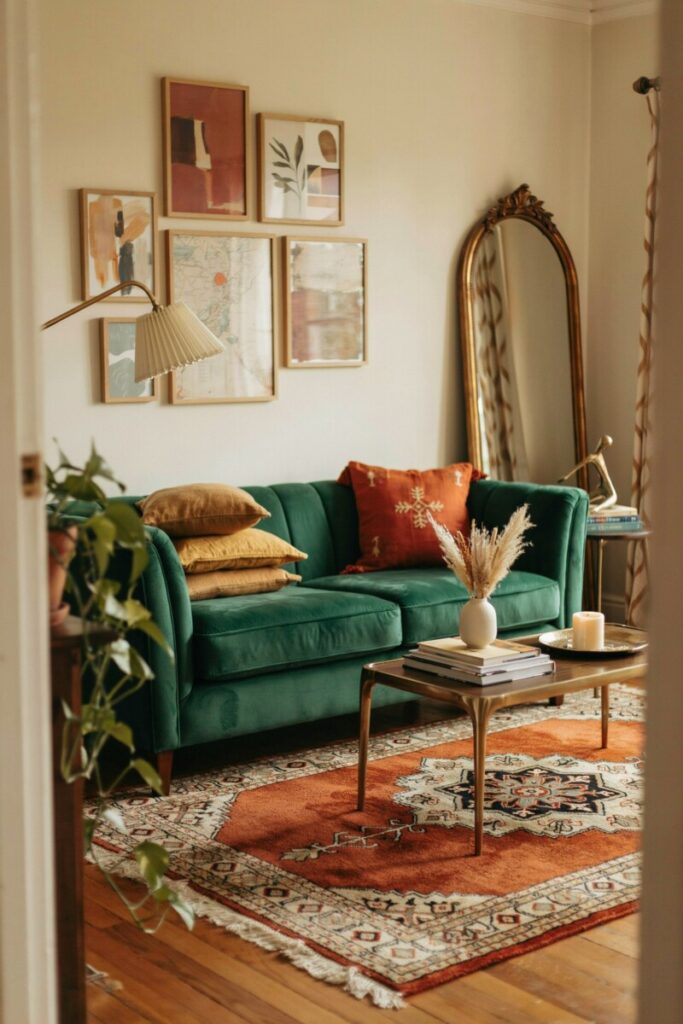
Do let the anchor do heavy visual lifting. Don’t choose two competing anchors (e.g., a loud sofa and a loud rug) unless one is clearly dominant.
Rule 2 — Embrace Curated Clutter (Edit with a Storytelling Lens)
Maximalism is not an excuse to keep everything you’ve ever owned. The best maximalist decor ideas lean on curated clutter: groupings of objects that feel meaningful and themed rather than random.
- Display items in odd-numbered clusters (threes and fives read more intentional).
- Rotate collections seasonally so shelves stay fresh.
- Ask of each piece: Does this tell a story I want to live with?
Example: A staggered shelf styled with sculptural vases from a trip to Oaxaca, a stack of art monographs, and a single inherited brass clock — grouped by theme, not stuffed edge-to-edge.
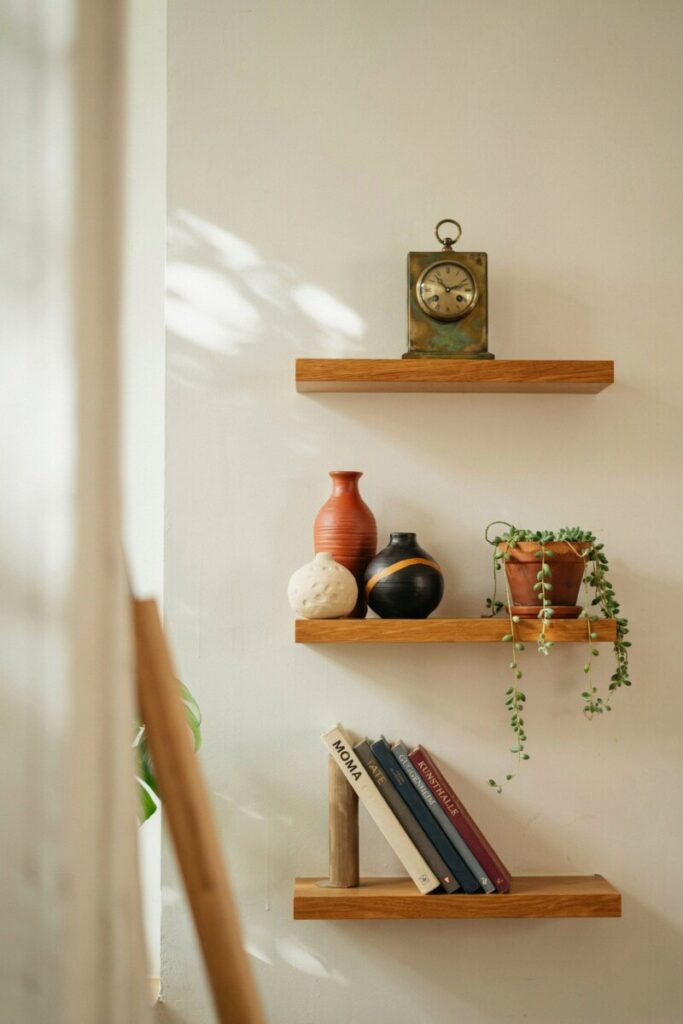
Do rotate and refresh. Don’t treat every flat surface as a landing pad for mail and keys — that’s just clutter.
Rule 3 — Layer Color the Smart Way
Layering color and pattern is where maximalism earns its wow factor — but even the boldest rooms benefit from a color plan. The most livable maximalist spaces use a dominant hue (roughly 60%), a secondary color (30%), and small accent pops (10%).
- Choose one dominant color for walls, a large rug, or your sofa.
- Pick two supporting hues that sit near it on the color wheel or across it for contrast.
- Balance warm tones (ochre, terracotta, blush) with cool ones (teal, sage, cobalt) so rooms don’t feel one-note.
Example: Emerald green walls (dominant) + blush linen curtains (secondary) + ochre velvet pillows and a lacquered coral tray (accents).
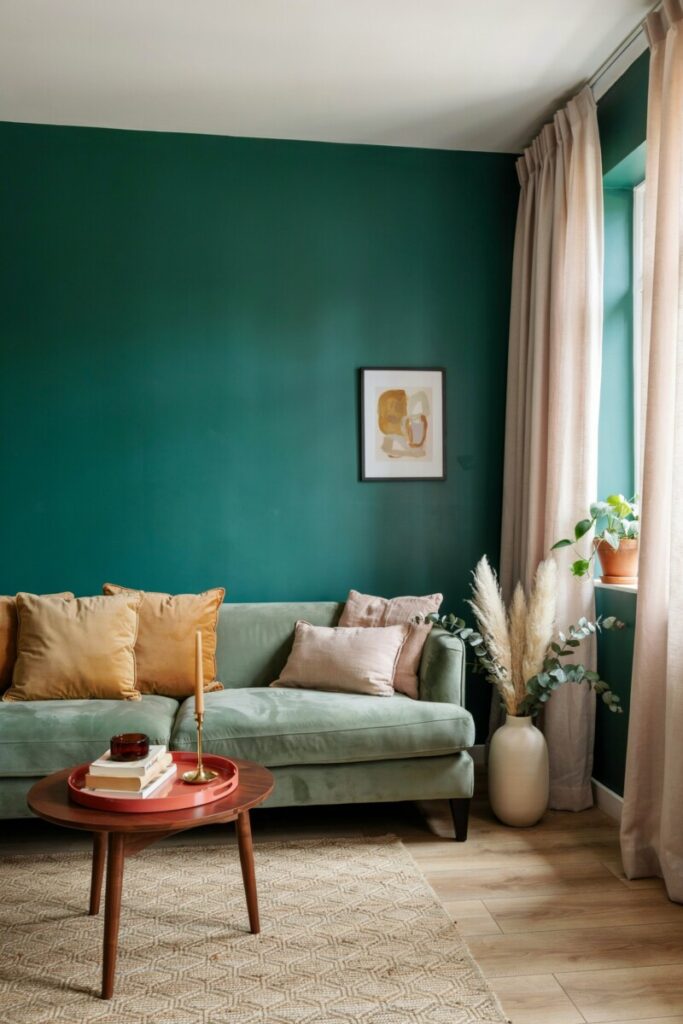
Do test paint samples at different times of day. Don’t introduce more than five distinct colors in one room — the eye gets exhausted.
Rule 4 — Mix Patterns and Scale Deliberately
Want to know how to mix patterns and textures like a pro? Vary the scale. Pair a large-scale pattern with a medium and a small one, then tie them together with at least one repeated color.
- Large scale: oversized florals, mural-style wallpaper, big ikat
- Medium scale: ticking stripes, medium geometrics, botanical prints
- Small scale: ditsy florals, pinstripes, micro-checks
Example: Large-scale floral curtains in a maximalist living room paired with a medium-striped throw and a small-scale geometric lumbar pillow — all linked by a shared deep teal thread.
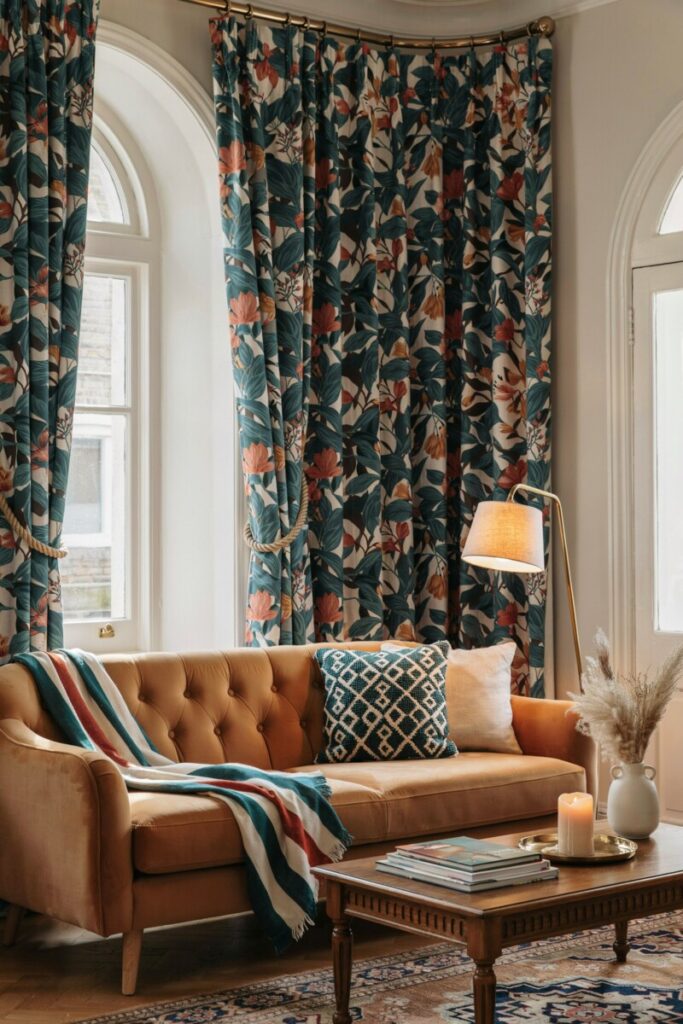
Do ground wild patterns with solid-color pillows or throws. Don’t put two same-scale prints next to each other — they’ll compete rather than converse.
Rule 5 — Play with Texture and Finish
Pattern and color get the glory, but texture is what makes a room feel tactile and luxurious. Maximalist rooms thrive on contrast: nubby against smooth, matte against glossy, rough-hewn against refined.
- Combine at least four textures per room (textiles, hard surfaces, metals, natural materials).
- Mix finishes: matte plaster walls beside glossy lacquered trays, unlacquered brass beside polished marble.
- Bring in nature — rattan, jute, raw wood, stone — to keep rooms from feeling over-produced.
Example: A boucle armchair next to a glossy ceramic lamp on a raw-edge wood side table, with a woven jute basket tucked underneath.
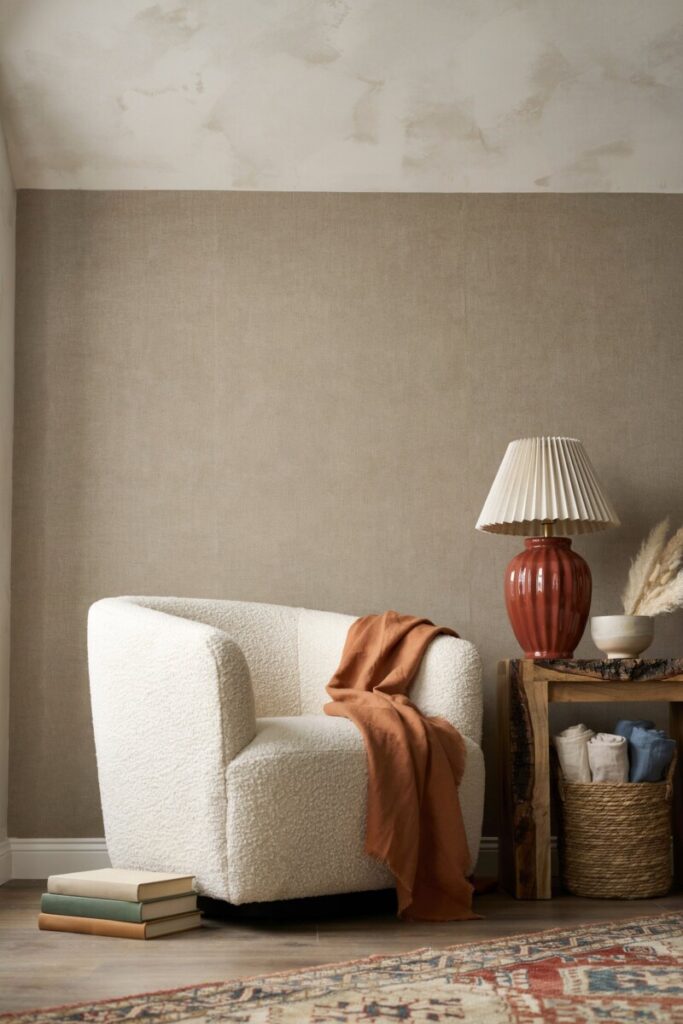
Do run your hand across the room — if everything feels the same, add a contrasting texture. Don’t forget the ceiling; grasscloth or a limewash finish adds surprise.
Rule 6 — Choose Contrast and Cohesion (Balance Bold + Calm Zones)
The most confident bold interior design schemes know when to breathe. Alternate high-impact vignettes with quieter visual resting spots so the room feels dynamic rather than overwhelming.
- Follow a bold gallery wall with a plain, neutral console below.
- Balance a heavily patterned sofa with solid-color drapery.
- Leave some walls or corners deliberately quiet — white, plaster, or single-hue.
Example: A salon-style gallery wall above a simple plaster-white credenza gives the eye a place to pause.
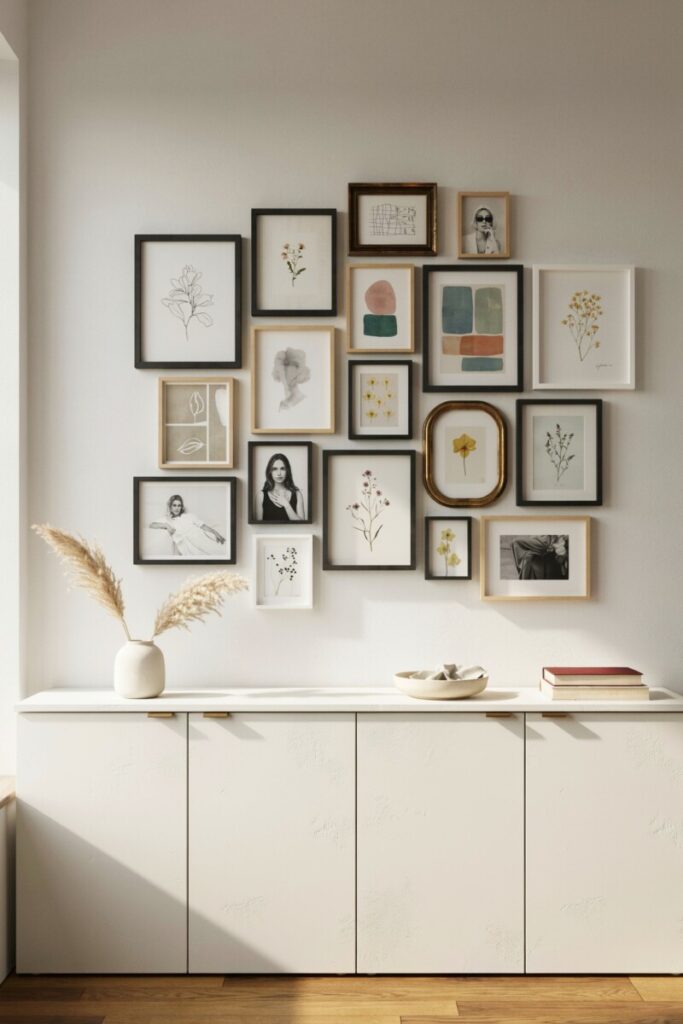
Do step back and photograph your room — flat surfaces in photos reveal busy spots instantly. Don’t decorate every inch; negative space is a design element too.
Rule 7 — Layer Lighting Like You Layer Looks
Maximalist rooms need layered lighting to show off all that gorgeous texture, pattern, and art. A single overhead fixture will flatten the room; multiple light sources bring it to life.
- Ambient: Chandelier, flush mount, or statement pendant for overall glow.
- Task: Table lamps, reading sconces, under-cabinet lighting.
- Accent: Picture lights over art, LED strips in shelving, candlelight.
Example: A brass chandelier overhead, a sculptural ceramic table lamp for reading, and slim brass picture lights highlighting the gallery wall — three layers, three moods.
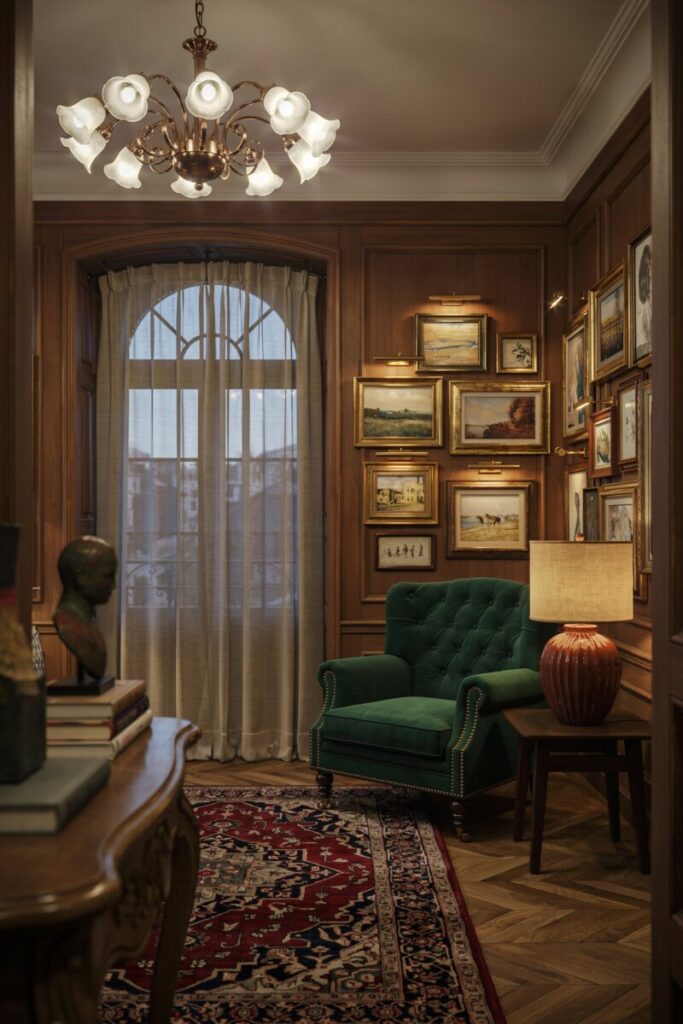
Do use warm-white bulbs (2700K–3000K) to enhance rich colors. Don’t rely on a single recessed-light grid — it kills atmosphere.
Rule 8 — Create Curated Vignettes and Levels
Flat surfaces are styling opportunities. Curated clutter shines when you build height, depth, and grouping using trays, risers, stacked books, and objects of varying scale.
- Start with the tallest item (vase, lamp, stack of books).
- Add a mid-height object (bowl, small sculpture, candle).
- Finish with a low, grounding element (tray, coaster set, small plant).
Example: A coffee table styled with a stack of three art books, a ceramic bowl of moss balls, a small potted fern, and an amber glass candle — all corralled on a brass tray.
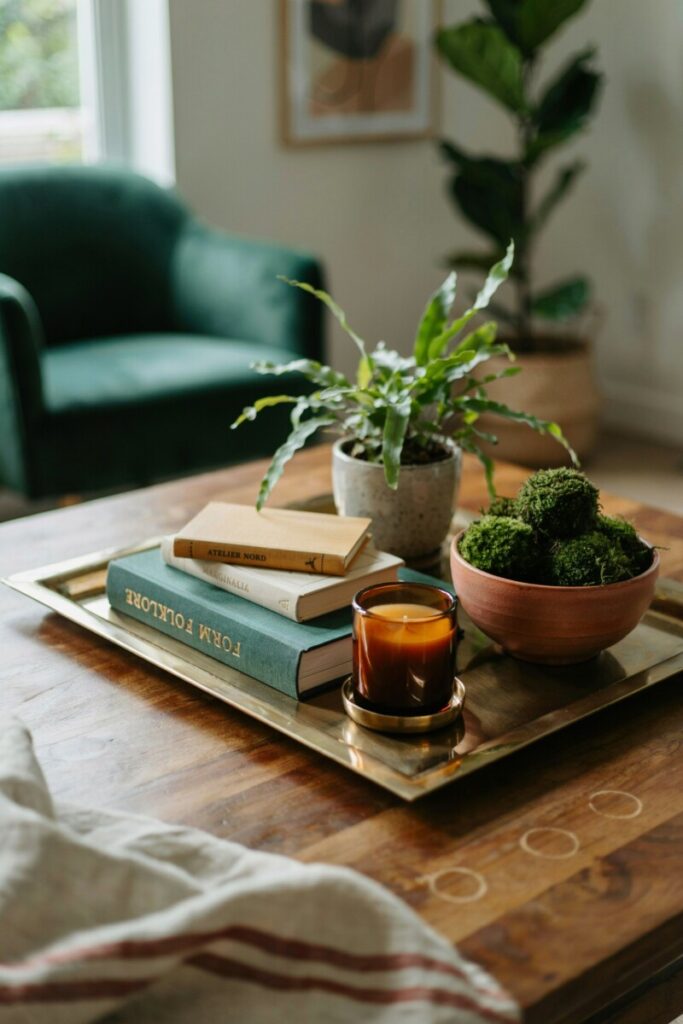
Do use trays to “contain” small objects so they read as one unit. Don’t line items up in a row — stagger heights and overlap slightly for depth.
Rule 9 — Incorporate Pattern, Art, and Textiles in Unexpected Places
The most memorable maximalist style tips involve the element of surprise. Take pattern and color beyond walls and furniture into the spots people don’t expect.
- Wallpaper or paint the ceiling — the “fifth wall” is huge in maximalist rooms.
- Add patterned stair risers using peel-and-stick tiles or painted designs.
- Line closets, pantries, or drawer interiors with bold wallpaper or fabric.
- Layer rugs — a smaller vintage rug over a larger neutral jute is a designer classic.
Example: A dining room with a lacquered teal ceiling, patterned wallpaper on the walls, and a vintage runner layered over sisal — maximalism from floor to crown molding.
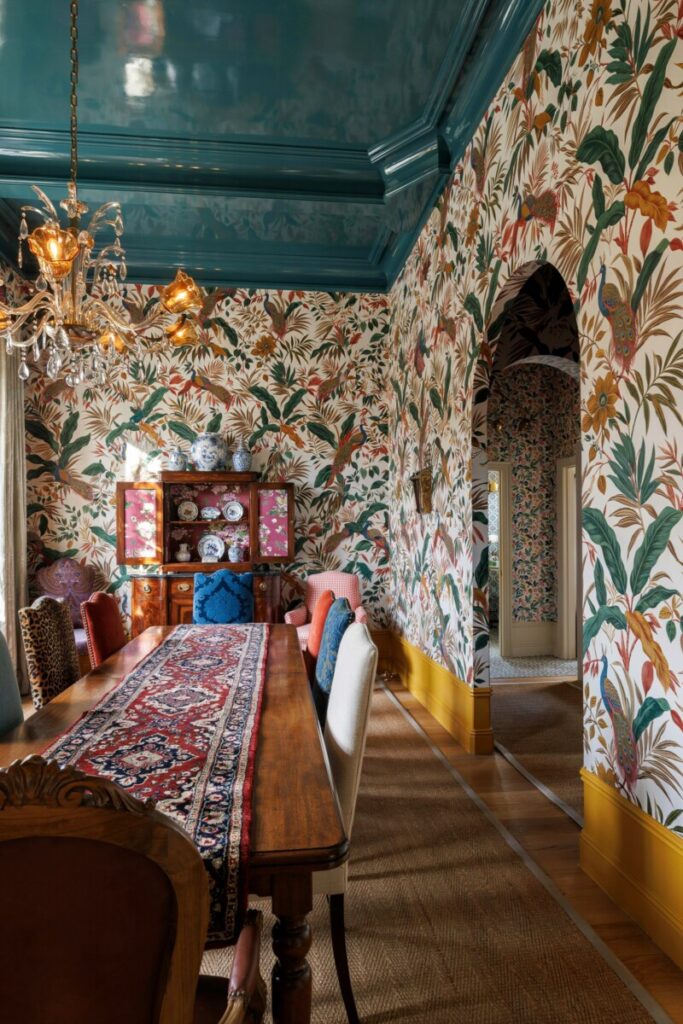
Do extend art to bathrooms, hallways, and even the inside of cabinet doors. Don’t forget baseboards — a contrasting painted trim adds a tailored, bespoke note.
Rule 10 — Make It Lived-In and Adaptable
The most charming maximalist rooms feel lived in, not staged. Embrace slight imperfection, plan for easy swaps, and design for real life — kids, pets, renters, and all.
- Use washable slipcovers and performance fabrics where spills happen.
- Secure artwork and top-heavy shelves in households with kids or pets.
- Renters: lean into renter-friendly maximalist decor — peel-and-stick wallpaper, removable gallery hooks, bold textiles, and furniture (not fixtures) that travels with you.
Example: A renter’s bedroom styled with removable wallpaper behind the bed, a gallery wall hung with Command hooks, and a thrifted velvet bench at the foot — all of it move-out ready.
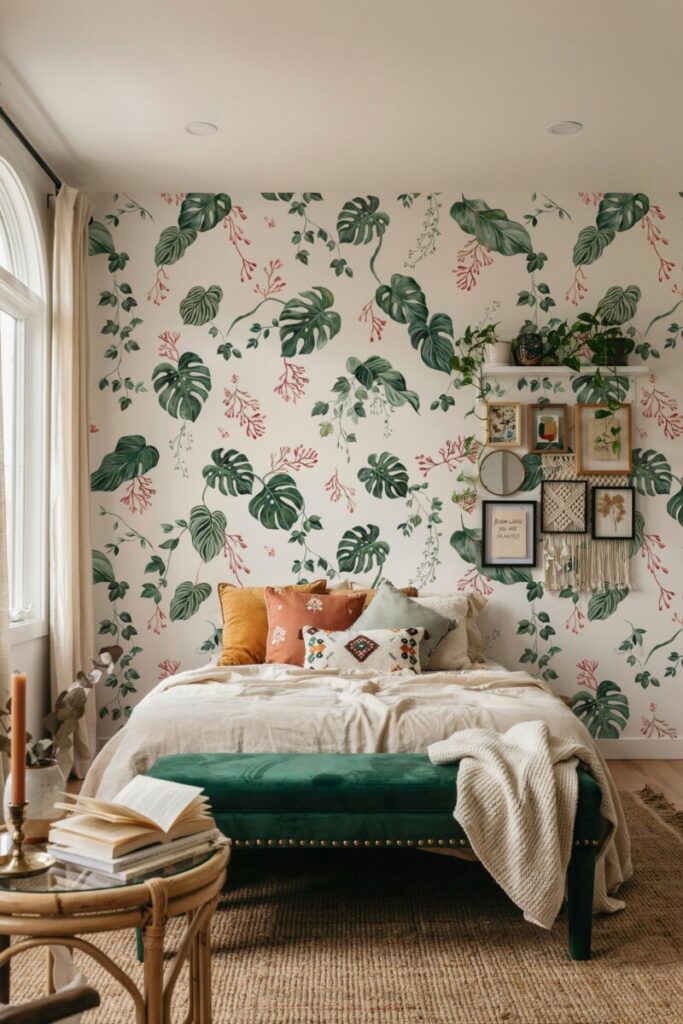
Do allow the room to evolve — swap pillows and art seasonally. Don’t treat maximalism as a one-time install; it’s an ongoing, joyful practice.
Room-by-Room Maximalist Tips
Maximalist Living Room Ideas
Anchor with a statement sofa or oversized rug, then layer in a gallery wall, mixed throw pillows, and at least two lighting sources. For renters, use large-scale removable art and a bold area rug to transform the space without touching walls. Choose rounded-edge coffee tables and secured bookshelves in homes with young kids or active pets.
Maximalist Bedroom Ideas
This is the perfect room for cozy maximalism. Layer bedding (linen sheets + a chunky knit throw + printed duvet), add a canopy or bed crown, and install sconces flanking a patterned headboard wall. Peel-and-stick patterned wallpaper behind the bed gives renter-friendly drama. Opt for washable velvet or performance cotton if pets join you in bed.
Kitchen
Maximalism in kitchens often shows up through displayed collections — open shelving with vintage plates, stacked ceramic canisters, colorful tea towels, and a bold runner. Use tension rods and removable hooks for renters. Paint or vinyl-wrap cabinet fronts for a rent-safe refresh.
Small Spaces
Contrary to popular belief, maximalism works in small rooms — bold pattern can actually make a powder room or entry feel jewel-box-like rather than cramped. Go big on one wall, mirror strategically to bounce pattern around, and keep floor space clear.
Where to Find Pieces and Shop Smart
Maximalism thrives on mixing high and low, new and old. Here’s where to source at every budget:
- Thrift stores and estate sales — goldmines for vintage finds, oil paintings, brass objects, and one-of-a-kind textiles.
- Etsy and small makers — handmade ceramics, custom pillows, and unique art prints that won’t appear in your neighbor’s home.
- Flea markets and antique malls — ideal for layered rugs, statement furniture, and thrifted home decor with patina.
- Big-box and online retailers — West Elm, CB2, World Market, and HomeGoods for on-trend accents; use them sparingly alongside vintage for depth.
- Upcycle what you have — reupholster a tired chair in a bold fabric, spray-paint brass hardware, or sew new covers for dining chairs.
Sustainable decor fits naturally with maximalism: buying secondhand, repairing pieces instead of replacing them, and choosing long-lasting natural textiles like linen and wool all reduce waste while adding the character and patina maximalism loves.
Quick Styling Checklist
Use this anytime you’re refreshing a room — it distills the 10 rules into fast action steps:
- Pick one anchor piece and build the palette from it
- Layer 3 distinct scales of pattern, linked by color
- Mix at least 4 textures (nubby + smooth + glossy + natural)
- Use 3 light sources minimum (ambient, task, accent)
- Group objects in odd numbers and vary heights with trays and risers
- Include one surprise element — a painted ceiling, unexpected wallpaper, or bold trim
- Leave breathing room — at least one quiet, neutral zone per room
- Rotate collections seasonally and edit anything that doesn’t tell your story
Try This at Home
Maximalism is, at heart, a forgiving style. There’s no single “right” look — only your look. Start small: restyle a single shelf, swap out your throw pillows, or hang a gallery wall in a hallway. Let the room grow with you, and don’t be afraid to move things around until they click.
We’d love to see your take. Share a photo of your favorite maximalist corner in the comments or tag us on social — and tell us your best layering trick. For more bold-home inspiration, check out our guides on Gallery Walls 101, Color Pairing Basics, and Budget-Friendly Renter Decor, or sign up for the Bold Home Styling newsletter for weekly maximalist ideas delivered to your inbox.
Happy layering — the more, the merrier.