
Picture this: soaring ceilings, raw exposed brick stretching floor to ceiling, and sleek matte black hardware tracing the lines of ductwork overhead. It’s the quintessential city loft — beautiful in its bone structure, but sometimes a little cold once the sun goes down. Industrial chic design celebrates these unfinished, honest materials, yet even the most devoted urban-loft lovers eventually crave a warmer, more inviting space to come home to.
The good news? You don’t have to sacrifice raw character to make your industrial space feel lived-in and lively. A few well-placed pops of color — from a terracotta throw draped over a steel-frame chair to a mustard-yellow pendant hovering above a concrete dining table — can transform a stark loft into a cozy retreat without covering up the architecture you fell in love with. In this guide, we’ll walk through practical, renter-friendly, and budget-conscious strategies to layer color into brick-and-metal interiors, whether you’re working with a permanent homeowner’s canvas or a lease you’ll hand back in twelve months.
Why Color Matters in Industrial Spaces
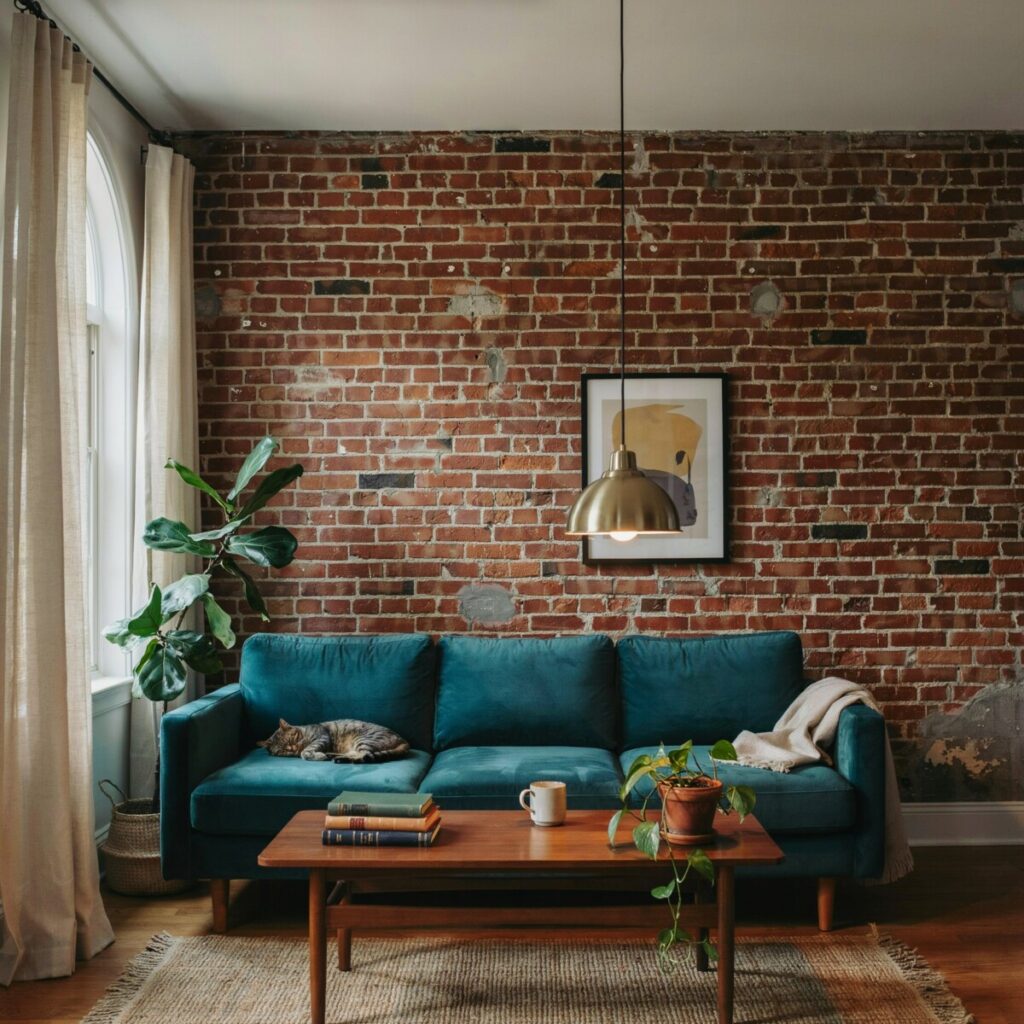
Industrial interiors lean heavily on neutrals: the ruddy brown of aged brick, the gunmetal grey of steel beams, the weathered tan of reclaimed wood. While that restrained palette reads as sophisticated and minimal, it can also tip into flat, sterile, or even institutional when every surface competes at the same low saturation. Color, applied intentionally, solves this problem by creating visual hierarchy — giving the eye a place to land, rest, and travel.
Psychologically, warm hues like burnt orange, ochre, and dusty rose trigger feelings of comfort and intimacy, which is exactly what a vast, open-plan loft with ten-foot ceilings needs. Cool accents like teal, sage, and slate blue, on the other hand, introduce calm and sophistication without fighting the industrial backdrop. The trick is balance: let brick and metal remain the “bones” (roughly 60–70% of your visual field) and use colored textiles, art, and décor to fill the remaining 30–40%.
Color also softens acoustics when introduced through fabric — a critical but often overlooked benefit in hard-surfaced spaces where every footstep echoes. A saturated rug or heavy linen curtain doesn’t just look warm; it literally makes the room feel warmer and sound quieter.
Choosing a Color Palette
Not every color plays nicely with brick and metal, so start by reading the undertones already present in your space. Red-toned brick pairs naturally with warm accent colors — think terracotta, mustard, and cream — while cooler grey or whitewashed brick opens the door to jewel tones like emerald, navy, and plum. Metal finishes also matter: mixed metals (brass, copper, blackened steel) each pull a palette in a different direction, so decide which hardware tone will be your “dominant” and let it guide your accent choices.
Below are three curated palettes designed specifically for industrial spaces. Each includes hex codes so you can pull exact paint, fabric, or product matches.
3 Go-To Palettes for Industrial Interiors
- Urban Cozy — Terracotta (
#C2703E), Oat Cream (#F2E8D5), Charcoal (#3B3B3B), and Sage (#8FA68A). Warm, earthy, and grounding. Pairs beautifully with red brick and blackened steel. Use terracotta as your dominant accent, cream for larger soft goods (curtains, area rugs), sage sparingly in plants and ceramics. - Warm Loft — Mustard Yellow (
#D4A537), Cognac Leather (#8B4513), Warm White (#FAF5EE), and Matte Black (#2C2C2C). Retro-tinged and cheerful. Ideal for spaces with visible ductwork and mid-century furniture. Mustard yellow decor shines as throw pillows, a single accent chair, or a statement pendant shade. - Modern Pop — Teal (
#2E8B8B), Dusty Pink (#C9A0A0), Concrete Grey (#A8A8A8), and Polished Brass (#C5A258). Fresh, fashion-forward, and unexpected. Works well in smaller apartments where you want maximum personality from minimal square footage. Teal accent color on a sofa or built-in creates an instant focal point.
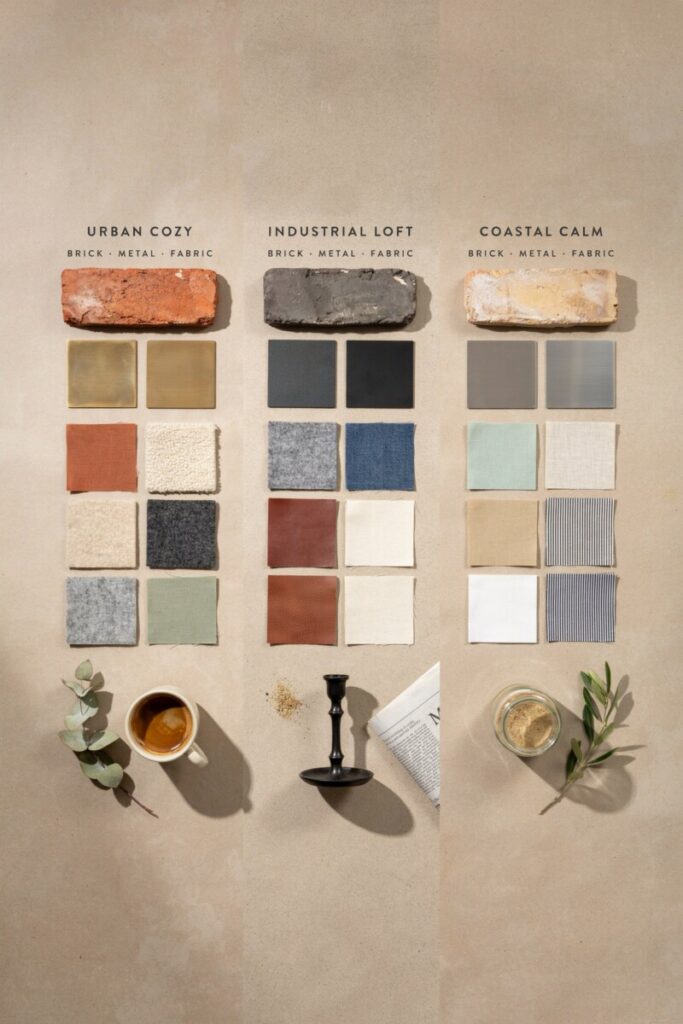
Quick Tip: Pick one dominant accent color (roughly 20% of your décor) and one supporting accent (roughly 10%). The remaining 70% stays neutral — let the brick and metal do the heavy lifting.
Paint and Wall Treatments That Work with Brick and Metal
One of the biggest mistakes in industrial chic styling is treating the brick wall as untouchable. Exposed brick is a feature, not a museum piece — and there are plenty of reversible, renter-friendly decor methods to add color without permanent damage.
Limewash is a top-tier option for homeowners: it deposits a translucent veil of pigment over brick while letting the texture and mortar lines show through. Brands like Portola Paints and Color Atelier offer limewash kits in muted tones (try “Biscuit” or “Sage”) that soften aggressive red brick into something warmer and more layered. Application is brush-on, and it’s fully breathable, so it won’t trap moisture against the masonry.
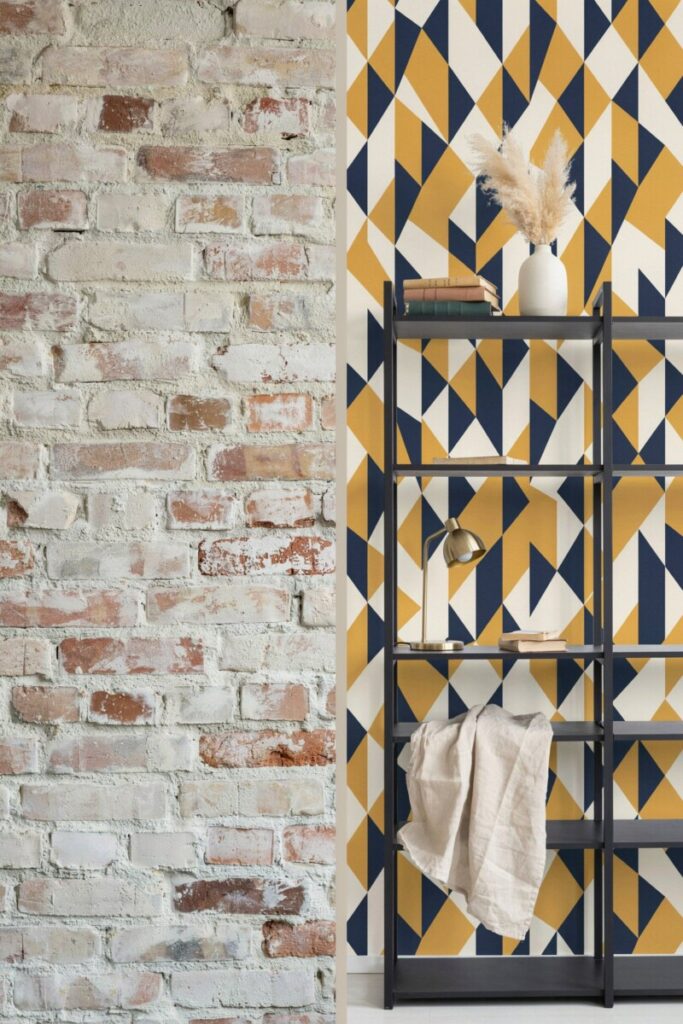
For accent wall ideas in rentals, removable wallpaper and peel-and-stick panels are lifesavers. Look for textured vinyl options that mimic plaster, terrazzo, or abstract brushstroke patterns — these hold their own visually against raw brick rather than looking pasted on. Tempaper, Chasing Paper, and Spoonflower all offer peel-and-stick lines in bold prints that complement metal accents. Apply to a single focal wall, the inside of open shelving, or even the back panel of a metal industrial bookcase for a hidden pop.
Temporary color washes — diluted latex paint wiped on and off brick with a rag — give a watercolor-stained effect that can be scrubbed off with TSP when your lease ends. Pair this treatment with a single painted metal trim (e.g., painting the interior lip of a steel doorframe in mustard) to tie the look together.
Furnishings and Textiles for Pops of Color
Textiles are your single most powerful tool for injecting color into an industrial space, and they’re fully reversible — perfect whether you own or rent. Start with the largest soft surfaces first: rugs, sofas, and curtains set the dominant tone, while pillows, throws, and smaller upholstery pieces layer in secondary and tertiary accents.
Fabric choice matters as much as color. Industrial textures — rough brick, cold steel, polished concrete — are balanced best by fabrics with tactile warmth: heavyweight linen, nubby wool, supple leather, and plush velvet. Avoid flimsy polyester blends, which can look cheap against honest, raw materials.

6 Ready-to-Use Combinations
| Anchor Piece | Color + Texture Pairing | Rug Base |
|---|---|---|
| Cognac leather sofa | Teal velvet cushions + oatmeal linen throw | Jute or sisal natural fiber |
| Matte-black metal dining chairs | Mustard-yellow seat cushions (linen or cotton canvas) | Flatweave kilim in rust/cream |
| Charcoal sectional | Dusty pink bouclé pillows + terracotta ceramic side table | Moroccan-style wool in ivory |
| Reclaimed-wood bench | Olive-green linen cushion + brass hardware | Layered cowhide |
| Steel-frame bed | Sage-green linen duvet + cream cable-knit throw | Vintage Persian in muted reds |
| Industrial bar stools (metal + wood) | Burnt-orange leather seat wraps + black-and-cream runner | Seagrass basketweave |
Don’t forget curtains. Floor-to-ceiling linen panels in a saturated hue (terracotta, olive, teal) draw the eye upward in loft-style spaces and add a massive dose of warmth. Hang them on matte-black or unlacquered brass rods to echo the metal accents in the room.
Accent Pieces and Décor
Once your textiles are in place, layer in smaller accent pieces to reinforce your palette and add personality.
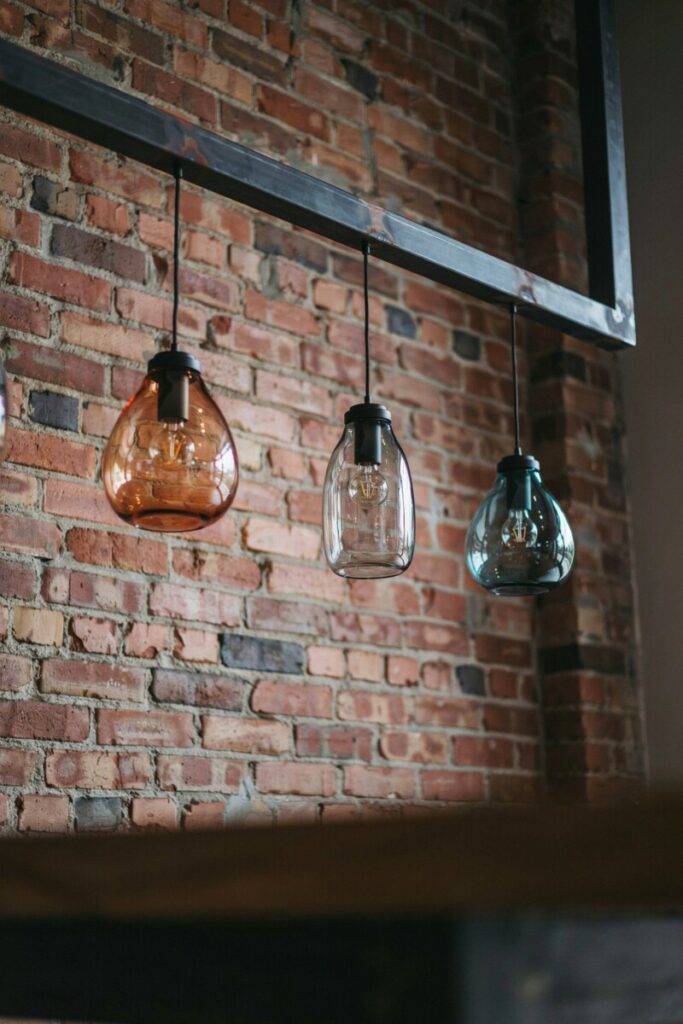
Lighting is an easy win. Swap out basic builder-grade pendants for colored glass globes (West Elm’s blown-glass pendants come in amber, smoke, and teal) or fabric drum shades in bold prints. For industrial lighting with a colorful twist, look at Schoolhouse Electric’s ceramic-shade pendants or Etsy makers who hand-dip brass fixtures in enamel paint. Budget pick: Target’s Project 62 line frequently stocks colored-glass table lamps under $80.
Art is your chance to go bold. A single oversized abstract canvas in your dominant accent color, hung directly on brick using masonry hooks (no drilling required), anchors the entire room. For gallery walls, mix framed prints with small sculptural objects mounted on floating metal shelves. Society6 and Juniper Print Shop offer affordable, large-format prints that photograph beautifully for social sharing.
Plants and planters provide organic color that never clashes. Terracotta pots reinforce terracotta accents in your palette, while matte-black or brushed-brass planters echo metal finishes. Large statement plants — fiddle-leaf figs, bird of paradise, olive trees — add height and greenery that read as “color” against grey and brown backgrounds.
Decorative objects like colored glass vases, ceramic bookends, and stacked coffee-table books with vibrant spines are inexpensive ways to scatter color across metal shelving and concrete surfaces.
Where to Shop (by Budget Tier)
| Tier | Retailers | Price Range |
|---|---|---|
| Budget | Target, IKEA USA, HomeGoods, Wayfair | $10–$80 per piece |
| Mid-range | West Elm, CB2, World Market, Etsy | $50–$250 per piece |
| Splurge | Design Within Reach, Schoolhouse Electric, Rejuvenation, 1stDibs | $200–$1,000+ |
Metal and Brick-Friendly Finishes
Metal in industrial spaces isn’t just structural — it’s a design element that deserves thoughtful finishing. Decide early whether you want your metal to read as patinated and vintage (think aged brass, rusted Corten steel, oil-rubbed bronze) or polished and modern (brushed nickel, polished chrome, satin brass). Mixing is fine — mixed metals are a hallmark of good urban loft decor — but pick one dominant finish and let the others play supporting roles.
Matte black hardware is the most versatile choice for industrial spaces: it recedes visually, letting brick and color accents take center stage, and it pairs with literally every accent color on our palettes above. Swap out cabinet pulls, switch plates, and shelf brackets for matte-black versions (Rocky Mountain Hardware and Amazon’s Franklin Brass line both offer affordable options).
When choosing between metallic color accents (brass, copper, gold) and painted color accents (teal, mustard, terracotta), think in terms of temperature. Metallic finishes add warmth and reflectivity — ideal for dim spaces or north-facing lofts — while painted accents add energy and personality. A well-styled room typically uses both: brass hardware and light fixtures for warmth, teal or mustard textiles for vibrancy.
Small DIY and Renter-Friendly Projects
You don’t need a contractor or a big budget to make a color statement in an industrial space. Here are quick, high-impact projects:
Quick-Win Ideas
- Painted shelf interiors: Roll a bold color (mustard, teal, terracotta) on the inside back panel of open metal shelving. Adds depth and a surprise pop without touching the brick.
- Colored grout in brick nooks: Use tinted masonry grout to fill select mortar joints in a small section of brick, creating a subtle geometric pattern.
- Magnetic panels: Adhere colored magnetic sheets (available at craft stores) to metal ductwork or steel-columns — swap colors seasonally with zero damage.
- Stenciled rug: Buy a plain jute rug ($30–$60 at IKEA or Home Depot) and stencil a geometric pattern using outdoor fabric paint in your accent color.
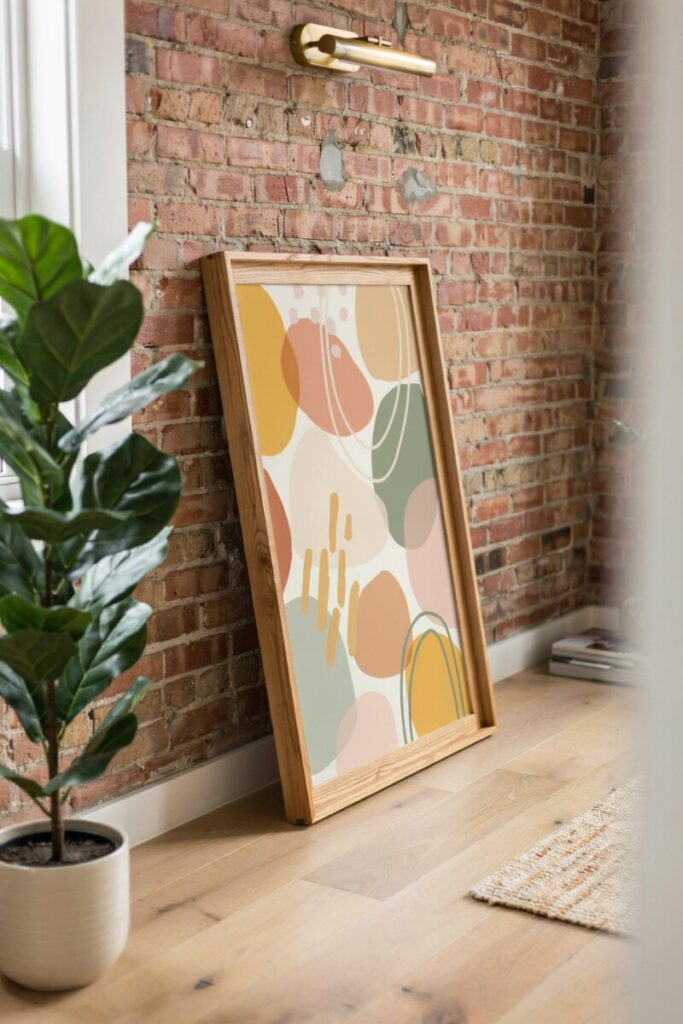
Step-by-Step: Peel-and-Stick Brick Accent Panel
What you’ll make: A framed, removable accent panel that leans against or hangs on a brick wall, adding instant color and pattern without adhesive contact with the masonry.
| Detail | Info |
|---|---|
| Time | 45–60 minutes |
| Cost | $40–$70 |
| Skill level | Beginner |
Materials:
- One 24″ × 36″ pre-primed wood panel (Home Depot, ~$12)
- Peel-and-stick wallpaper roll in your chosen pattern (Spoonflower or Tempaper, ~$25–$40)
- Matte-black spray paint for frame edges (Rust-Oleum, ~$7)
- Utility knife, smoothing tool, picture-hanging wire
Steps:
- Spray-paint the panel edges in matte black; let dry 30 minutes.
- Peel and apply wallpaper to the panel face, smoothing outward from center to eliminate bubbles.
- Trim excess with a utility knife along the back edge.
- Attach picture-hanging wire to the back and mount on the brick wall using adhesive brick hooks (Command hooks rated for masonry, ~$8).
- Lean or hang against your exposed brick wall — fully removable when your lease is up.
Mini Case Study: Apartment Living Room Refresh
The Space: A 600-square-foot loft style apartment in Brooklyn, NY, featuring one full exposed brick accent wall (original 1920s red brick), visible galvanized steel ductwork running along the ceiling, concrete-look vinyl flooring, and large factory-style windows with black metal frames. The renters — a couple in their late twenties — loved the urban loft decor bones but described the living room as feeling “like a cool warehouse, not a home.”
Before: A low-profile grey sectional, a glass-and-steel coffee table, two black leather sling chairs, and a single black rug. Everything was well-chosen but monochromatic. The brick wall had no art, no lighting directed at it, and no soft furnishings nearby to absorb its visual weight.
The Interventions (3 main moves):
- Textile swap: Replaced the black rug with a vintage-style 8×10 Persian-style rug in muted reds and cream ($120, Rugs USA). Added a teal linen throw blanket ($45, West Elm) and four pillows — two mustard velvet, two oatmeal linen ($18 each, Target). Total textile spend: ~$240.
- Lighting upgrade: Swapped the basic flush-mount for a cluster of three amber-glass globe pendants hung at staggered heights over the seating area ($89 each, West Elm pendant base + colored globes from Etsy, $35 each). Added a brass-and-black articulated floor lamp next to the sofa ($130, CB2).
- Art and greenery: Hung a single large abstract canvas in terracotta and cream directly on the brick using brick clips ($65 art print from Society6, $12 clips). Added a 5-foot olive tree in a matte-black planter ($95, The Sill).
Budget total: Approximately $820 over six weeks.
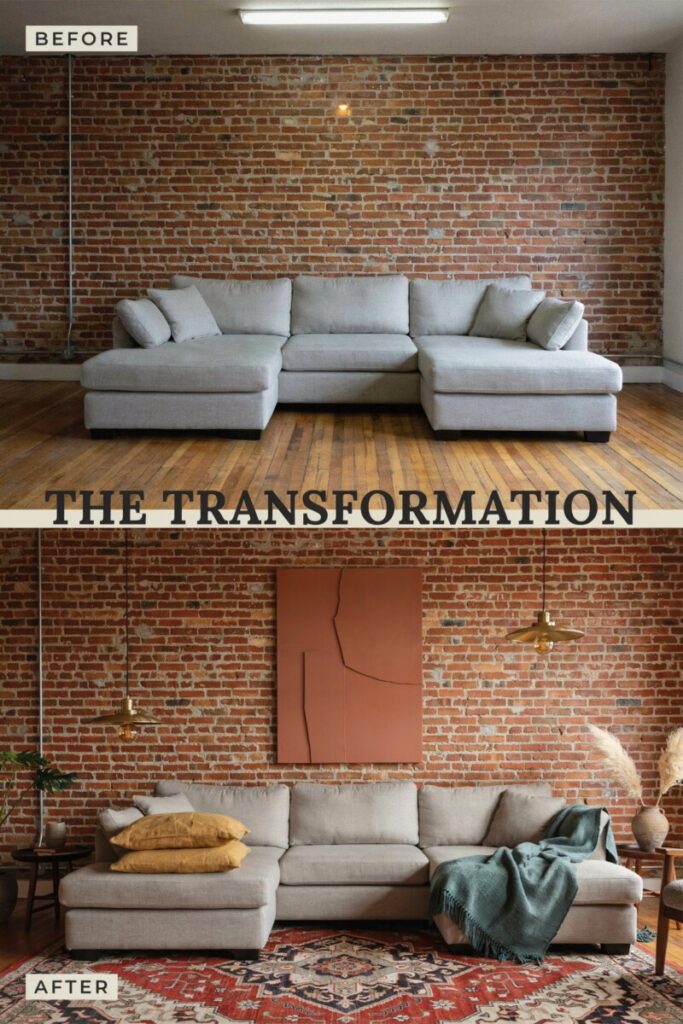
The result: The same raw materials — brick, steel, concrete-look floors — now read as intentional backdrops rather than cold surfaces. The teal accent color on the throw pulls the eye across the room, the mustard pillows echo the amber pendants, and the terracotta art ties directly to the brick’s natural warmth. The couple reported the space now “feels like us — still edgy, but somewhere we actually want to curl up.”
Final Styling Checklist: Quick Tips for Industrial-Chic Color
- ✅ Start with textiles — they’re the highest-impact, lowest-commitment color delivery system.
- ✅ Read your brick’s undertone before choosing a palette; warm brick loves warm accents, cool brick loves jewel tones.
- ✅ Limit yourself to 2–3 accent colors — more than that reads as clutter against raw materials.
- ✅ Layer texture with color — a teal velvet pillow hits harder than a teal cotton one against brick.
- ✅ Use lighting as colored décor — amber, smoke, or colored-glass pendants add warmth 24/7.
- ✅ Don’t fear the brick — limewash, peel-and-stick, and color washes are all reversible options.
- ✅ Echo metal finishes in your accessories — brass vase near brass hardware ties the room together.
- ✅ Anchor big color to one focal point (sofa, rug, or art wall) rather than scattering it everywhere.
- ✅ Add living color — large potted plants are a cheat code for warming industrial spaces.
- ✅ Test before you commit — hold fabric swatches and paint samples against your actual brick in natural and artificial light.
- ✅ Renter? Go heavy on soft goods — pillows, throws, rugs, and curtains leave zero damage and travel with you.
- ✅ Photograph your space at different times of day — industrial materials shift dramatically with light, and your color choices should work in all conditions.
Pin It, Share It, Live It
Loved these industrial chic color strategies? Pin your favorite image from this post to your home-decor board, tag us on Instagram with your before-and-after shots using #IndustrialChicColor, and sign up for our weekly newsletter to grab the free downloadable mood-board templates (including all three palettes above with shoppable product links). Your warm industrial space is one throw pillow away — go make it yours.