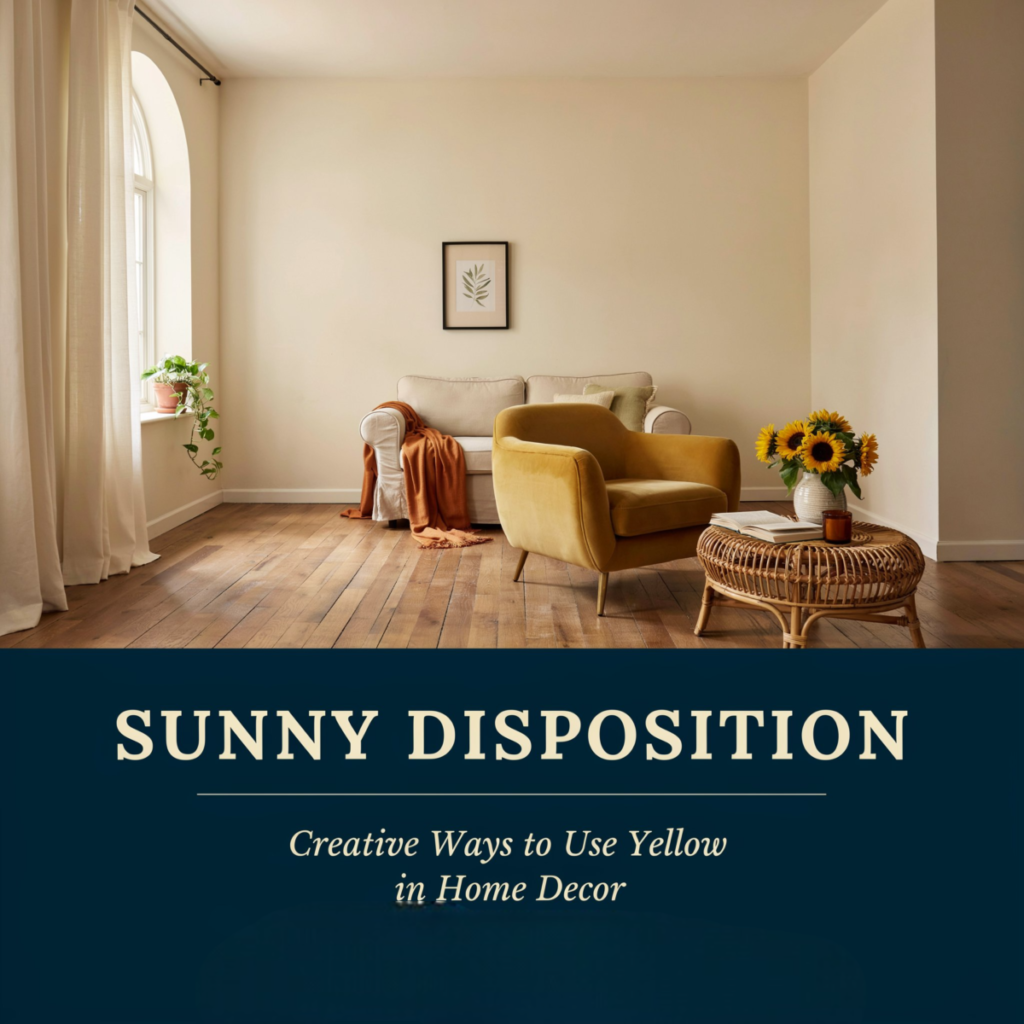
Imagine pulling back the curtains on a gray Tuesday morning and catching a flash of golden light bouncing off a mustard throw draped across your sofa. That single warm note can shift the energy of an entire room—and your mood along with it.
Yellow is having a moment. Pinterest’s recent trend reports show a steady rise in searches for warm, optimistic interiors, with yellow home decor leading the charge among accent colors. Designers are moving away from all-gray palettes and embracing hues that feel lived-in, joyful, and unmistakably personal.
But here’s the catch: yellow is bold. Get the shade right and your space feels like perpetual sunshine. Get it wrong and you’re living inside a highlighter.
This guide walks you through everything you need to know about using yellow in home decor—from color psychology and shade selection to room-by-room ideas and renter-friendly hacks. By the end, you’ll have a clear plan to bring warmth into your home without committing to a full renovation.
The Psychology of Yellow
Color isn’t just visual—it’s emotional. Yellow sits at the warm end of the visible spectrum and is consistently associated with happiness, optimism, energy, and creativity. Research in environmental psychology suggests that warm-toned rooms can promote social interaction and feelings of comfort, which is exactly why yellow keeps showing up in kitchens, living rooms, and creative workspaces.
Culturally, yellow carries layered meanings. In many Western contexts it signals cheerfulness and warmth. In parts of Asia, it’s historically linked to royalty and prosperity. Understanding these associations helps you use the color intentionally, not accidentally.
There’s a caveat, though. Overstimulation is real. A room saturated in bright lemon yellow can feel agitating over time—especially in spaces where you’re trying to unwind. The shade you choose matters enormously:
- Muted buttercup is calming and serene, ideal for bedrooms or reading nooks.
- Vibrant lemon energizes and activates, making it better suited for kitchens, home offices, or entryways.
The lesson? Treat yellow like seasoning. A little lifts everything; too much overwhelms the dish.
Choosing the Right Yellow
Understanding Undertones and Lighting
Every yellow has an undertone—either warm (leaning orange or golden) or cool (leaning green or chartreuse). Warm yellows feel cozy and traditional. Cool yellows feel modern and crisp. The undertone you pick should complement your room’s existing fixed elements: flooring, countertops, and cabinetry.
Lighting is the wild card. A shade that looks perfect in the paint store can turn sickly under cool LED bulbs or glow almost orange in late-afternoon sun. Here’s a reliable method for testing:
- Buy sample pots of three to four shades.
- Paint large swatches (at least $12 \times 12$ inches) on different walls.
- Observe them at morning, midday, and evening over two to three days.
- View them alongside your existing furnishings, not in isolation.
Pairing Principles
Yellow is surprisingly versatile when paired thoughtfully. Keep these combinations in mind:
- Neutrals — gray, white, beige, and warm taupe let yellow breathe without competition.
- Contrast colors — navy, charcoal, and teal create sophisticated tension.
- Complementary accents — blush pink, soft lavender, and natural wood tones add depth and softness.
Popular Yellow Shades at a Glance
| Shade | Undertone | Best Room | Mood |
|---|---|---|---|
| Buttery | Warm, soft | Bedroom, reading nook | Calm, restful |
| Pale lemon | Cool, light | Bathroom, nursery | Fresh, airy |
| Mustard | Warm, earthy | Kitchen, entryway | Cozy, inviting |
| Ochre | Warm, deep | Accent wall, dining room | Dramatic, grounded |
| Goldenrod | Warm, vibrant | Home office, playroom | Energetic, creative |
If you’re new to yellow, start with buttery or mustard. They’re the most forgiving and pair beautifully with the neutral furnishings most people already own. For more guidance on building a palette from scratch, check out our guide on how to choose paint colors.
Styling Strategies: From Subtle to Bold
Think of yellow as existing on a spectrum of commitment. You don’t have to paint a wall to make an impact—sometimes the smallest touches carry the most personality.
Subtle: Accessories and Accents
This is the low-risk, high-reward tier. You can refresh a room in an afternoon and change your mind next season.
- Throw pillows in textured linen or velvet add instant warmth to a neutral sofa.
- Lampshades cast a golden glow that softens the entire room in the evening.
- Artwork and prints with yellow motifs tie a gallery wall together.
- Ceramic vases in varying shades create depth on a console or shelf.
- Patterned rugs with yellow threads woven in ground a seating area without dominating it.
If you’re looking for specific recommendations, our roundup of the best accent pillows for living rooms includes several yellow options across price points.
Moderate: Furniture and Soft Furnishings
Step up the commitment with pieces that anchor a room but can still be swapped or reupholstered.
- Dining chairs in mustard velvet make a breakfast nook feel curated.
- An ottoman or pouf in golden fabric adds a casual, layered look.
- Curtains in pale lemon linen filter light beautifully and feel airy.
- Removable wallpaper panels behind a bed or desk create a focal point without painting an entire wall.
Bold: Walls, Cabinetry, and Statement Pieces
For those ready to go all in, yellow can be a showstopper at scale.
- A full accent wall in ochre behind a sofa or bed commands attention.
- Painted kitchen cabinets in warm mustard paired with brass hardware feel both vintage and current.
- An upholstered sofa or headboard in a rich golden tone becomes the room’s centerpiece.
- Tiled backsplashes in handmade yellow zellige tile add texture, movement, and warmth.
The Rule of Three
No matter which level you choose, aim to repeat yellow in at least three places per room. A throw, a lampshade, and a framed print. A vase, a book spine, and a candle. This repetition creates cohesion instead of randomness.
Balance those pops with grounding neutrals and layer in metallic accents—brass hardware and yellow are a near-perfect pairing, adding warmth without additional color.
Mini Case Study: The Small Apartment Living Room
Sarah, a renter in Austin, loved her compact living room but felt it looked flat and impersonal. Her budget was tight, and her lease prohibited painting. Instead of replacing furniture, she layered in three yellow touches: a mustard knit throw ($38), a brass-and-linen table lamp with a golden shade ($65), and a vintage botanical print with yellow highlights, framed in natural oak ($45 from a local estate sale).
The result? Her gray sofa suddenly looked intentional, the brass hardware on her existing bookshelf felt connected to the lamp, and the whole room read as warm and styled—total investment: under $150.
Room-by-Room Yellow Home Decor Ideas
Every room has a different job. The shade and intensity of yellow you choose should match how the space is used. Here’s a breakdown of how to bring yellow home decor into the rooms where it shines brightest.
Yellow Living Room Ideas
The living room is where yellow feels most at home—warm, social, and welcoming.
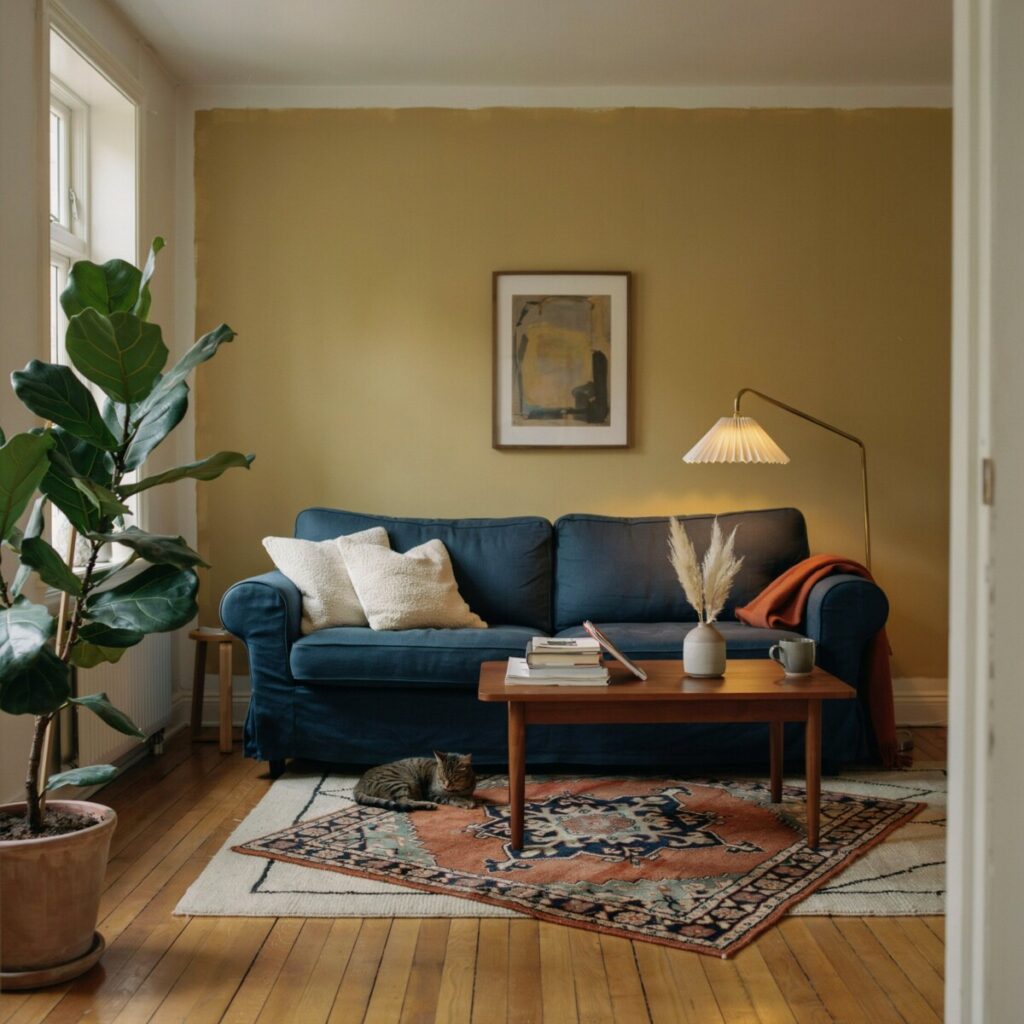
Walls and wallpaper. A yellow accent wall behind the sofa in a muted ochre or warm buttercup creates a cozy backdrop without overwhelming. If paint feels permanent, try a peel-and-stick wallpaper with a subtle yellow botanical or geometric motif.
Furniture and seating. A pair of yellow accent pieces—like mustard velvet armchairs or a goldenrod ottoman—anchor a seating arrangement. Pair them with navy or charcoal upholstery for a sophisticated contrast that feels both classic and current.
Styling the coffee table. Create a small vignette: a stack of books with yellow spines, a ceramic bowl in pale lemon, and a single brass object. This layered approach makes the color feel intentional.
Lighting and textiles. A brass floor lamp with a linen shade casts warm pools of light that complement yellow walls. Add a textured throw in golden tones across the arm of your sofa and choose curtains in a soft, warm white to let the yellow breathe.
Yellow Kitchen Decor Ideas
Kitchens benefit enormously from warm tones—they’re spaces where people gather, cook, and linger.
Cabinetry. Painted lower cabinets in warm ochre, paired with white uppers and butcher block countertops, create a two-tone look that’s both modern and nostalgic. Swap in unlacquered brass pulls for continuity.
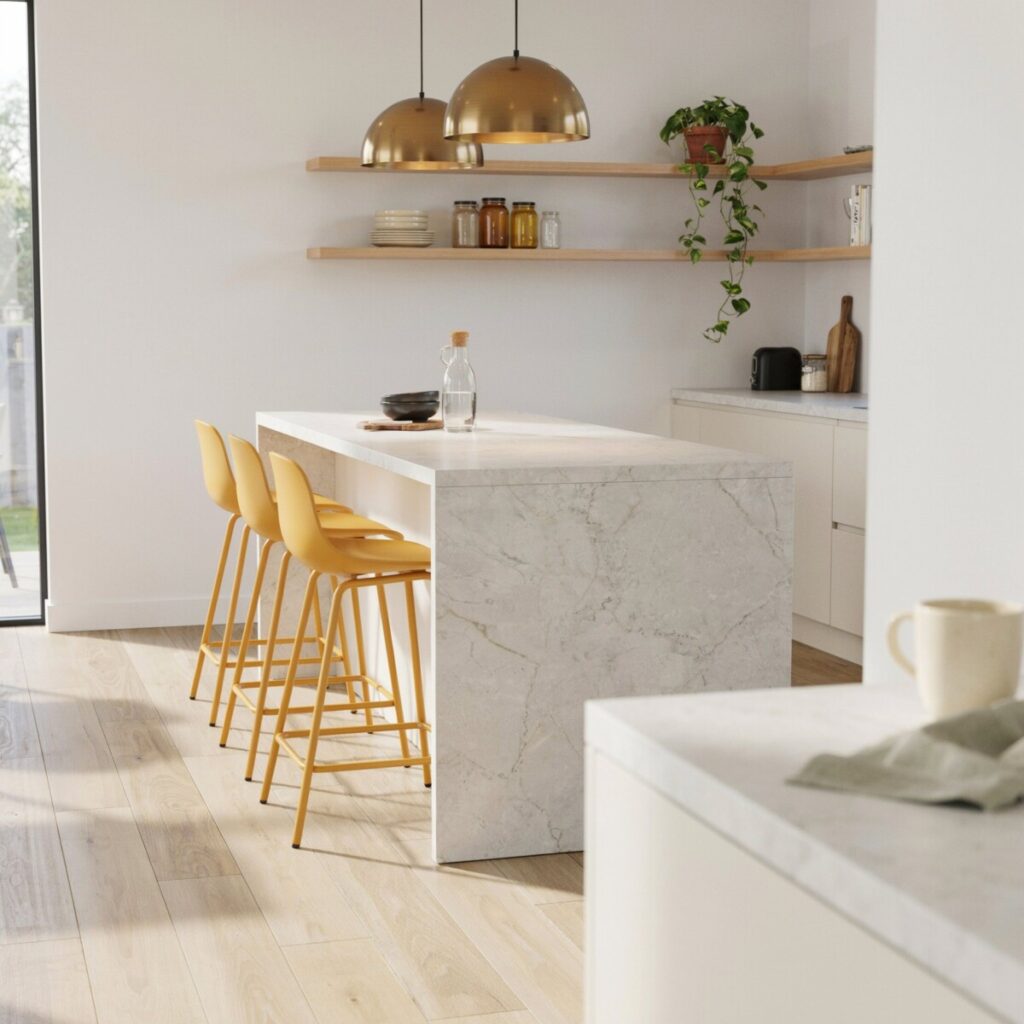
Seating. Yellow kitchen decor can be as simple as a set of bar stools in mustard leather or golden fabric at the island. They pop against white or marble countertops and are easy to replace if your taste shifts.
Backsplash and shelving. Handmade yellow zellige tile brings texture and artisan character. Open shelving styled with yellow ceramic plates, mugs, and a few brass canisters adds personality without a full renovation.
Small touches. Don’t overlook tea towels in cheerful yellow prints, a handmade fruit bowl, or pendant shades in golden enamel over the sink. These are affordable ways to test the color before committing to bigger changes.
Yellow Bedroom Ideas
The bedroom demands restraint. This is where you unwind, so saturation matters.
Wall color. Soft, buttery yellow paint ideas work beautifully on all four walls when paired with white or cream bedding. Think morning light rather than midday sun. Avoid anything too bright—it can feel energizing at the exact moment you’re trying to fall asleep.
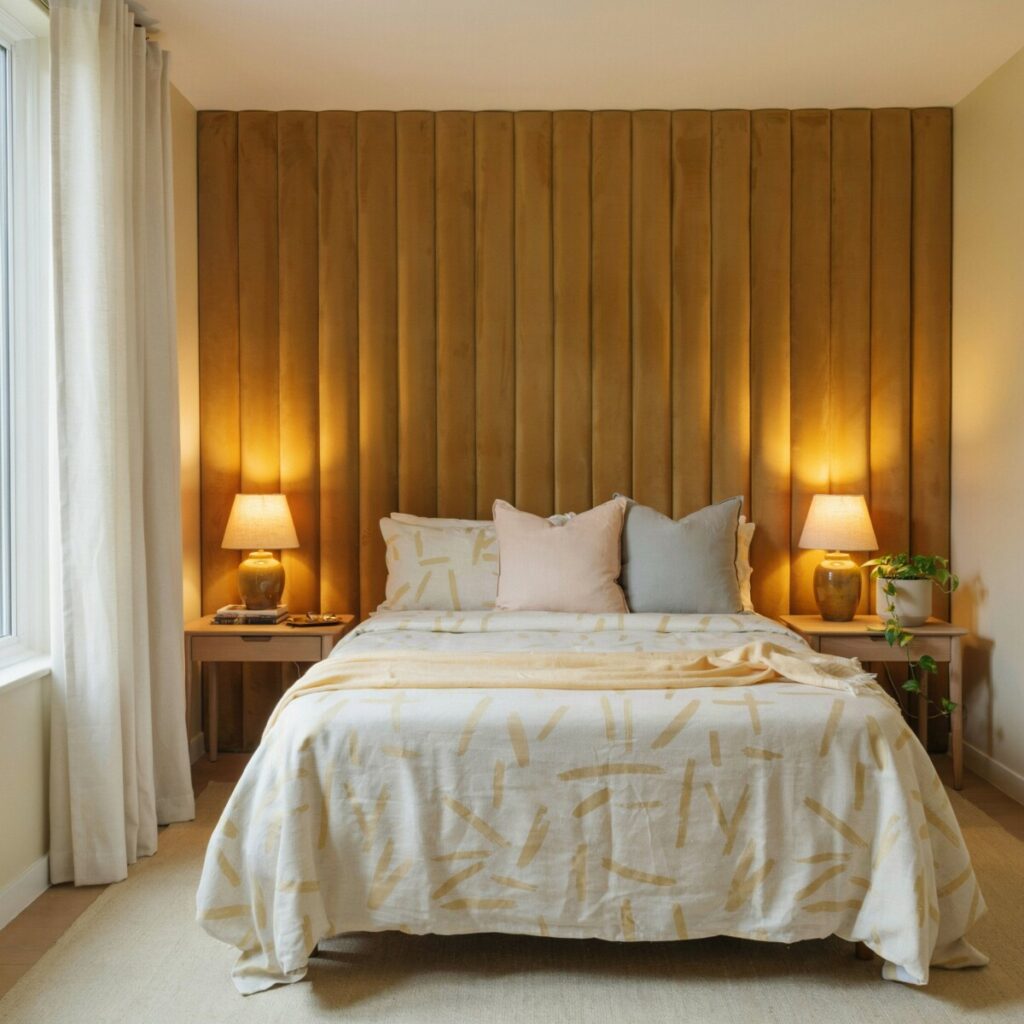
Headboard and upholstery. A channel-tufted headboard in warm mustard velvet anchors the bed and becomes the room’s focal statement. Layer with linen pillows in cream, blush, and soft gray.
Bedding and trim. A patterned duvet with subtle yellow accents—florals, stripes, or abstract brushstrokes—adds interest without overwhelming. Layer a lightweight yellow throw at the foot of the bed for a finishing touch.
Lighting. Bedside lamps with golden ceramic bases and warm-white bulbs ($2700K$ color temperature) reinforce the palette. Skip cool-toned bulbs, which make warm yellows look muddy.
A small note on sleep quality: research links cool, low-stimulation environments to better rest. If you choose yellow for the bedroom, lean muted. Save the vibrant lemons for spaces where you want to feel awake.
Bathroom and Entry Ideas
These smaller spaces are surprisingly powerful canvases for yellow.
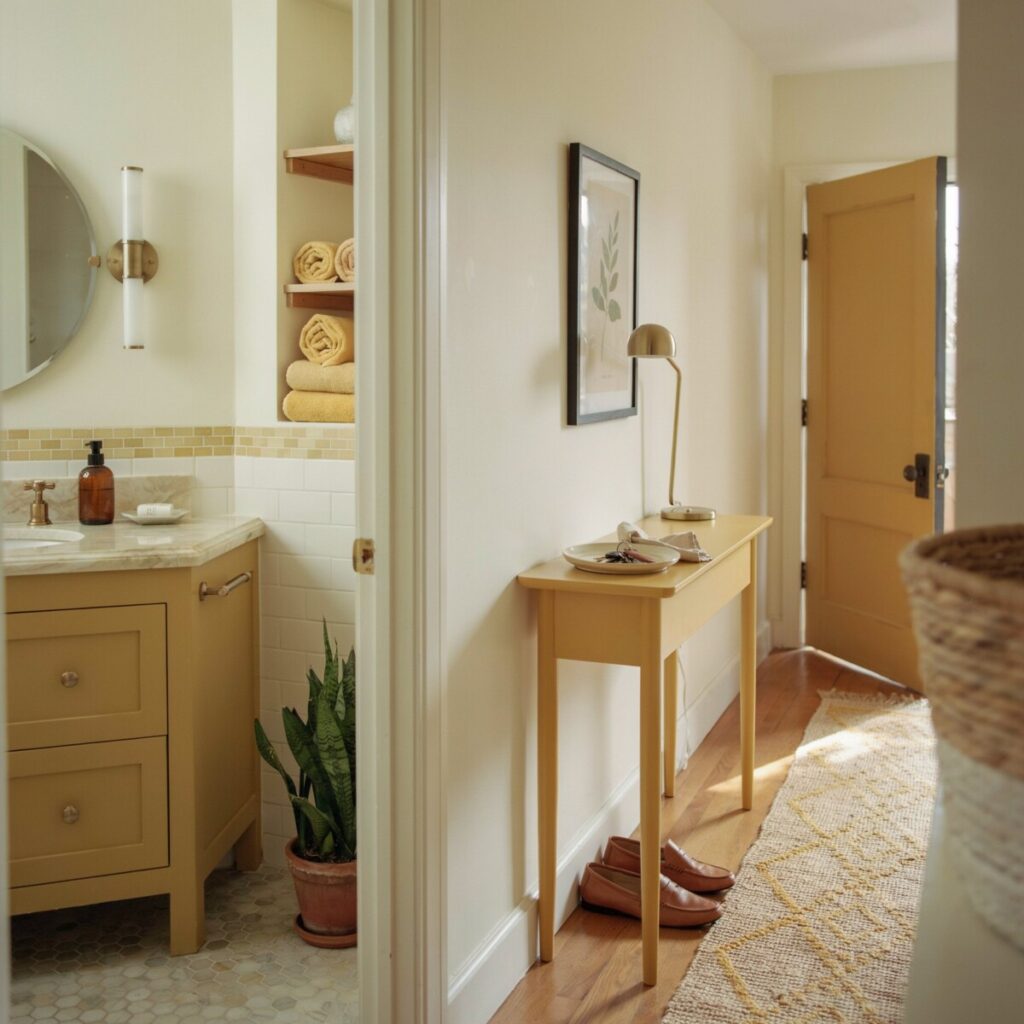
Bathroom. Pale lemon on the walls keeps things feeling fresh and spa-like. Stack rolled towels in warm yellow on open shelving, or add a small tile accent in handmade yellow ceramic behind the vanity. For a bolder move, paint the vanity itself in deep mustard and pair it with brass knobs and a marble top.
Entryway. This is where a first impression lives, and yellow delivers. A painted console table in goldenrod, a patterned runner rug with yellow threads, or—if your lease or HOA allows—a front door painted in warm ochre all signal warmth the moment someone walks in. For renters, peel-and-stick solutions on an interior accent wall deliver similar impact with zero permanence.
Budget-Friendly and Renter-Friendly Options
You don’t need a contractor or a big budget to bring yellow into your home. Some of the best budget yellow decor ideas rely on creativity, not capital.
- Peel-and-stick wallpaper in yellow patterns transforms a focal wall in hours and removes cleanly at move-out.
- Removable wallpaper panels behind a desk or bed create the look of a headboard or accent without any permanent installation.
- Adhesive backsplash tiles in yellow tones give kitchens a refresh without grout or demolition.
- Slipcovers for dining chairs or sofas let you experiment with color seasonally.
- Spray paint rated for metal or wood can transform thrifted brass-toned frames, lamp bases, or hardware in an afternoon.
- Thrifted furniture refreshed with a coat of warm yellow paint becomes a statement piece at a fraction of the cost.
Quick DIY idea: Stencil a repeating yellow accent pattern on a single wall using painter’s tape and a small foam roller. Or paint the back wall of a bookshelf in a warm mustard—every object on the shelf suddenly looks curated against that backdrop.
Safety tip: Always test furniture cleaners, adhesives, and spray paints on a small, inconspicuous area first. Ventilate well when painting indoors.
For more wallet-friendly inspiration, browse our collection of budget-friendly DIY home updates.
Common Mistakes and How to Avoid Them
Even experienced decorators misstep with yellow. Here are the most frequent errors—and simple fixes.
Wrong undertone. A cool, greenish yellow in a room with warm oak floors will clash. Always test swatches against your fixed elements before committing.
Over-saturating a small room. A tiny powder room in bright lemon can feel claustrophobic. In compact spaces, opt for paler, muted shades or use yellow in accessories only.
Ignoring lighting. Yellow shifts dramatically under different bulbs. Pair warm yellows with warm-white bulbs ($2700K$–$3000K$). Cool LEDs will flatten the color.
Clashing color pairings. Yellow next to certain reds or oranges can vibrate uncomfortably. Stick to proven pairings: neutrals, navy, charcoal, teal, blush, or natural wood.
Not enough contrast. Accessibility matters. If you’re adding yellow signage, labels, or text elements in your decor, ensure there’s strong contrast with the background for readability.
The fix for most of these? Follow the rule of three, swatch-test everything, anchor with neutrals, and when in doubt, go one shade more muted than your first instinct.
Ready to Bring the Sunshine In?
Yellow isn’t a trend that demands you follow it—it’s a mood you get to choose. Whether your style leans modern farmhouse with weathered mustard accents, mid-century modern with goldenrod upholstery, or boho with layered lemon textiles, there’s a version of yellow that belongs in your home.
Here’s your quick-start checklist:
- ✅ Choose your shade based on the room’s purpose.
- ✅ Test it in real light across multiple times of day.
- ✅ Repeat it three times in each space for cohesion.
- ✅ Balance with neutrals and warm metallics like brass.
“A little yellow goes a long way—repeat it three times for balance.”
Or subscribe to our weekly newsletter for seasonal decor ideas, budget DIYs, and the color trends we’re watching next. Have you already added yellow to a room in your home? Share a photo on Instagram and tag us—we’d love to see what you’ve created.