
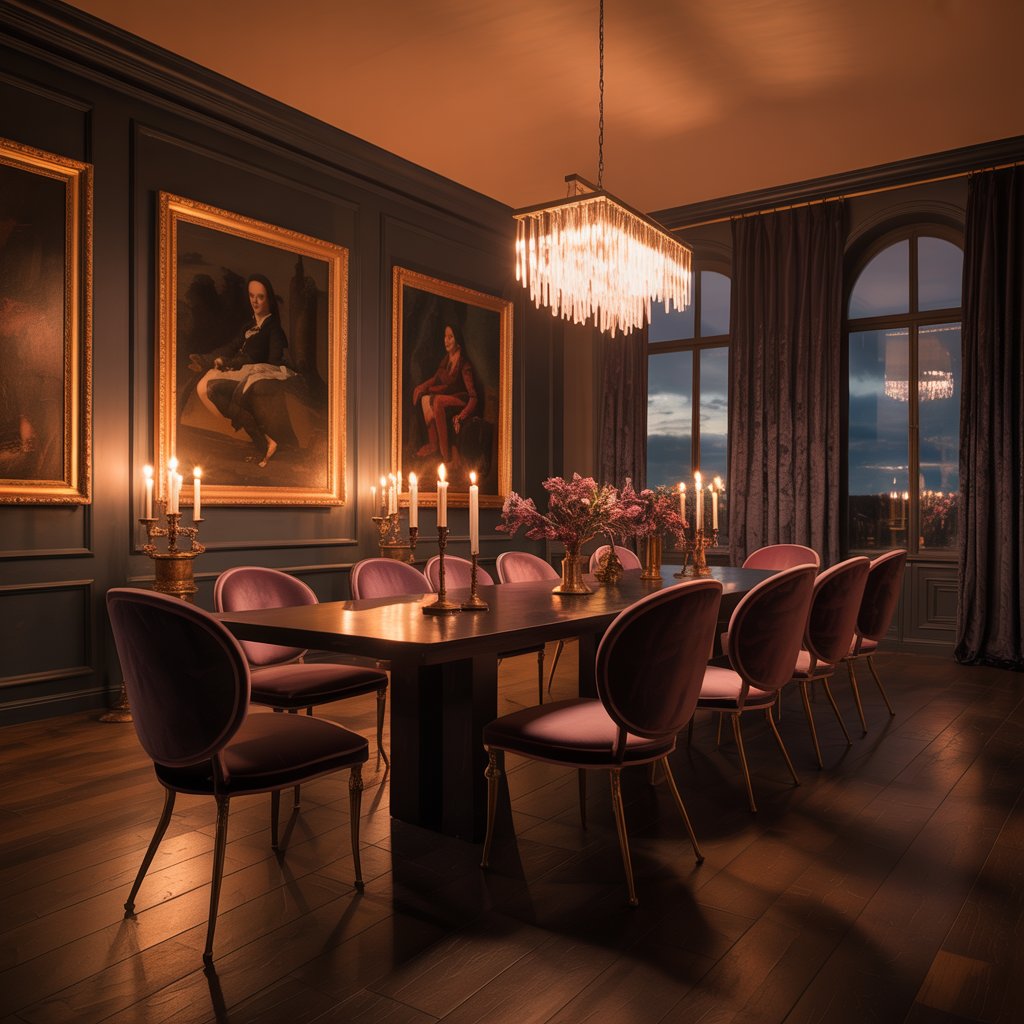
Imagine stepping into a dining space that instantly slows your pulse, wrapping you in an atmosphere of intimate, candlelit elegance. A moody, dramatic dining room isn’t just a place to eat; it’s an immersive experience that elevates everyday meals into memorable events. In design terms, “moody” relies on deep, saturated colors, low-contrast lighting, and rich textures, while “dramatic” introduces bold focal points and striking silhouettes. Together, they create a space that feels both deeply personal and incredibly luxurious.
Whether you are hosting a lively dinner party or enjoying a quiet evening meal, this environment sets the perfect stage. In The Ultimate Guide to Designing a Moody, Dramatic Dining Room, we will walk you through everything from selecting the perfect deep paint colors to mastering layered lighting. You’ll learn how to balance scale, incorporate lush fabrics, and style your table for maximum impact, all while keeping your budget and space constraints in mind. Let’s transform your dining area into a brooding, beautiful masterpiece.
1. Defining the Mood & Concept
Before picking up a paintbrush, you need a solid concept. The foundation of moody interiors lies in four core design principles: contrast, scale, texture, and layering. Unlike bright, airy spaces that rely on uniform light, a dark dining room thrives on shadows and highlights. You want to create visual tension—pairing a heavy, matte wood table with delicate, shimmering brass fixtures, or grounding a large-scale space with an oversized, intimate dining room layout.
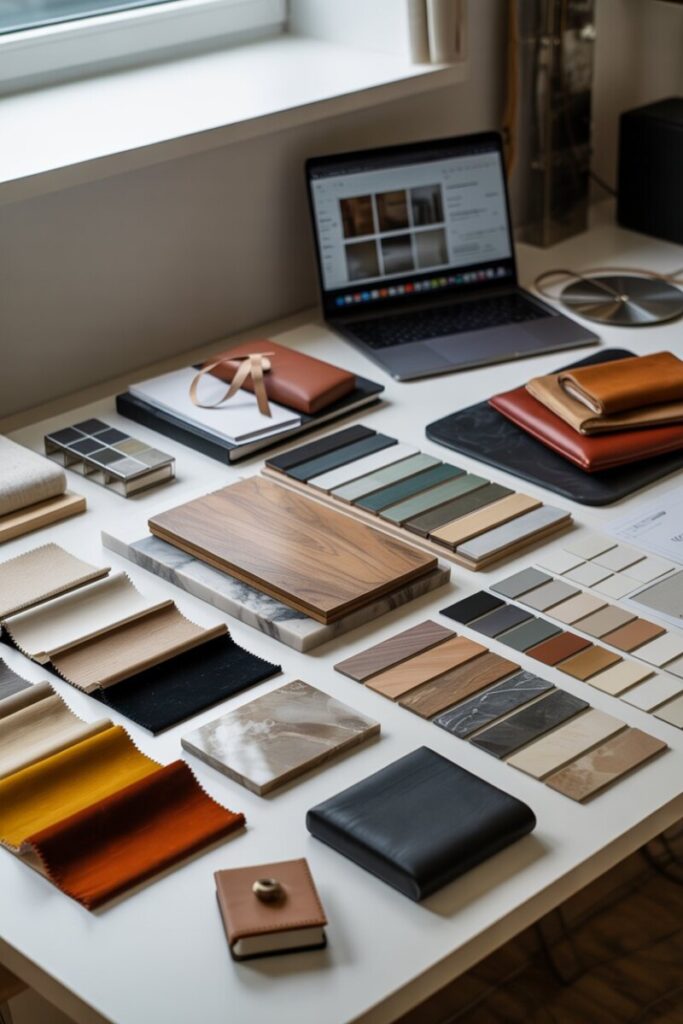
Start by building a physical or digital mood board. Collect images of moody dining room inspiration, fabric swatches, and paint chips. Look for recurring themes. Are you drawn to the velvety richness of a moody modern dining room, or the historic charm of a traditional space with ornate moldings?
Color psychology plays a massive role here. Deep, saturated hues like navy, forest green, and charcoal don’t just look beautiful; they physically lower the heart rate and encourage relaxation. These deep paint colors absorb light rather than reflecting it, creating a cocooning effect that makes guests feel secure, intimate, and engaged. When conceptualizing your space, remember that a moody decor scheme isn’t about making a room feel dark and depressing; it’s about curating a sanctuary that feels deliberate, grounded, and deeply inviting. By focusing on these foundational elements, you ensure your dramatic dining room feels designed, not just dimly lit.
2. Choosing a Moody Color Palette
The right moody color palette is the backbone of your design. When selecting deep, saturated colors, think beyond basic black. Rich jewel tones—like emerald, sapphire, and amethyst—or earthy, brooding shades like plum, rust, and peat bring complex undertones that shift beautifully throughout the day.
To prevent the room from feeling like a cave, pair your dominant dark hue with grounding neutrals. Warm brass, unlacquered bronze, and rich walnut woods add necessary warmth. For paint finishes, opt for matte paint finishes or eggshell on the walls to absorb light and hide imperfections, while using a high-gloss or semi-gloss on the trim and ceilings. Painting the ceiling the same dark color as the walls (a technique called color drenching) blurs the boundaries of the room, making it feel infinitely expansive and incredibly intimate.
If you prefer bold wallpaper, choose textured walls like grasscloth or a dark, moody floral print to add depth without overwhelming the space.
Sample Moody Color Schemes (with Hex Codes)
- Cool & Brooding: Deep Teal (
#1A3C40), Charcoal (#2C3539), Brushed Nickel (#8A9A9E), Crisp Linen (#F5F5F0)- Warm & Earthy: Blackened Plum (
#3B2E3A), Oxidized Copper (#8A5A44), Matte Black (#1C1C1C), Warm Alabaster (#EDE6D6)- Eclectic & Moody: Midnight Navy (
#1B263B), Emerald Green (#2D6A4F), Antique Gold (#D4AF37), Deep Burgundy (#5C162E)
Trend Callout: According to recent 2025 interior design industry reports, searches for “dark, moody dining rooms” and “color-drenched ceilings” have surged by over 40% this year, signaling a major shift away from stark, all-white interiors toward deeply personalized, enveloping spaces.
3. Mastering the Lighting Strategy
Lighting can make or break a dramatic dining room. The secret to achieving that perfect, cinematic glow is layered lighting. You need a strategic mix of ambient, task, and accent lighting to create depth and highlight your design choices.
Start with your ambient lighting, which will likely be a statement lighting piece like an oversized chandelier or a sculptural pendant hung directly over the dining table. This fixture serves as the room’s jewelry. Hang it 30 to 36 inches above the tabletop to ensure it illuminates the space without blocking sightlines across the table.
Next, integrate task and accent lighting. Wall sconces or wall washers placed on either side of a buffet or artwork draw the eye outward and wash the textured walls in a soft, flattering light. Don’t forget the power of candles and candelabras; the flickering, organic movement of a real flame is the ultimate moody decor element.
When it comes to the technical specs, ambient lighting for dining room spaces should always be on a dimmer. This is non-negotiable for a moody room! For bulb selection, aim for a warm color temperature between 2700K and 3000K (Kelvin). Anything higher (like 4000K) will cast a harsh, clinical blue light that instantly kills the intimacy. In terms of brightness, aim for a total of 3,000 to 4,000 lumens for the entire room, but keep the chandelier itself around 1,500 to 2,000 lumens so you can dim it down for evening entertaining.
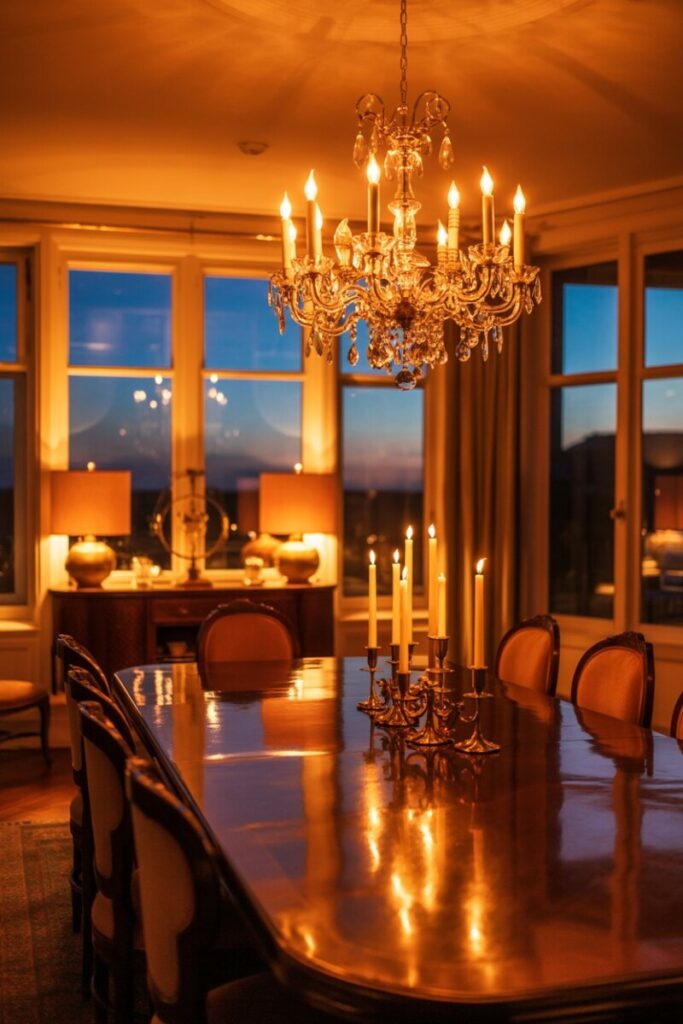
By combining a striking central fixture with moody, low-level accent lights, you ensure the room transitions seamlessly from a bright, functional workspace during the day to a captivating, intimate dining room by night.
4. Furniture, Scale, and Layout
The furniture in a moody, dramatic dining room needs to hold its own against dark walls and bold lighting. When selecting a dining table, look for pieces with substantial visual weight. A thick, matte wood slab table, a dark marble top, or a sleek, blackened steel base provides the necessary anchor. Mixing materials is key to preventing the room from feeling flat; pair a heavy stone table with delicate, velvet dining chairs to create a luxurious contrast.
Speaking of seating, upholstery is a hallmark of moody interiors. Velvet, boucle, or distressed leather chairs not only add rich texture but also absorb sound, making the acoustics of the room feel hushed and intimate. If you prefer wood chairs, add textured seat cushions or drape them with faux fur throws for winter.
Layout is just as crucial as the pieces themselves. For a standard dining setup, ensure you have at least 36 to 48 inches of circulation clearance between the edge of the table and the walls or surrounding furniture. This allows guests to pull out chairs comfortably.
Mini Case Study: The Small-Space Solution
In a recent 10×10 foot urban apartment makeover, the designer transformed a cramped eating nook into a jewel box. By painting the walls and ceiling a deep aubergine and using a round, 42-inch dark walnut table, the sharp corners disappeared. They added a curved, mustard-velvet banquette to maximize seating without bulky chair legs, proving that small dining room solutions can actually feel more dramatic and luxurious than sprawling, open-concept spaces.
Whether you are working with a grand formal room or a cozy nook, prioritizing scale and lush materials will ensure your furniture feels intentional and inviting.
5. Textures, Fabrics & Surfaces
In a dark dining room, texture does the heavy lifting that color usually does in a light room. Without varied textures, a moody space can easily look flat and muddy. You want to introduce materials that catch the light differently and invite touch.
Start with the soft furnishings. Velvet dining chairs are a classic choice because the fabric’s pile reflects light in dynamic ways, shifting from deep shadow to bright highlight as you move around the room. Distressed leather, heavy linen drapery, and thick, high-pile wool rugs add a tactile, lived-in luxury that softens the dramatic edges of the room.
For hard surfaces, lean into matte finishes. Matte wood sideboards, limewash or plaster wall treatments, and honed stone countertops absorb light beautifully, enhancing the brooding atmosphere. If you opt for bold wallpaper, consider textured options like grasscloth, which adds a subtle, organic weave, or a heavily embossed vinyl that mimics vintage leather.
Don’t neglect the tabletop surfaces and linens. Swap out glossy, high-shine tablecloths for heavy, washed linen runners, matte ceramic plates, and hammered metal flatware. These dining room styling tips ensure that every surface your guests interact with reinforces the rich, layered, and deeply sensory experience of your moody dining room.
6. Art, Mirrors & Decorative Details
Art and decor are where your dramatic dining room truly gets its personality. In a moody space, small, scattered decor can look cluttered. Instead, curate oversized art or a tightly grouped gallery wall. A massive, abstract canvas with dark, brooding tones or a moody, classical oil painting creates a stunning focal point. When framing, mix ornate, antique gilt frames with sleek, matte black profiles to bridge the gap between traditional and moody modern dining room aesthetics.
Mirrors are a designer’s best friend in dark rooms. A large, heavily framed mirror placed opposite a window or a light source bounces illumination around the room, creating the illusion of depth and preventing the space from feeling claustrophobic.
For the table, skip the towering floral arrangements that block conversation. Opt for sculptural, low-profile centerpieces—think twisting branches in a dark ceramic vase, a cluster of thick pillar candles, or a bowl of dark, moody fruits like figs and pomegranates. Pair these with statement tableware, like dark stoneware or smoked glass goblets, to complete the look.
7. Styling for Entertaining & Everyday Use
A dramatic dining room must function beautifully for both lively dinner parties and quiet weeknight meals. Your tablescape ideas should be adaptable: keep a baseline of dark placemats and a textured runner for daily use, then layer on charger plates and cloth napkins for guests.
Lighting cues are essential. Set dimmers to 100% while guests mingle, then drop them to 30% once seated to instantly shift the mood. To maintain the serene vibe, use a sideboard with hidden storage to stash serving platters and everyday clutter out of sight. Remember, dark matte paint finishes and dark wood show dust easily, so keep a microfiber cloth handy and use coasters to protect your surfaces.
💡 Quick Fixes to Add Drama
- Swap standard white switch plates for matte black or antique brass.
- Add heavy, dark linen curtains to soften harsh window light.
- Place a large, dark-toned vintage rug under the set to anchor the space.
⚠️ Mistakes to Avoid
- Using cool-white (4000K+) LEDs, which make dark paint look sickly.
- Choosing a glass table, which lacks visual weight for a moody room.
- Forgetting the ceiling, leaving a jarring “white lid” over a dark room.
8. Budget Plans & Room Makeover Checklist
You don’t need unlimited funds to achieve a luxury dining room on a budget. Here is how to prioritize your spend across three tiers:
- Budget (Under $1,500): Focus on deep paint colors, DIY plaster treatments, and slipcovers. Keep your existing table but upgrade the lighting fixture.
- Mid-Range ($1,500–$5,000): Invest in a statement chandelier, custom dark window treatments, and a high-pile wool rug.
- Splurge ($5,000+): Prioritize custom built-ins, a solid wood dining table, and high-end textured wallcoverings.
📋 Click to Expand: Your 10-Step Moody Dining Room Makeover Checklist
- Measure & Plan: Measure the room and plan the layout, ensuring 36″+ clearances (Week 1).
- Conceptualize: Create your mood board and finalize the moody color scheme (Week 1).
- Sample: Order fabric swatches, paint samples, and peel-and-stick wallpaper (Week 2).
- Paint: Paint the walls, trim, and ceiling in your chosen deep hue (Week 3).
- Texture: Install textured wallcoverings, grasscloth, or plaster treatments (Week 4).
- Illuminate: Hire an electrician to install dimmers, sconces, and the main chandelier (Week 5).
- Anchor: Assemble and place the dining table and sideboard (Week 6).
- Soften: Arrange seating, lay the rug, and hang window treatments (Week 6).
- Curate: Hang oversized art, position mirrors, and style the sideboard shelves (Week 7).
- Celebrate: Set the table, light the candles, and host your first dinner party!
Conclusion: Embrace the Dark Side of Design
Designing a moody, dramatic dining room is all about embracing the shadows, layering rich textures, and creating an intimate sanctuary for gathering. By mastering deep color palettes, layered lighting, and bold furniture choices, you can transform an ordinary eating space into an unforgettable, immersive experience. We hope The Ultimate Guide to Designing a Moody, Dramatic Dining Room has inspired you to take the plunge into the dark side of design.
Ready to start your transformation? Download our free, printable 10-step makeover checklist below, or sign up for our weekly design email series for more moody interiors inspiration. Once your room is complete, we’d love to see it! Share your before-and-after photos on Instagram using the hashtag #MoodyDiningMakeover.